
Direct answer: The West Africa trailer market is strongest for flatbed and container trailers, side wall trailers, lowbed trailers, tipper trailers, fuel tanker trailers, and tractor-trailer combinations. A strong dealer should not only sell units. It should help buyers choose the right trailer for the route, confirm documents before import, stock fast-moving parts, and support repairs after delivery.
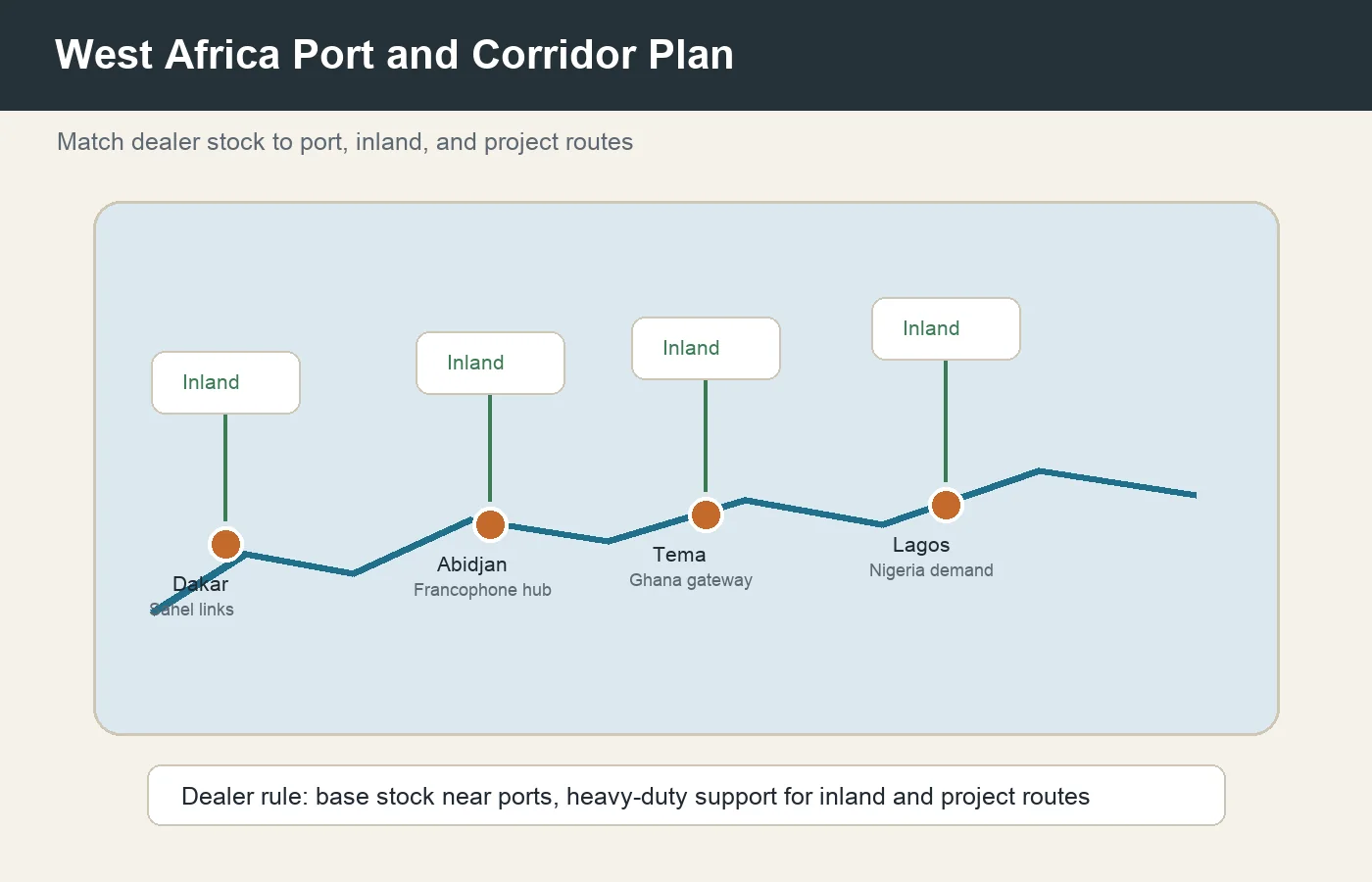
West Africa is a port-and-corridor market. Buyers often move containers, steel, cement, fuel, farm cargo, construction materials, and mining equipment from coastal ports to inland cities and project sites. A dealer wins when it understands the route, not only the product price.
Quick Buyer Decisions
- Start with the route and cargo before choosing dealer stock.
- Keep flatbed and container trailers as the base stock for general freight.
- Add lowbed trailers where mining, construction, and machinery transport are active.
- Add tankers only when the dealer can support safety checks and fittings.
- Sell spare parts, inspection, and repair support together with the trailer.
- Use supplier verification before promising delivery dates or warranty terms.
Why West Africa Is a Route-Based Trailer Market
West Africa demand is shaped by ports, inland corridors, construction projects, mining work, farms, and city distribution. Nigeria, Ghana, Ivory Coast, Senegal, Benin, Togo, Sierra Leone, Guinea, Mali, Burkina Faso, and Niger all create different transport needs. Some buyers operate only near ports. Some move cargo into landlocked countries. Some serve mines or project sites where road damage is part of daily work.
The World Bank says transport is central to development and that many people still lack reliable all-weather road access on its transport overview. For trailer dealers, this is a practical signal. A trailer that works on a paved port road may not be enough for a mixed road, rural, or mining route.
UNCTAD publishes the Review of Maritime Transport as a regular source on shipping, ports, and maritime trade. The report is useful for dealers because ocean freight, port congestion, and route demand can affect landed cost and delivery timing.
Main Demand Corridors
West Africa is not one market. A dealer should divide it into buyer clusters.
Nigeria and Lagos
Nigeria is usually the first West Africa market many trailer sellers study. Lagos handles major port activity and connects to large consumer, construction, fuel, and container movements. The Nigerian Ports Authority describes Lagos Port Complex and Tin Can Island Port among major Lagos port facilities on its official pages. Buyers that import through Lagos should plan customs, port handling, inland delivery, and road condition together.
For a country-specific guide, read how to ship a trailer from China to Lagos port and importing semi-trailer from China to Nigeria.
Ghana and Tema
Ghana is useful for dealers that want a more organized entry point for general cargo, used trucks, and container logistics. Tema often appears in buyer plans because many importers already understand the port process. For used equipment import planning, see how to import a used trailer to Ghana.
Ivory Coast and Abidjan
Abidjan is a key French-speaking West Africa gateway. Buyers often ask for French paperwork support, clear invoices, and stronger document control. The guide on import trailer to Ivory Coast via Abidjan port is useful when a dealer handles French-speaking customers.
Senegal and Dakar
Dakar supports Senegal and wider Sahel movement. A dealer selling into Senegal should prepare French product descriptions, port release planning, and inland delivery support. Read import semi-trailer to Senegal via Dakar port for the port-side checklist.
Inland and Cross-Border Buyers
Some buyers are not located near the port. They may be in Mali, Burkina Faso, Niger, or inland project areas. These buyers care about stronger axles, tire availability, spare parts, and repair support. A dealer that can explain route risk will look more serious than a seller that only sends photos.
Trailer Types Dealers Should Understand
Flatbed and Container Semi-Trailers
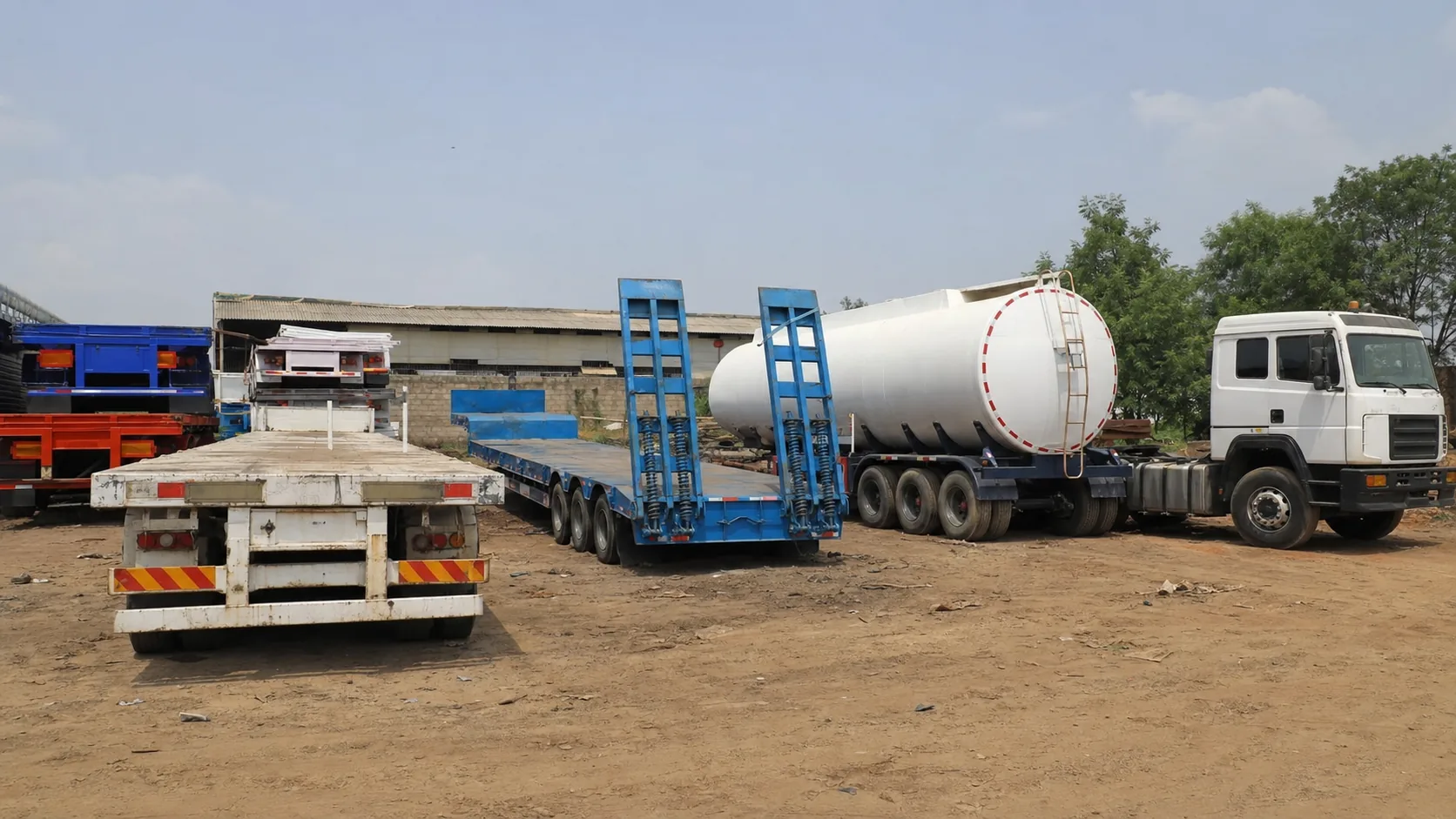
Flatbed semi-trailers are the safest base product for many dealers. They can serve containers, steel, timber, bagged cargo, farm goods, and general freight. A dealer can use the 40 ft 3 axle flatbed container semi trailer as a reference model for container and general cargo buyers.
Flatbed stock is useful because it is easier to explain and easier to sell across several buyer groups. The key checks are deck length, twist locks, axle rating, tire type, main beam strength, landing gear, brake system, and lashing points.
Lowbed Trailers
Lowbed trailers fit machinery, excavators, bulldozers, generators, transformers, and mining equipment. They are important for construction and mining customers. A dealer should not sell a lowbed only by payload number. Deck height, ramp type, axle layout, suspension, tire size, and road clearance matter.
For equipment routes, compare the 13 m heavy-duty low bed semi-trailer with hydraulic ramps and the lowbed semi-trailer.
Fuel Tanker Semi-Trailers
Fuel tanker trailers can create strong demand, but the dealer must be more careful. Tank material, compartments, valves, manholes, discharge system, safety fittings, and local rules must be checked. A dealer can use the 30-40 ton fuel tanker semi trailer as a product reference, but tanker sales should include a technical checklist and buyer training.
Tractor Trucks
Many buyers need a tractor and trailer combination. A dealer should check fifth-wheel height, kingpin size, brake lines, electrical plug, tractor power, and route service. For tractor-trailer packages, the HOWO NX371 6×4 tractor truck for semi-trailer haulage is a useful match point.
Dealer Stock Mix
A new dealer should not buy every model at once. Start with a small stock mix and a clear customer group.
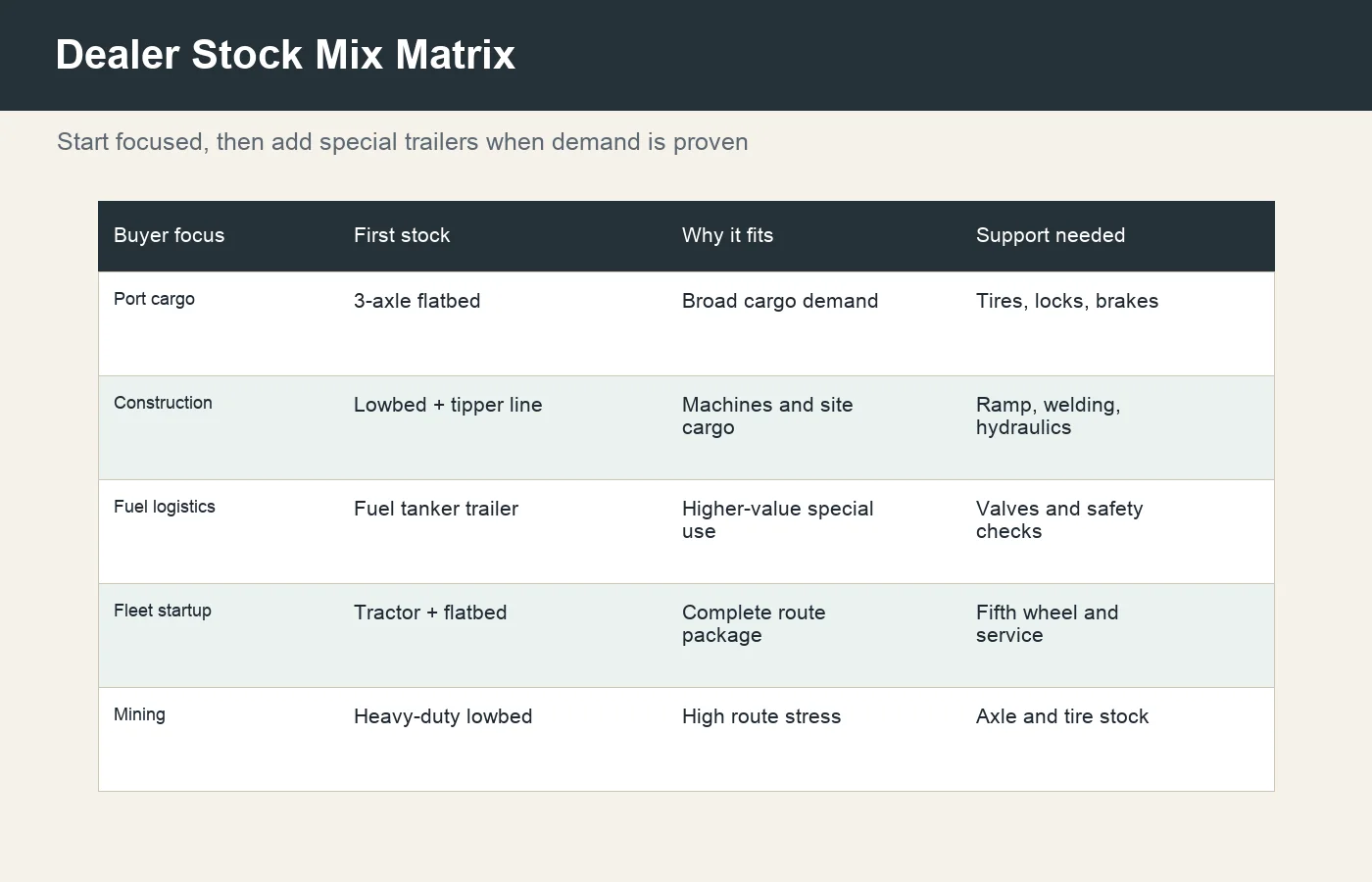
| Dealer focus | First stock to show | Why it fits | Extra support needed |
|---|---|---|---|
| Port and container work | 3-axle flatbed semi-trailer | Broad demand and simple sales story | Twist locks, tires, brake parts |
| Construction | Lowbed and tipper-related products | Moves machines, gravel, and site cargo | Ramp, hydraulics, tire, welding support |
| Fuel logistics | Fuel tanker trailer | Higher-value special use | Valve, safety, and inspection support |
| General fleet buyers | Tractor plus flatbed | Complete transport package | Fifth-wheel, brake, and service match |
| Mining and heavy haulage | Heavy-duty lowbed | High route stress and strong buyer need | Axle, suspension, ramp, and repair support |
Need a practical trailer lineup for West Africa?
Compare flatbed, lowbed, tanker, and tractor-trailer options before you plan dealer stock.
How a Dealer Should Handle Leads
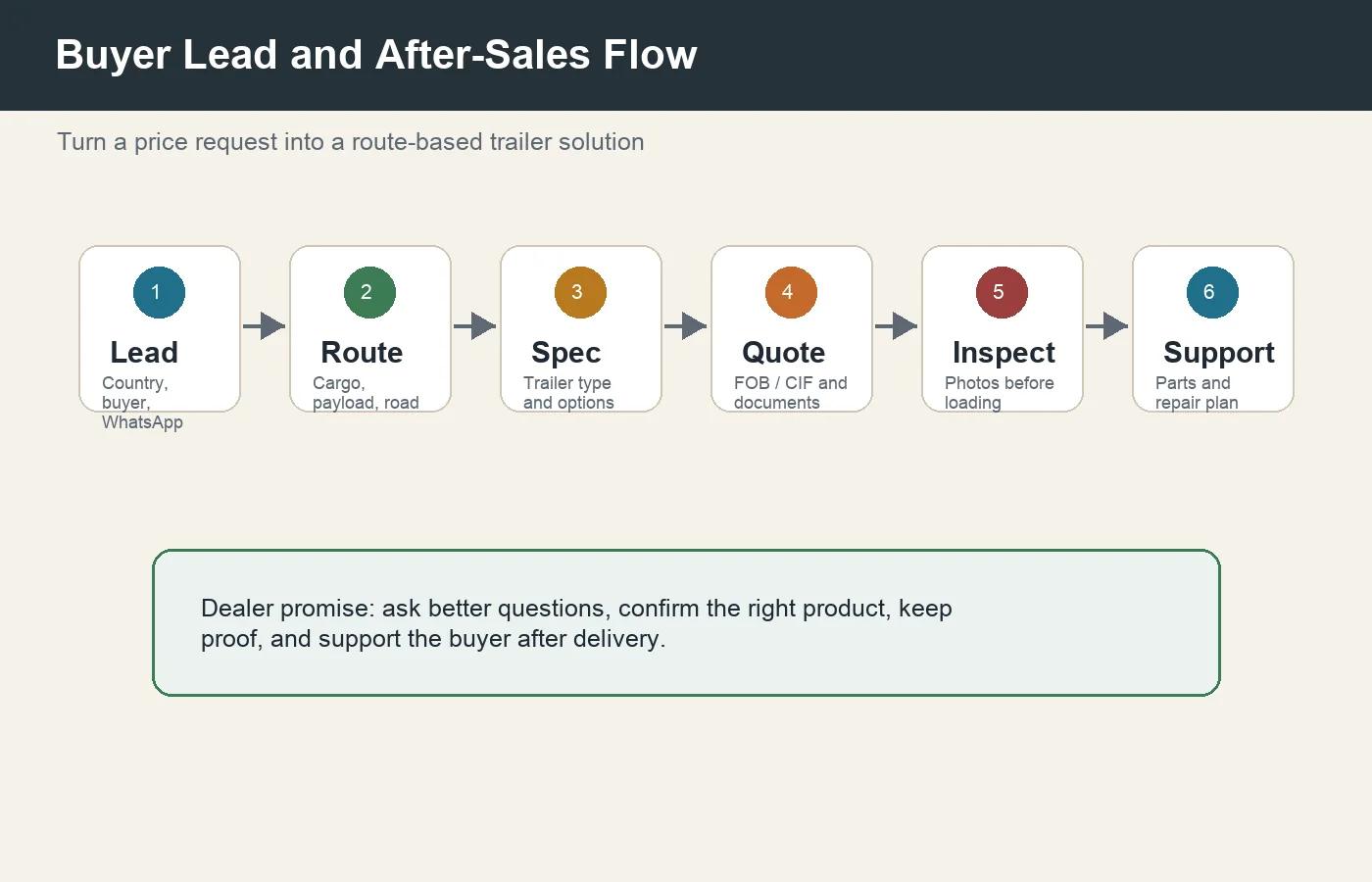
Many West Africa trailer leads start with a short message: "price please," "send catalog," or "I need 3 axle trailer." A weak dealer only sends a price. A strong dealer asks the right questions and gives a route-based answer.
Ask every serious buyer:
- What country and port will receive the unit?
- What cargo will the trailer carry?
- What is the normal payload?
- What is the road condition?
- Is the buyer using an existing tractor?
- What fifth-wheel height and kingpin size are needed?
- Does the buyer need spare parts in the first shipment?
- Does the buyer want FOB, CIF, or local delivery support?
This approach also protects the dealer. It reduces wrong-spec orders, payment disputes, and after-sales complaints.
Supplier Checks Before Dealer Cooperation
A dealer should verify the supplier before building a local brand promise. A low factory quote is not enough. The dealer should ask for:
- Product drawings.
- Chassis and axle specification.
- Real production photos.
- Previous export records.
- Warranty terms.
- Spare parts list.
- Packing and shipping method.
- Inspection photos before loading.
- Company and payment account verification.
The World Customs Organization explains on its Harmonized System overview that the HS is used by many countries as a basis for customs tariffs and trade statistics. A dealer does not need to act as a customs broker, but it should give buyers clear product descriptions so their brokers can classify the goods correctly.
For supplier risk control, read how to verify a Chinese trailer manufacturer.
After-Sales Strategy
After-sales is where many dealers lose trust. A buyer may forgive a late reply before purchase. It will not forgive silence after a breakdown.
A practical dealer should prepare:
- A basic spare-parts package for each sold trailer.
- Local mechanic or workshop partners.
- Brake and air-line parts.
- Tire and wheel-nut support.
- Axle bearing, seal, and hub checks.
- Welding and frame inspection contacts.
- Clear warranty claim photos and video rules.
- Driver inspection checklist.
The article on trailer axle spare parts in Africa helps dealers decide which axle parts to stock. The article on trailer tire selection for African roads is useful when buyers work in heat, overload risk, or rough road conditions.
Dealer Pricing and Landed Cost
Dealers should explain landed cost, not only unit price. A buyer needs to understand the cost from factory to usable vehicle.
Include:
- Unit price.
- Inland transport in China if needed.
- Ocean freight.
- Insurance if included.
- Port charges.
- Customs duty and taxes.
- Local agent fee.
- Inland transport from port.
- First inspection and service.
- Spare parts kit.
- Dealer margin.
For freight planning, read CIF vs FOB trailer shipping to Africa and trailer shipping time from China to Africa.
Common Dealer Mistakes
Selling every model too early
Too much stock can trap cash. Start with models that fit the dealer's real buyer base.
Ignoring spare parts
Trailers work in dust, heat, port yards, and rough roads. Parts support is part of the product.
Quoting without route questions
A quote without route context may be wrong. It can create costly after-sales conflict.
Using only catalog photos
Buyers want proof. Use real yard photos, inspection videos, loading photos, and clear specifications.
Promising customs results
The dealer can support documents, but local brokers and authorities control clearance. Avoid unsafe promises.
FAQ
What trailer sells best in West Africa?
Flatbed and container semi-trailers are often the safest base product because they serve many cargo types. Lowbeds, tankers, and tractor-trailer combinations can also sell well when the dealer targets the right buyer group.
Should a new dealer stock new trailers or sell by order?
A new dealer can start with one or two sample units, factory media, and a clear order process. Full stock is useful only when the dealer has enough buyer demand and cash flow.
What support does a trailer dealer need?
A dealer needs product knowledge, import document support, spare parts, inspection process, workshop partners, and a clear sales follow-up system.
Is West Africa good for lowbed trailer sales?
Yes, where construction, mining, heavy equipment rental, and infrastructure projects are active. The dealer must check payload, ramp, axle, tire, deck height, and route condition before selling.
Related Reading
- How to ship a trailer from China to Lagos port
- Import trailer to Ivory Coast via Abidjan port
- Import semi-trailer to Senegal via Dakar port
- How to verify a Chinese trailer manufacturer
Final Buyer Checklist
The West Africa trailer market rewards dealers that understand routes, products, documents, and after-sales. Start with a focused stock mix. Use clear supplier checks. Build parts support early. Then sell the trailer as a working transport solution, not only as a low-price unit.