
Direct answer: Trailer tire selection for African roads should start with axle load, route surface, heat, speed, cargo weight, tire size availability, and maintenance discipline. A strong tire brand helps, but it cannot fix underinflation, overload, poor alignment, bad suspension, or the wrong tread pattern for the route.
For a semi-trailer fleet, tires are not only consumables. They affect safety, fuel use, downtime, cargo claims, and driver confidence. The best buyer plan is to select tires together with axle layout, suspension, loading method, and the roads the trailer will actually use.
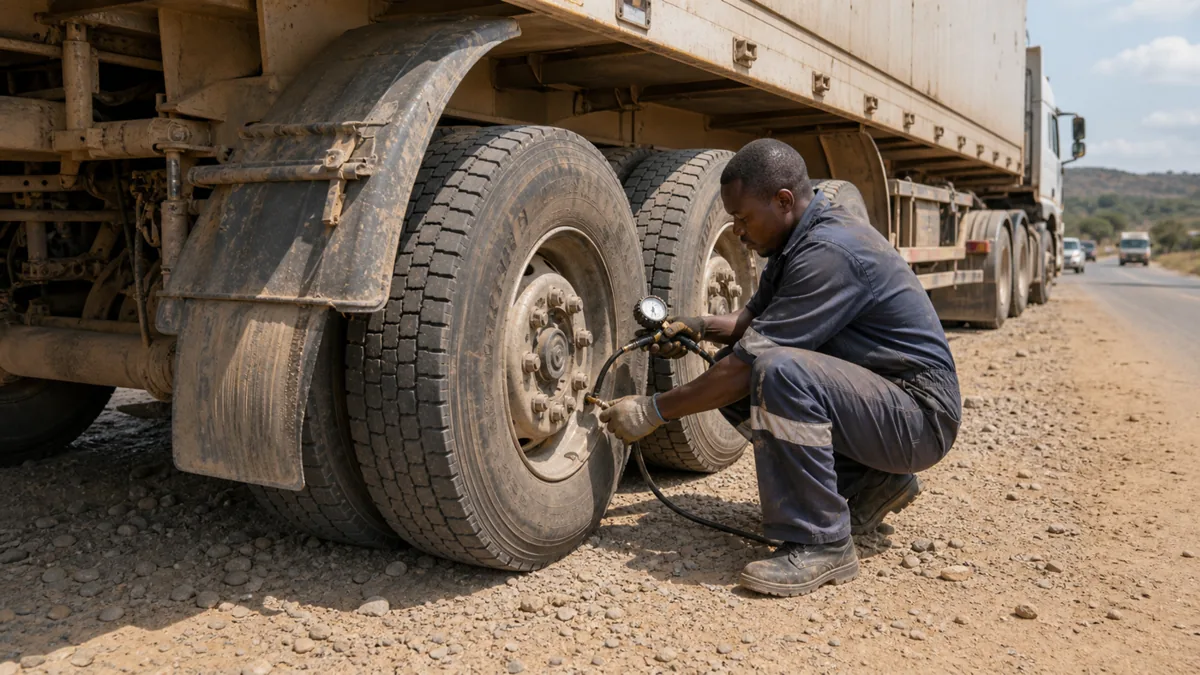
Quick Buyer Decisions
- Match tire load rating to the axle group and real cargo weight.
- Select tread pattern by route: port-city, highway, rural road, construction site, or mining road.
- Check cold tire pressure before dispatch, not after the tires are hot.
- Keep dual tires matched in size, pressure, pattern, and wear level.
- Treat uneven wear as a system problem, not only a tire problem.
- Confirm local availability before choosing an uncommon size.
- Train drivers to report cuts, bulges, missing valve caps, heat damage, and abnormal vibration.
Start With Axle Load
The tire must carry the load that reaches the axle. This sounds simple, but many tire problems start with poor load distribution. A trailer may be within total payload on paper, while one axle group or one side carries too much weight. That can overheat tires, damage sidewalls, and shorten casing life.
Before choosing tires, review the cargo weight and axle layout. The guide on trailer axle load capacity for African roads explains how axle groups, road limits, and loading pattern work together. Use that logic before selecting tire size and rating.
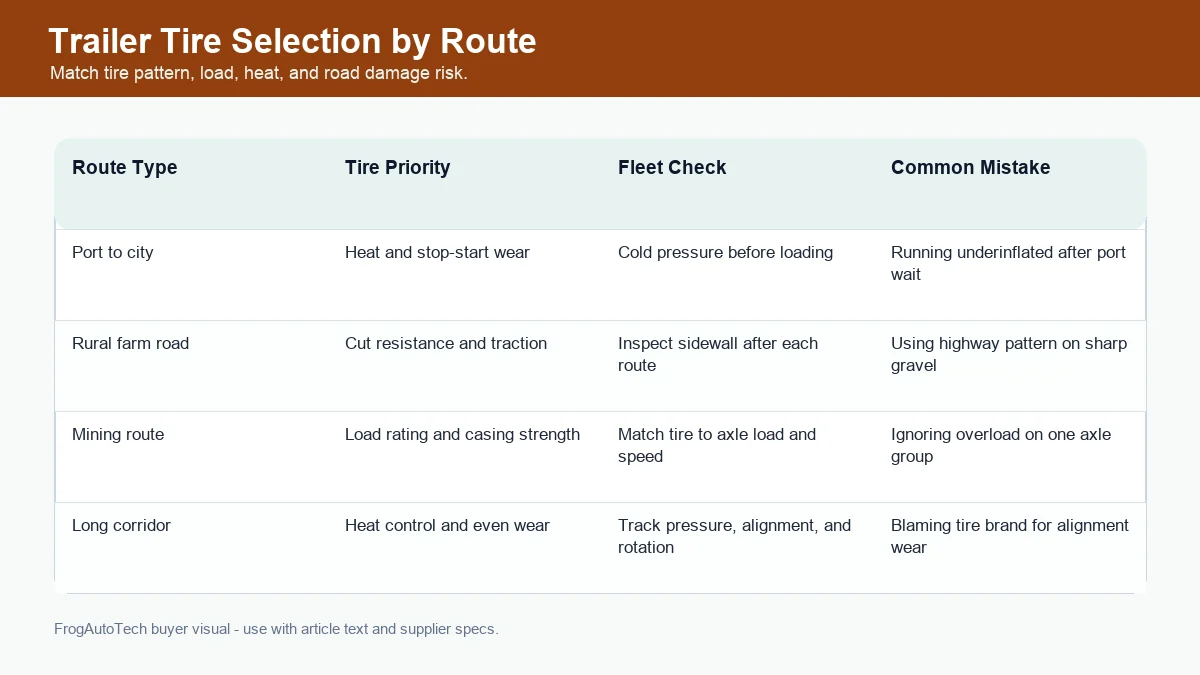
| Route type | Tire priority | Buyer check |
|---|---|---|
| Port to city | Heat control and stop-start durability | Cold pressure before loading and after long port wait |
| Highway corridor | Even wear and stable temperature | Alignment, pressure records, and speed discipline |
| Rural farm road | Cut resistance and traction | Sidewall inspection after rough sections |
| Construction site | Casing strength and shoulder protection | Rock cuts, overload risk, and turning damage |
| Mining route | Load rating and heat control | Axle load, speed, tire temperature, and spare tire stock |
| Coastal route | Corrosion and maintenance access | Valve caps, wheel nuts, and cleaning after wet work |
Heat and Pressure Decide Tire Life
Heat is a major tire enemy. Underinflation creates more flexing. More flexing creates more heat. Heat can damage the tire structure and increase the risk of failure. Overload makes the problem worse.
The NHTSA tire safety page, accessed June 19, 2026 tells vehicle users to check tire pressure when tires are cold and explains that poor tire maintenance can lead to blowouts and tread separation. The page is written for a broad public audience, but the logic is even more important for heavy trailers. A semi-trailer tire works under much higher load than a passenger car tire.
Data point: NHTSA TireWise material, accessed June 19, 2026, reported 511 deaths in tire-related crashes in 2024.
Use these pressure rules:
- Check pressure before dispatch while the tire is cold.
- Record pressure by tire position.
- Do not bleed air from a hot tire just because the reading is higher.
- Fix slow leaks quickly.
- Replace missing valve caps.
- Keep a calibrated pressure gauge in the fleet.
- Compare tire pressure with the trailer load and tire specification.
For hot African routes, pressure control should be part of the dispatch routine. It should not depend only on the driver feeling that the tire “looks fine.”
Tread Pattern Should Match the Route
Trailer tires do not all need the same tread. A tire for long highway work should run cool and wear evenly. A tire for rough rural roads needs better cut resistance. A tire used around construction sites must handle stones, turning stress, and low-speed heavy movement.
Use this practical guide:
| Route condition | Better tire focus | Avoid |
|---|---|---|
| Long paved corridor | Heat resistance, even wear, stable casing | Aggressive tread that wastes fuel on highway |
| Rough gravel road | Strong shoulder, cut resistance, deeper tread | Thin highway-only casing |
| Wet rural road | Drainage and traction | Smooth or worn tread |
| Port and city delivery | Heat, sidewall protection, stop-start wear | Running underinflated after long waiting |
| Mining and quarry road | Heavy load rating, cut resistance, spare stock | Uncommon tire size with no local supply |
If the trailer works in both highway and rough-yard conditions, choose a balanced tire. The route that damages tires most should guide the purchase, not the route that looks best in the brochure.
Tire Wear Often Points to Another Problem
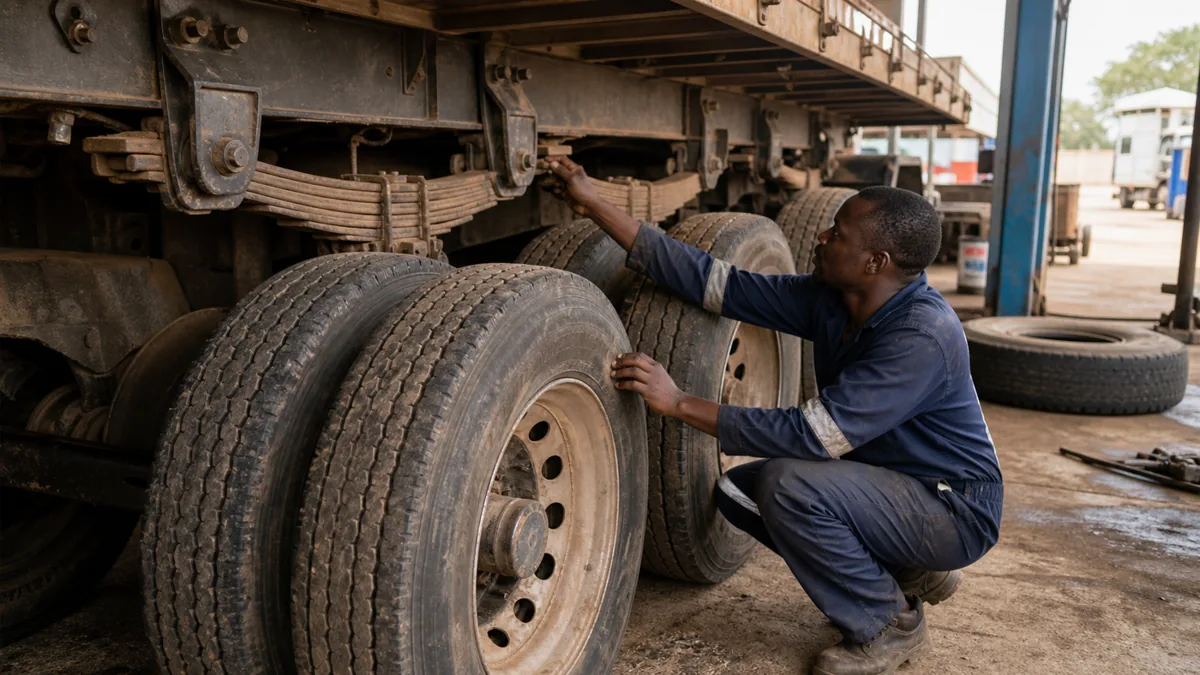
Uneven wear is a warning. It may come from pressure error, overloaded axle group, wrong toe or camber, worn suspension bushings, damaged wheel bearings, poor shock absorption, or bad loading habits. Replacing the tire without fixing the cause only repeats the cost.
| Wear sign | Possible cause | Fleet action |
|---|---|---|
| Center wear | Overinflation or light load pattern | Check pressure and cargo weight |
| Edge wear | Underinflation or overload | Check cold pressure and axle load |
| One-side wear | Alignment or axle position issue | Inspect axle, suspension, and bearings |
| Cupping | Suspension or balance problem | Check shocks, bushings, and wheel condition |
| Sidewall cuts | Gravel, rock, curb, or yard damage | Review route and driver turning habits |
| Heat marks | Underinflation, overload, or high speed | Stop dispatch until cause is fixed |
The FMCSA commercial motor vehicle tire page, accessed June 19, 2026 is a useful safety reference for commercial operators. Even when a fleet is not operating under US rules, the safety principle is universal: tire condition is part of vehicle roadworthiness.
Dual Tires Need Matching Discipline
Many semi-trailer axle groups use dual tires. Dual tires share the load, but only if they are matched and maintained. If one tire is underinflated, the other tire may carry more load and run hotter. If the pair has different diameter, tread depth, or pressure, the load share can become uneven.
Check these points:
- Same size on the dual pair.
- Similar tread depth and pattern.
- Similar pressure when cold.
- No stone trapped between dual tires.
- Valve stems accessible for pressure checks.
- No sidewall contact between tires.
- No mixing of badly worn and new tires on the same pair.
Dual tires are forgiving only when maintained. If they are ignored, they can hide problems until the failure is expensive.
Match Tires With Suspension and Route
Tire choice is linked to suspension. Mechanical suspension may be easier to repair in remote areas, while air suspension can protect some cargo but needs stronger maintenance discipline. Worn suspension can damage tires even when the tires are good.
For a deeper suspension comparison, read How to Choose Trailer Suspension for the African Market. If the trailer works in a humid or rainy region, combine tire checks with the routine in Semi-Trailer Maintenance in Tropical Climate.
Specifying trailers for rough or hot routes?
Confirm axle load, tire size, suspension type, spare tires, and route surface before production.
Spare Tire and Local Availability
A tire that is difficult to buy locally can become a major downtime risk. A premium tire size is not useful if the fleet cannot replace it after damage. Before ordering a trailer, ask which tire sizes are common in the target market and along the route.
Use this spare-parts plan:
| Item | Buyer decision |
|---|---|
| Tire size | Choose a size with local availability where possible |
| Spare tire count | Match route length and damage risk |
| Wheel rim | Confirm rim size and bolt pattern |
| Valve parts | Keep caps, stems, and extensions |
| Pressure tools | Give drivers reliable gauges and hoses |
| Repair record | Track tire position, date, route, and failure type |
For lowbed or heavy machinery work, ask the supplier to match tire and axle choice with the trailer frame. The 13 m Heavy-Duty Low Bed Semi Trailer with Hydraulic Ramps is an example of a trailer where tire choice, axle load, ramp design, and route type should be reviewed together.
Daily and Weekly Tire Checklist
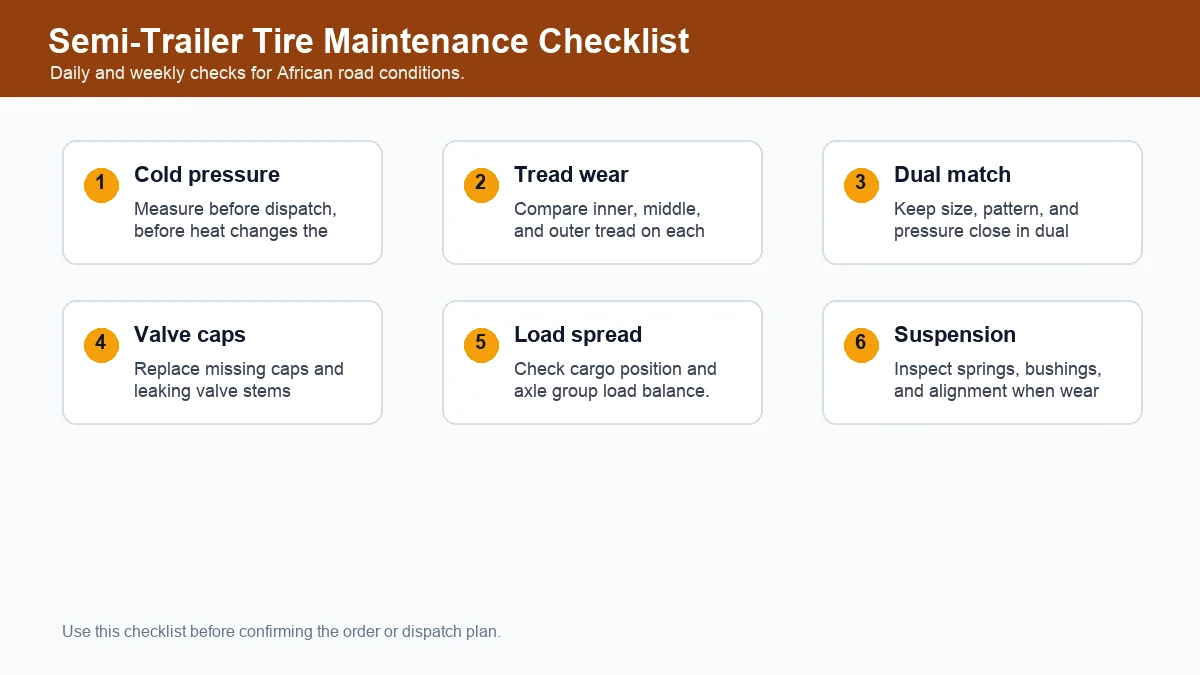
| Timing | Check | Action |
|---|---|---|
| Before dispatch | Cold tire pressure | Record by tire position |
| Before loading | Tire sidewall and tread | Reject unsafe cuts or bulges |
| After rough road | Stones, cuts, valve caps, heat | Clean and inspect before next trip |
| Weekly | Tread depth and uneven wear | Compare inner, middle, and outer tread |
| Monthly | Alignment signs, suspension bushings, wheel nuts | Send to workshop if wear pattern changes |
| After overload event | Tire heat and casing damage | Inspect before dispatch |
Drivers should not be expected to solve every tire problem. But they should be trained to stop small problems before they become roadside failures.
FAQ
What tire pattern is best for African roads?
There is no single best pattern. Highway routes need heat control and even wear. Rural and construction routes need cut resistance and shoulder strength. Mining routes need load rating, casing strength, and spare tire planning.
Should buyers choose the cheapest tire to reduce cost?
Usually no. Tire cost should be measured per kilometer, not only per tire. A cheap tire that fails early can cost more through downtime, cargo delay, and roadside repair.
How often should trailer tire pressure be checked?
Check cold pressure before dispatch and before loading when possible. For high-heat, long-distance, or heavy-load routes, make pressure checks part of the daily routine.
Can tire problems come from suspension?
Yes. Poor alignment, worn bushings, damaged springs, bad bearings, and overloaded axle groups can all create tire wear. If the same position wears tires repeatedly, inspect the trailer system.
Final Buyer Advice
Trailer tire selection for African roads is a system decision. The tire must match axle load, road surface, heat, speed, cargo, suspension, and local service access. A good tire can fail quickly if the trailer is overloaded, underinflated, badly aligned, or used on the wrong route.
Choose the tire after you understand the route. Then build a simple maintenance routine that drivers and workshops can actually follow.
Once tire load rating, tread pattern, and road conditions are clear, review FrogAuto’s used tipper trucks category for trucks that fit rough-road hauling needs.