
A landlocked buyer pays for one extra step that a coastal buyer never sees. Your trailer lands at Mombasa or Dar es Salaam. Then it crosses one or two more countries before it reaches you. That adds time, cost, and paperwork. This guide explains why a landlocked import is different, how to choose your corridor, the import process step by step, the documents and duties to plan for, and how to spec and source a trailer that clears without trouble.
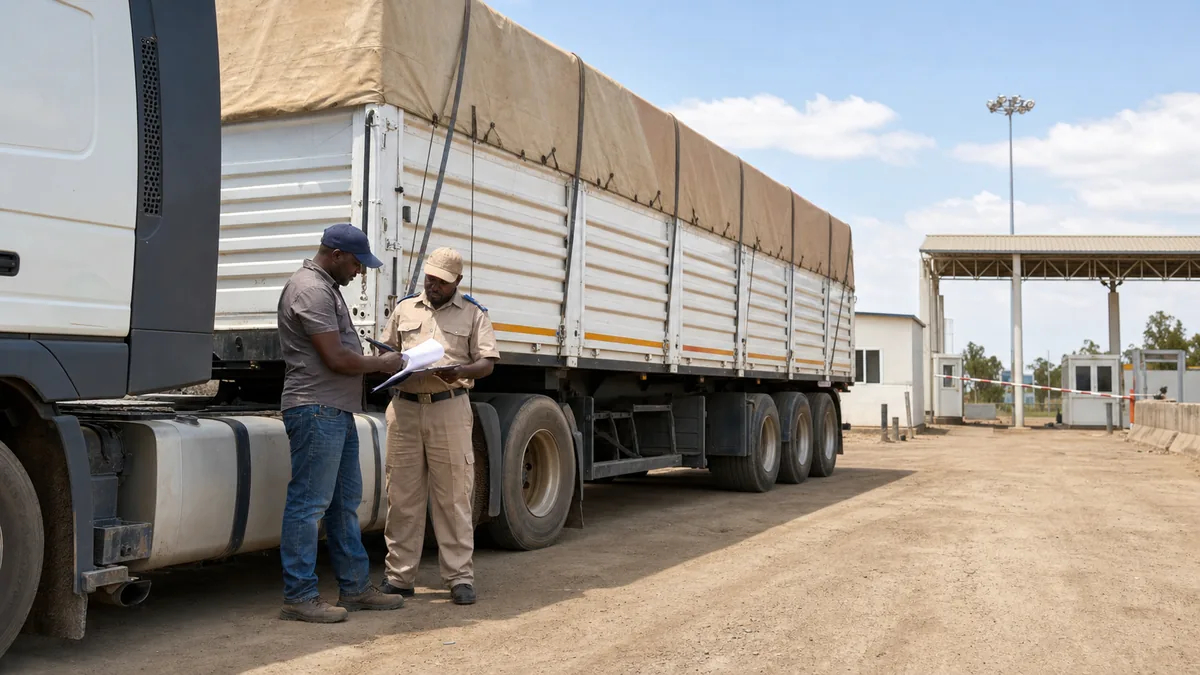
Why Importing a Trailer to a Landlocked Country Is Different
A landlocked import clears customs more than once. That is the core difference.
Landlocked import: Goods that enter through a foreign seaport, then cross one or more transit countries before reaching the buyer.
A coastal buyer clears once, at the port. A landlocked buyer faces at least three clearance points. The first is the port of entry. The second is each border crossing. The third is the final clearance in your own capital.
Each stop adds time and risk. If the documents are not right, the unit can sit at a border for days. On a busy corridor, that delay also adds storage and demurrage cost.
You also follow the rules of every country your trailer passes through. A unit bound for Kigali may cross Kenya and Uganda first. That is roughly 1,800 km from Mombasa to Kigali.
So a landlocked import carries more moving parts than a port-side one:
- Three clearance points instead of one.
- Transit duty risk across two or three borders.
- Longer inland distance, so higher transport cost.
- More documents, so more chances for delay.
This is why corridor choice and complete paperwork matter so much. Get them right and the trailer keeps moving. Get them wrong and the cost climbs. If your route includes rough inland roads or strict axle checks, use the guide on trailer axle load capacity for African roads before you approve the final trailer drawing.
Choose Your Corridor and Port: Northern vs Central
Two main corridors serve the region. Pick the one that fits your country and your distance.
| Item | Northern Corridor | Central Corridor |
|---|---|---|
| Port of entry | Mombasa (Kenya) | Dar es Salaam (Tanzania) |
| Length | ~1,700 km | ~1,300 km |
| Mainly serves | Uganda, Rwanda, Burundi, South Sudan, eastern DRC | Tanzania, Zambia, Rwanda, Burundi, Uganda, eastern DRC |
| Best fit | Uganda, South Sudan | Zambia, western Tanzania |
| Note | Busiest route; Uganda took 76.7% of Mombasa transit cargo in 2015 | A common alternative for Rwanda and Burundi |
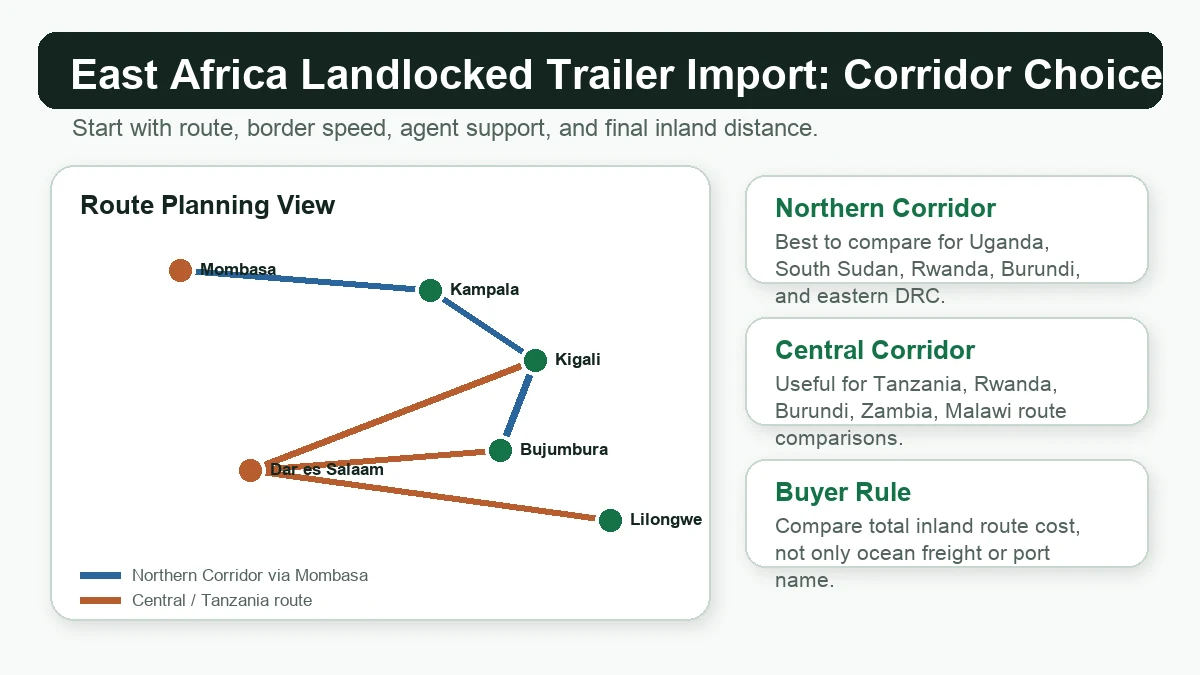
For Uganda and South Sudan, the Northern Corridor through Mombasa is the usual path. For Zambia, the Central Corridor through Dar es Salaam fits better.
For Rwanda and Burundi, both work. Mombasa to Kigali runs about 1,800 km. Dar es Salaam to Kigali is longer, around 2,000 km. So compare current cost and border speed before you decide.
A few points help you choose:
- Match the port to your country and road network.
- Compare total transit distance, not just sea freight.
- Check recent border wait times on your route.
- Ask your supplier which port they ship to most.
For corridor examples, the guide on importing a semi-trailer to Uganda via Mombasa shows how a Northern Corridor plan works. If your inland route may involve Mozambique or Southern Africa, the article on trailer import via Maputo Port gives a useful port-planning comparison.
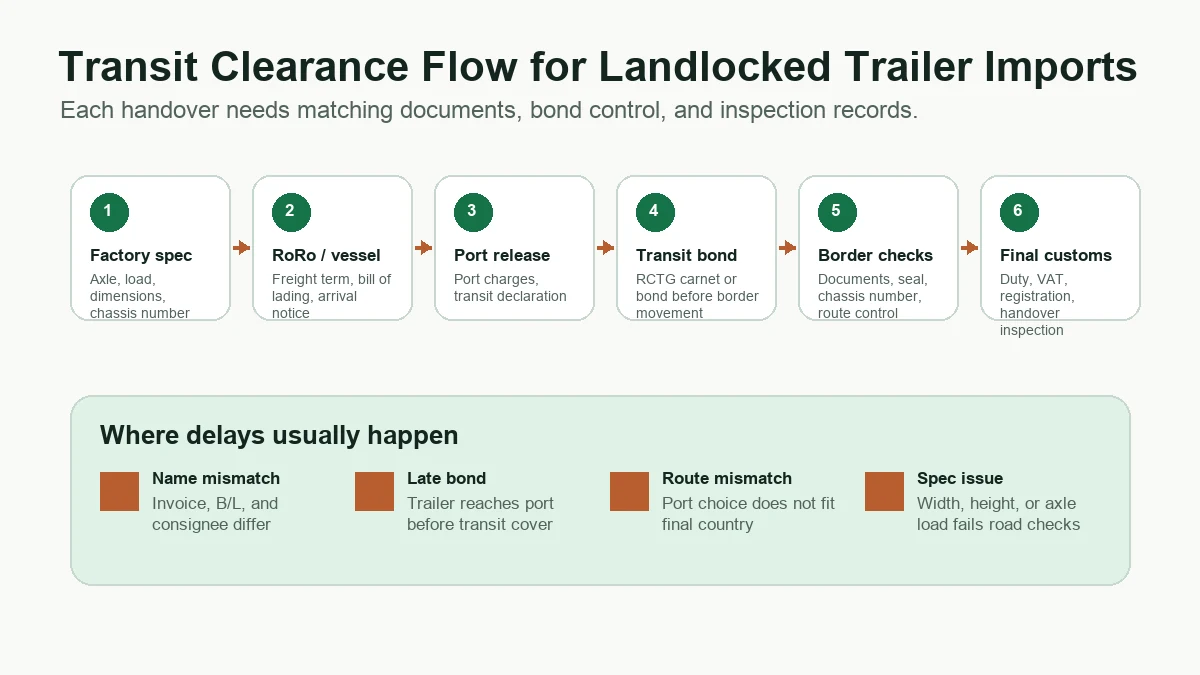
The Trailer Import Process, Step by Step
The process runs in a clear order. Know it before you order, so nothing surprises you.
- 1. Confirm the trailer spec. Agree the type, axles, load rating, and dimensions.
- 2. Agree price and documents. Get the invoice, packing list, and certificate of origin.
- 3. Ship by RoRo. The trailer rolls onto the vessel and off at the port.
- 4. Clear the port. Pay port charges and open the transit declaration.
- 5. Open a transit bond or carnet. This covers duty while the unit crosses borders.
- 6. Cross the borders. Each border checks the bond and the documents.
- 7. Clear customs in your capital. Pay your duty and VAT, then collect the trailer.
RoRo (Roll-on/Roll-off): A shipping method where wheeled units are driven on and off the vessel. It is the common, lower-handling way to ship trailers.
RoRo suits trailers well. There is less lifting and less handling damage than container loading. The unit is driven on at the load port and driven off at the destination port.
The transit stage is where landlocked imports slow down. The sea leg is predictable. The border legs are not. A regional carnet keeps the unit moving across them, which we cover next.
Before you reach this stage, settle the spec. Agree the trailer type, load rating, and configuration for your route up front. If you are still comparing freight terms, read CIF vs FOB trailer shipping to Africa before you decide who controls booking, documents, and port handover.
Documents, Duties, and Costs to Plan For
Budget for three things: shipping, duty, and the transit leg. Missing paperwork is the single biggest cause of delay.
| Document | What it is for |
|---|---|
| Commercial invoice & packing list | Proves the value and the contents |
| Certificate of origin | Sets the duty rate under trade rules |
| Customs transit declaration | Allows the unit to move in transit |
| Transit bond / RCTG carnet | Guarantees duty across transit countries |
RCTG Carnet (Regional Customs Transit Guarantee): One regional bond that replaces separate national bonds, from the port to your final inland destination. It runs in Burundi, Kenya, Rwanda, Tanzania, and Uganda.
Duty depends on your country and the goods. Plan with these bands in mind:
- EAC common external tariff: three bands of 0%, 10%, and 25%.
- Uganda: VAT of 18%, plus a 1.5% infrastructure levy on imports.
- Rwanda: four bands of 0%, 10%, 25%, and 35%, with special handling for vehicles.
Confirm the exact rate for your trailer before you ship. The figure depends on the unit's classification and your country's current rules. For broader cross-border rules, use trailer weight limits in African countries together with your local clearing agent's customs advice.
Need a trailer plan for an inland corridor?
Send your destination country, preferred port, cargo weight, tractor model, and road condition. We can help match the trailer spec with the route before production.
How to Spec and Source a Trailer That Clears Smoothly
The right spec and a supplier who knows export paperwork can save you weeks. The spec is not only about the load. It also affects how easily the unit moves on the road and through customs.
Confirm these points before you order:
- Match axles and load to your road limits. Overweight units get stopped at weighbridges.
- Confirm width and height for the route. Out-of-gauge units need special permits.
- Order new, built to your use. Trailers are made to order, so spec it right once.
- Get full export documents on time. Invoice, packing list, and certificate of origin.
- Confirm the RoRo port. Know which port your supplier ships to, and plan the corridor from there.
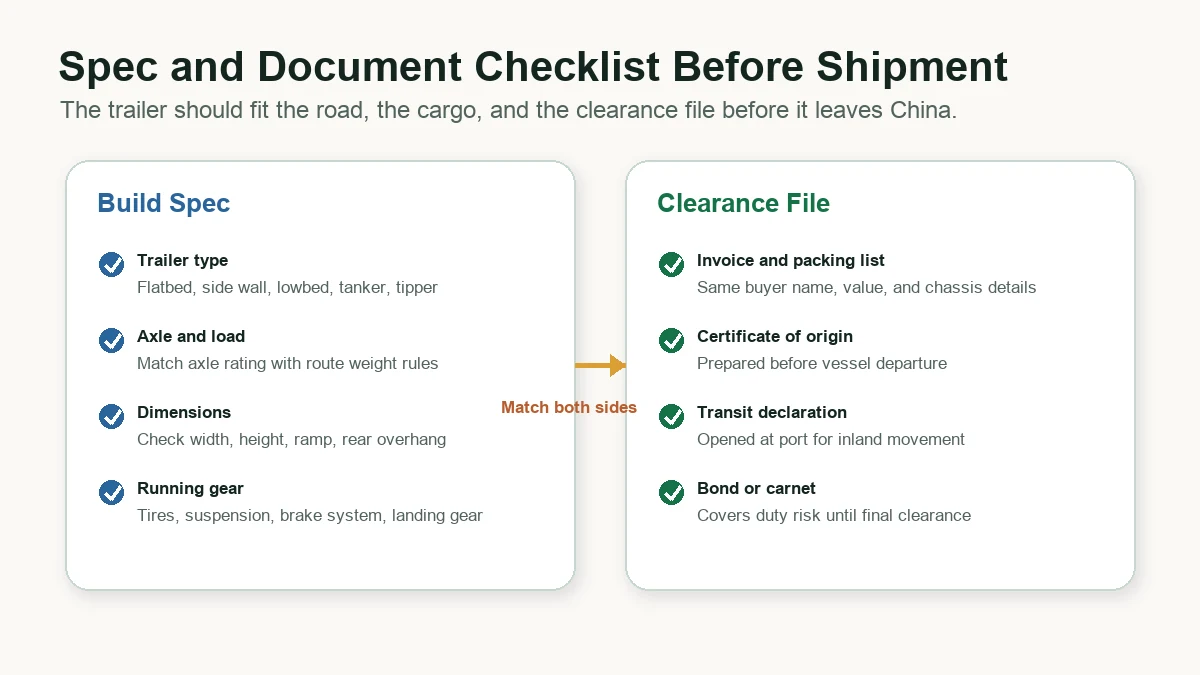
Because trailers are built new and to order, you fix the type, load rating, and configuration before shipping. That is easier than reworking a unit after it lands. Spec it for your roads, your goods, and your route.
For general cargo, compare the 40 ft 3 axle flatbed container semi trailer and the 3-axle side wall cargo semi trailer. For heavy equipment, a lowbed semi-trailer or 13 m heavy-duty low bed semi trailer may fit better. For liquid cargo, review the fuel tank semi trailer.
Suspension and tires should also match the final route. The guide on choosing trailer suspension for the African market is useful when workshop access is limited. For heat, load, and rough-road wear, read trailer tire selection for African roads.
Q: Why does the supplier matter for clearance?
A: Correct, complete documents move the unit through borders. Wrong papers cause the longest delays.
A supplier who exports to the region knows the corridors, the ports, and the documents your border needs. That experience lowers your risk on the transit leg. To check our manufacturing background, see about FrogAuto. To compare product types, start from the semi trailer category.
Frequently Asked Questions
What raises the landed cost most for a landlocked buyer?
The transit leg usually raises the landed cost most. Border bonds, inland transport, clearing fees, and waiting time add up after sea freight.
Can I avoid paying duty in the transit countries?
Yes, with a transit bond or RCTG carnet. You then pay duty only in your own country, subject to the final customs rules in your destination market.
When should I arrange the bond?
Arrange the bond before the unit leaves the port. The carnet should cover the inland route from day one so the trailer can keep moving through border checks.
Which trailer type is safest for mixed inland cargo?
For many fleets, a flatbed or side wall trailer is flexible for containers, bagged goods, steel, and agriculture cargo. Heavy machinery usually needs a lowbed. Fuel or liquid work should use a tanker built for that cargo.
What should I check when the trailer arrives inland?
Check the chassis number, tires, rims, lights, air lines, brake chambers, kingpin area, landing gear, paint damage, spare parts, accessories, and final handover photos before fleet work begins.
Final Import Plan
Importing a trailer to a landlocked country comes down to three habits. Choose the corridor that fits your country. Plan the documents and duty before you ship. Spec the trailer for your roads and your load.
The next step depends on where you are. If you are still choosing a unit, view our product overview to compare trailer types. If you are ready to plan delivery, contact us to confirm the spec, documents, RoRo port, and transit route to your country.
Ready to confirm your trailer route and spec?
Send the destination country, port option, cargo type, payload, and tractor details. FrogAuto can help check route fit, trailer build, spare parts, and export documents before shipment.