
Direct answer: A used semi-trailer inspection should check the frame, welds, crossmembers, axles, suspension, hubs, tires, brake system, kingpin, landing gear, lights, deck or tank body, documents, repair history, and chassis number before price negotiation. If the buyer cannot inspect these points clearly, the trailer price is not safe.
A used semi-trailer can save money, but it can also hide expensive repairs. This is especially true on African routes where heat, overload, rough roads, port waiting, and limited parts supply can turn small defects into downtime.
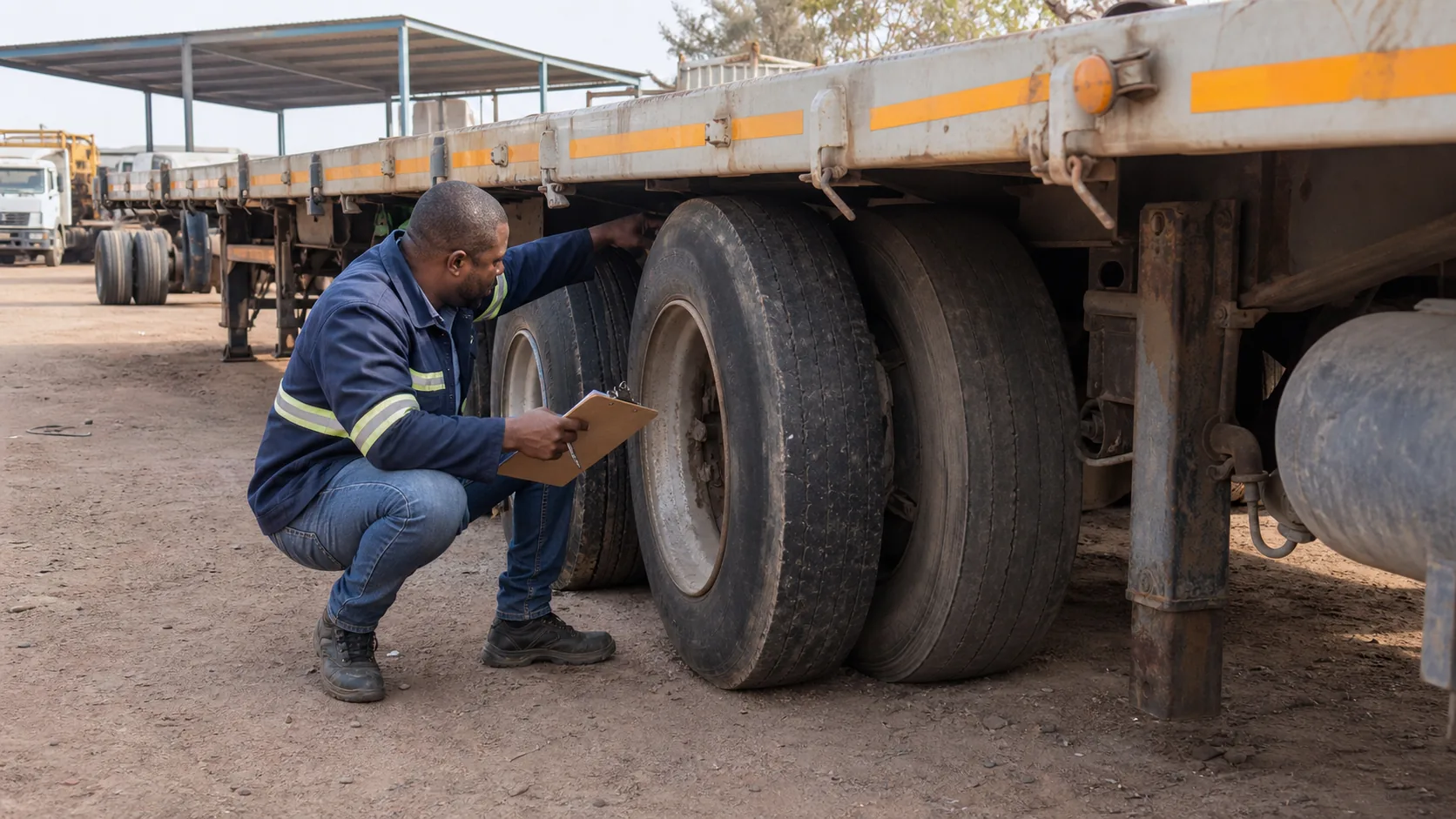
Quick Buyer Decisions
- Inspect structure before price.
- Check chassis number and documents before deposit.
- Treat frame cracks, severe rust, axle damage, and brake faults as major price risks.
- Inspect tires by age, wear pattern, cuts, and load rating.
- Check kingpin and landing gear because they affect safe coupling.
- Compare repair cost with the price of a new or refurbished trailer.
Why Used Trailer Inspection Matters
A used semi-trailer does not fail all at once. It often fails through small signs: uneven tire wear, bent crossmembers, weak brake response, old air hoses, rusty welds, hot hubs, loose suspension, or a worn kingpin. A buyer who misses these signs may pay again through repairs, delays, tire loss, or unsafe road operation.
The U.S. eCFR Part 393 is not African law, but it is a useful technical reference because it organizes safety topics such as brakes, lighting, tires, coupling devices, wheels, and frames. African buyers should still follow local rules, but the same inspection categories are practical.
Inspection Order
Use a fixed order. Do not jump from tire price to paint condition. Structure and safety come first.
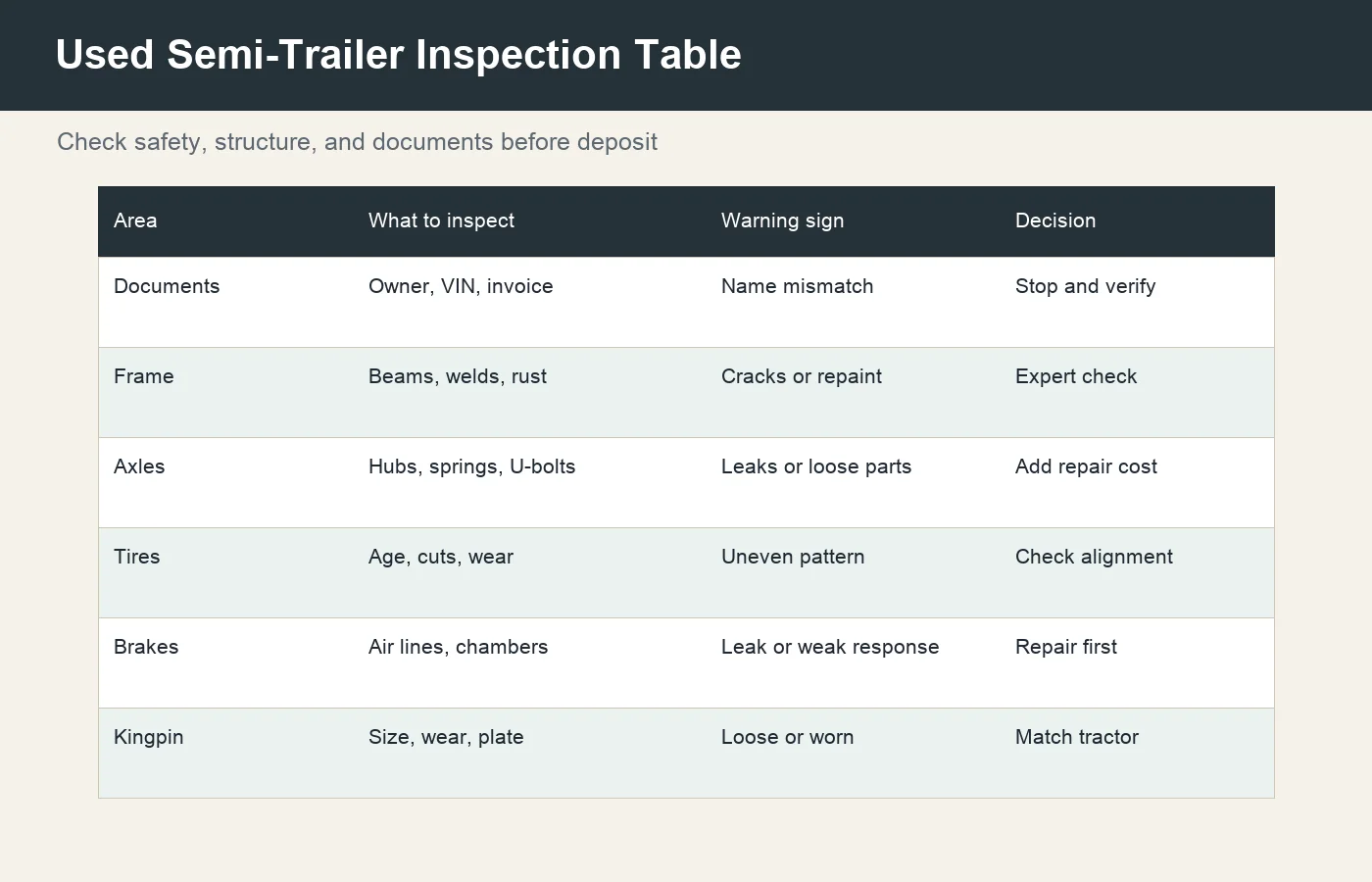
1. Confirm identity and documents. 2. Inspect frame and welds. 3. Check axles, suspension, hubs, and wheels. 4. Check tires. 5. Inspect brake system and air lines. 6. Check kingpin, upper plate, and coupling area. 7. Inspect landing gear. 8. Check deck, tank, side wall, ramps, or special body. 9. Test lights and electrical plug. 10. Estimate repair cost before final price.
1. Documents and Identity
Start with documents. If the documents do not match the trailer, the inspection should stop.
Check:
- Seller name.
- Ownership or sale document.
- Chassis number or VIN.
- Trailer plate or registration record where available.
- Invoice description.
- Import or customs document if already imported.
- Previous repair records if available.
- Photos of chassis number and main plates.
The World Customs Organization explains on its Harmonized System overview that HS product descriptions support customs tariffs and trade statistics. For used trailer buyers, the product description should be clear: flatbed semi-trailer, lowbed semi-trailer, tanker semi-trailer, skeletal trailer, or another exact type.
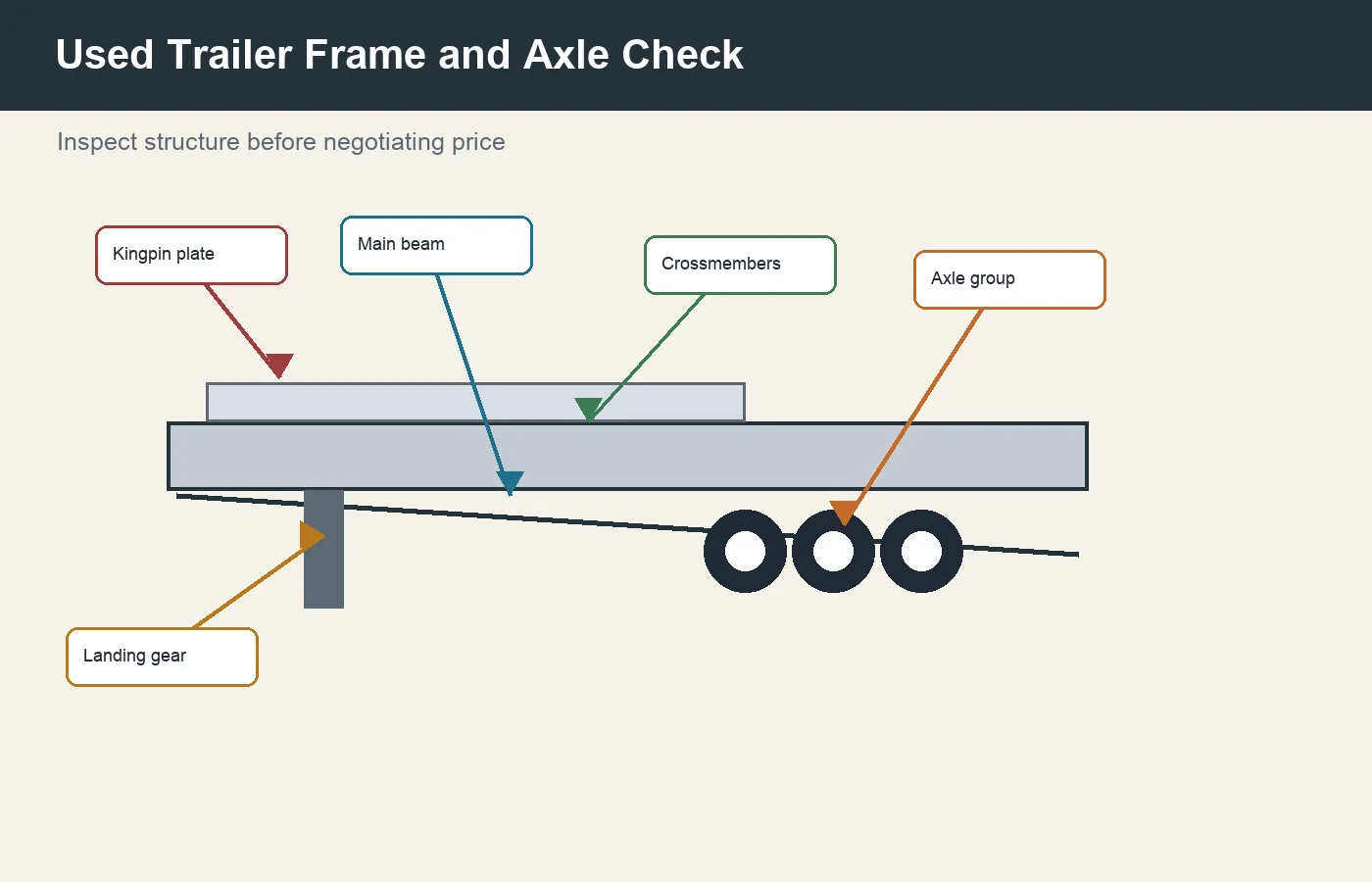
2. Frame and Chassis
The frame is the most important part of a used trailer. A cheap trailer with a damaged frame can become the most expensive choice.
Look for:
- Cracks near the kingpin plate.
- Cracks around suspension hangers.
- Bent main beams.
- Twisted frame.
- Rust holes.
- Fresh paint hiding repair areas.
- Uneven crossmembers.
- Poor welding repair.
- Deck sag.
- Loose brackets.
Use a hammer tap only if the seller allows it. Use a flashlight. Look under the trailer, not only at the side view. If the frame looks freshly painted but the underside is rusty, ask why.
3. Axles, Suspension, Hubs, and Wheels
Axle and suspension problems can create tire wear, brake problems, and downtime. A used trailer that looks straight from the side may still have axle or suspension issues.
Check:
- Axle brand and model.
- Axle alignment signs.
- Leaking hub seals.
- Loose wheel nuts.
- Cracked rims.
- Worn bushings.
- Broken leaf springs.
- Loose U-bolts.
- Air suspension bag damage if fitted.
- Uneven ride height.
If the trailer will work on rough roads, read trailer axle spare parts in Africa before buying. Spare parts availability can decide whether a used trailer is practical.
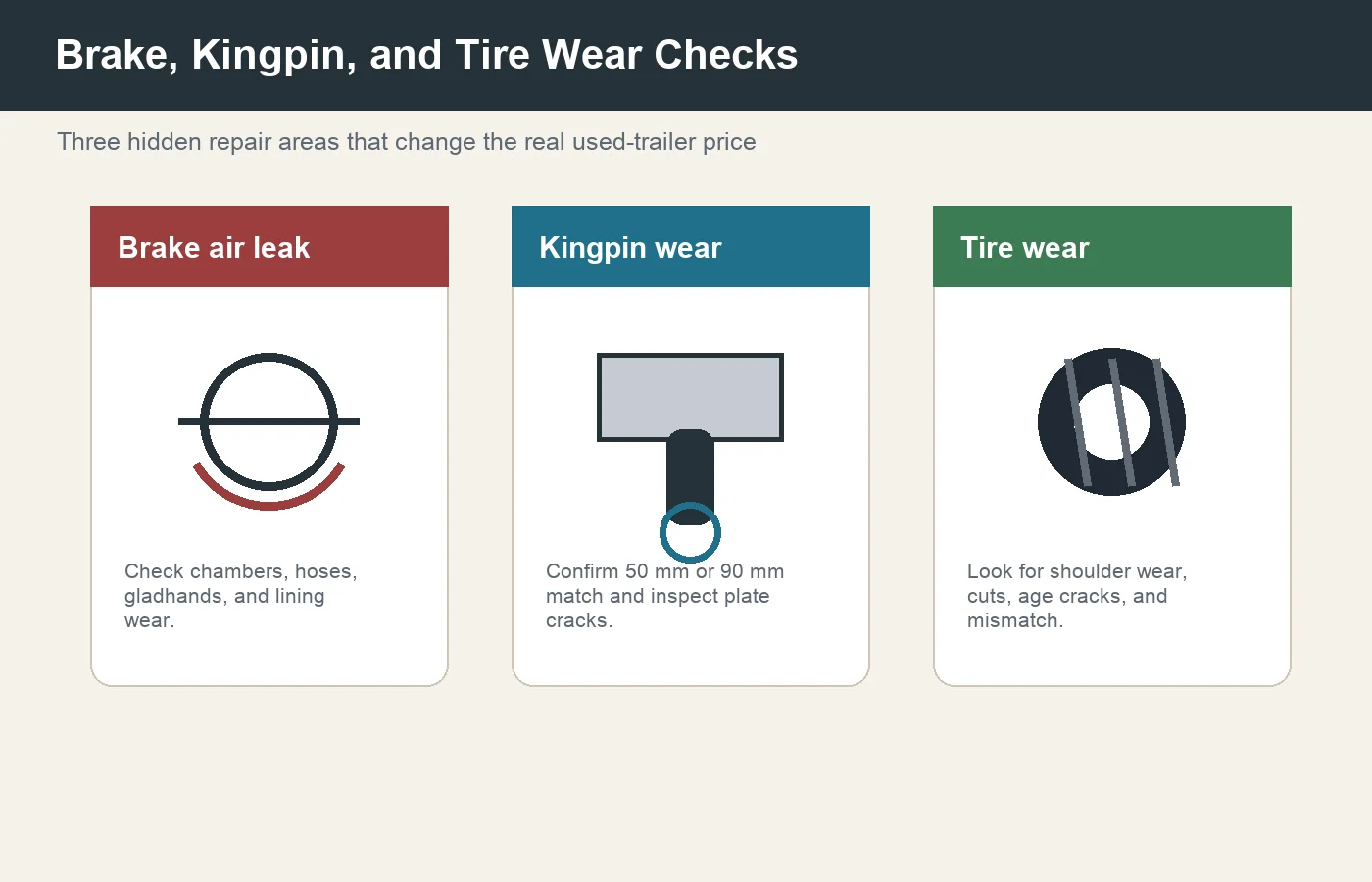
4. Tires
Tires show the trailer's history. Uneven wear can point to axle misalignment, overload, suspension damage, brake drag, or bad pressure control.
Check:
- Tire size and load rating.
- Tread depth.
- Sidewall cuts.
- Shoulder wear.
- Flat spots.
- Different tire brands on one axle.
- Cracks from age or heat.
- Repair patches.
- Valve condition.
- Matching dual tires.
For African road use, see trailer tire selection for African roads. Tire choice should match payload, heat, road surface, and service access.
5. Brake System and Air Lines
Brake repairs can be expensive and unsafe to ignore. Inspect before negotiation.
Check:
- Brake chambers.
- Slack adjusters.
- Brake linings.
- Drums or discs.
- Air tanks.
- Air hoses.
- Gladhand seals.
- ABS wiring if fitted.
- Air leaks.
- Brake response during yard test if possible.
If the seller says "only small air leak," treat it as a repair item. A small air leak can become a route delay. The guide on trailer brake system maintenance in Africa explains why tropical climates and rough roads make brake checks important.
Not sure if a used trailer is worth the repair risk?
Compare used-trailer inspection points with new and configured semi-trailer options for your route.
6. Kingpin, Upper Plate, and Coupling Area
The kingpin connects the trailer to the tractor. A worn or damaged kingpin is a serious issue.
Check:
- Kingpin wear.
- Kingpin size: 50 mm or 90 mm.
- Upper plate cracks.
- Loose mounting bolts.
- Weld repairs near the kingpin.
- Damage from poor coupling.
- Landing gear clearance when coupled.
The ISO online browsing platform includes pages for ISO 337, the 50 mm semi-trailer fifth wheel coupling pin standard, and ISO 4086, the 90 mm fifth wheel coupling pin standard. Buyers should confirm the tractor fifth wheel matches the trailer kingpin before payment.
For more detail, read trailer kingpin size in Africa and trailer fifth wheel coupling types.
7. Landing Gear, Lights, and Electrical System
Landing gear problems can stop loading and coupling. Electrical problems can create road fines and delays.
Check:
- Landing gear legs.
- Crank handle.
- Mounting brackets.
- Foot plates.
- Support under load.
- Electrical plug.
- Brake lights.
- Turn signals.
- Side marker lights.
- Reflectors.
- Wiring damage.
Do not ignore missing lights. A trailer that cannot pass road inspection may not be ready for work.
8. Deck, Tank, Side Wall, Ramp, or Special Body
The body check depends on trailer type.
For flatbed trailers, inspect the deck, lashing points, twist locks, crossmembers, and side edges. For lowbed trailers, inspect ramps, hinges, hydraulic cylinders, deck height, and rear structure. For tankers, inspect tank shell, compartments, manholes, valves, discharge fittings, and obvious repair marks. For side wall trailers, inspect wall panels, hinges, locks, and floor support.
If the trailer type is wrong for the route, repairs will not solve the problem. A flatbed is not a lowbed. A tanker is not a general cargo trailer. Match the trailer to the work before negotiating price.
Red Flag Table
| Red flag | What it may mean | Buyer action |
|---|---|---|
| Frame crack near kingpin | High stress or bad repair | Avoid or require expert inspection |
| Fresh paint over rusty welds | Hidden repair | Inspect underside and ask for history |
| Uneven tire wear | Axle, suspension, or overload issue | Add alignment and repair cost |
| Air leak | Brake system fault | Price repair before purchase |
| Leaking hub seal | Bearing or seal issue | Inspect hub and axle parts |
| Bent ramp or deck | Overload or rough use | Check body repair cost |
| Missing documents | Ownership or import risk | Do not pay deposit |
| Wrong kingpin match | Coupling risk | Confirm tractor and trailer match |
When a New or Refurbished Trailer Is Safer
A used trailer is not always cheaper after repair. A new or refurbished trailer may be safer when:
- The route is mining, construction, or heavy equipment transport.
- The used trailer frame has cracks.
- The buyer cannot confirm documents.
- Tire, brake, and axle repair cost is high.
- Spare parts are hard to find locally.
- The buyer needs warranty support.
- The fleet cannot afford early downtime.
For general freight, compare the 40 ft 3 axle flatbed container semi trailer. For heavy equipment, compare the 13 m heavy-duty low bed semi-trailer with hydraulic ramps. For fuel work, compare the fuel tank semi trailer.
Price Negotiation Method
Do not negotiate from asking price only. Use repair cost.
Build a simple table:
| Inspection area | Repair estimate | Urgency |
|---|---|---|
| Frame and welds | High if cracked | Immediate |
| Tires | Medium to high | Before first route |
| Brakes | Medium to high | Immediate |
| Axles and hubs | Medium to high | Immediate if leaking or hot |
| Lights and wiring | Low to medium | Before road use |
| Paint and cosmetic items | Low | Later |
Then compare total repair cost with the cost of a new or configured trailer. If the used trailer is only slightly cheaper after repairs, choose the safer option.
FAQ
What is the first thing to check on a used semi-trailer?
Check identity and documents first. Then inspect the frame and kingpin area. If documents or structure are weak, the price may not matter.
Is rust always a deal breaker?
Surface rust is common. Deep rust, rust holes, weak weld areas, or rust around structural points are serious risks.
How do I know if the axle is bad?
Look for uneven tire wear, leaking hubs, loose suspension parts, hot hubs after movement, cracked rims, and poor alignment signs. A mechanic should inspect the axle before purchase.
Should I buy a used tanker trailer?
Only with strong inspection. Tank shell, valves, compartments, discharge fittings, and safety equipment must be checked carefully. A used tanker can carry higher safety and compliance risk than a flatbed.
Related Reading
- Trailer tire selection for African roads
- Trailer brake system maintenance in Africa
- Trailer axle spare parts in Africa
- Trailer kingpin size in Africa
- How to verify a Chinese trailer manufacturer
Final Inspection Rule
A used semi-trailer is a good purchase only when the frame, axles, brakes, tires, kingpin, documents, and repair cost are clear. Inspect before price. Estimate repairs before deposit. If the risk is unclear, compare a new or refurbished trailer before you commit.