
Marker lights fail more than any other trailer light. Most of the time the cause is simple: a bad ground, a corroded connector, or a worn wire. This guide shows you how to find the fault fast, fix it, and stop it coming back. The focus is heavy haul on African roads.
If you are buying a new trailer or checking a used one, treat lighting as part of the trailer spec, not only a small repair job. Buyers comparing models in the Semi Trailer product category should confirm lamp type, plug standard, voltage, wiring protection, and pre-shipment test photos before delivery.
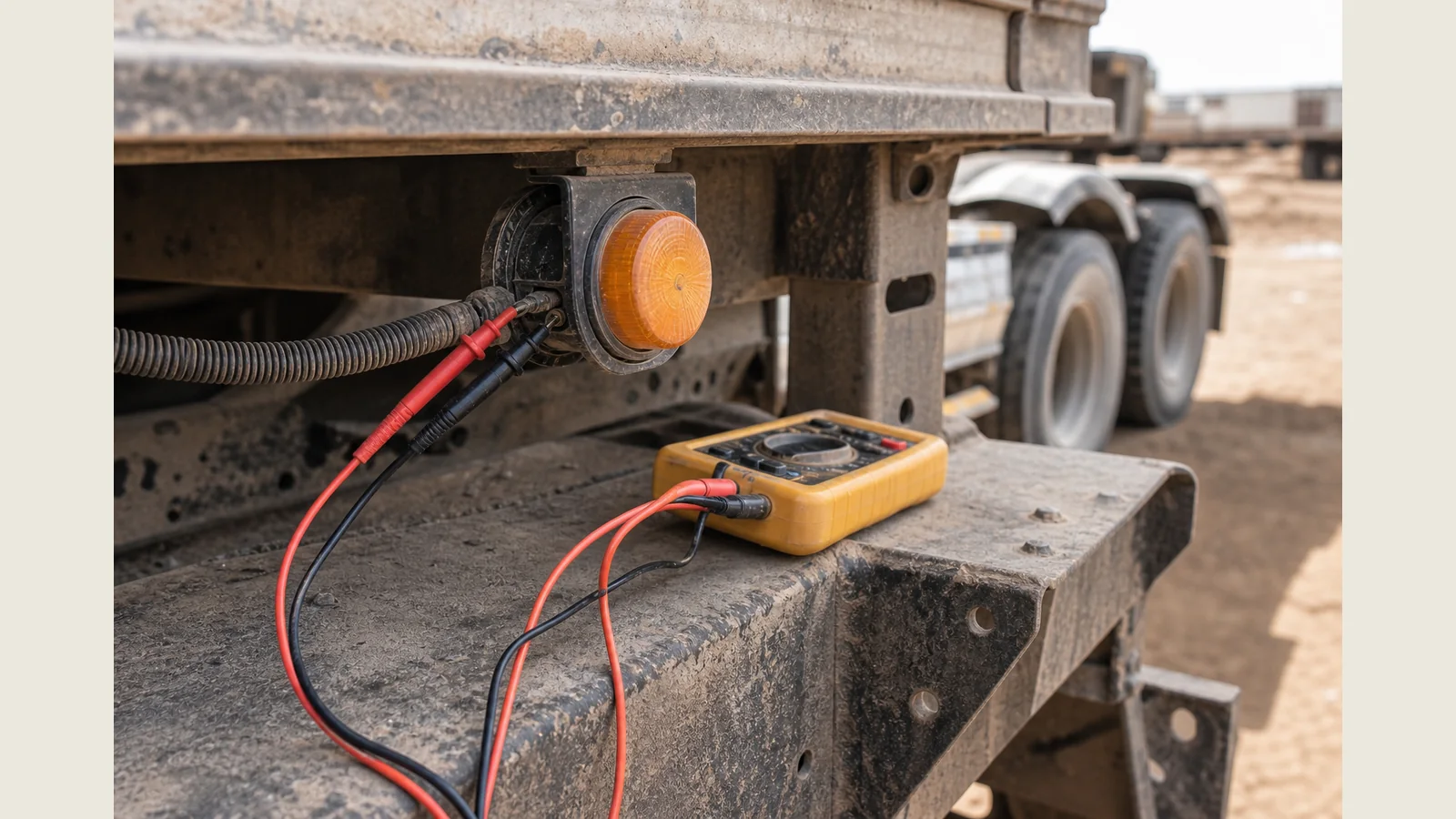
What Marker Lights Are, and Why They Fail First
Marker lights: The small clearance and side lights that show the outline of your trailer at night. They are also called clearance lights or running lights.
Marker lights mark the width and length of the trailer. They tell other drivers how big you are in the dark. In most markets they are a legal requirement. A trailer with dead markers can be stopped, fined, or delayed at a checkpoint.
These lights fail first for three reasons. They sit on the outer edges of the trailer, exposed to water and dust. They run on a low-power circuit that is sensitive to a weak ground. They also depend on clean metal contact to work. On rough African roads, constant vibration loosens every one of these points.
If the trailer uses a central wiring box, the marker circuit usually passes through it. The guide on semi trailer junction box wiring explains how the main cable splits into marker, brake, turn, tail, and ground circuits.
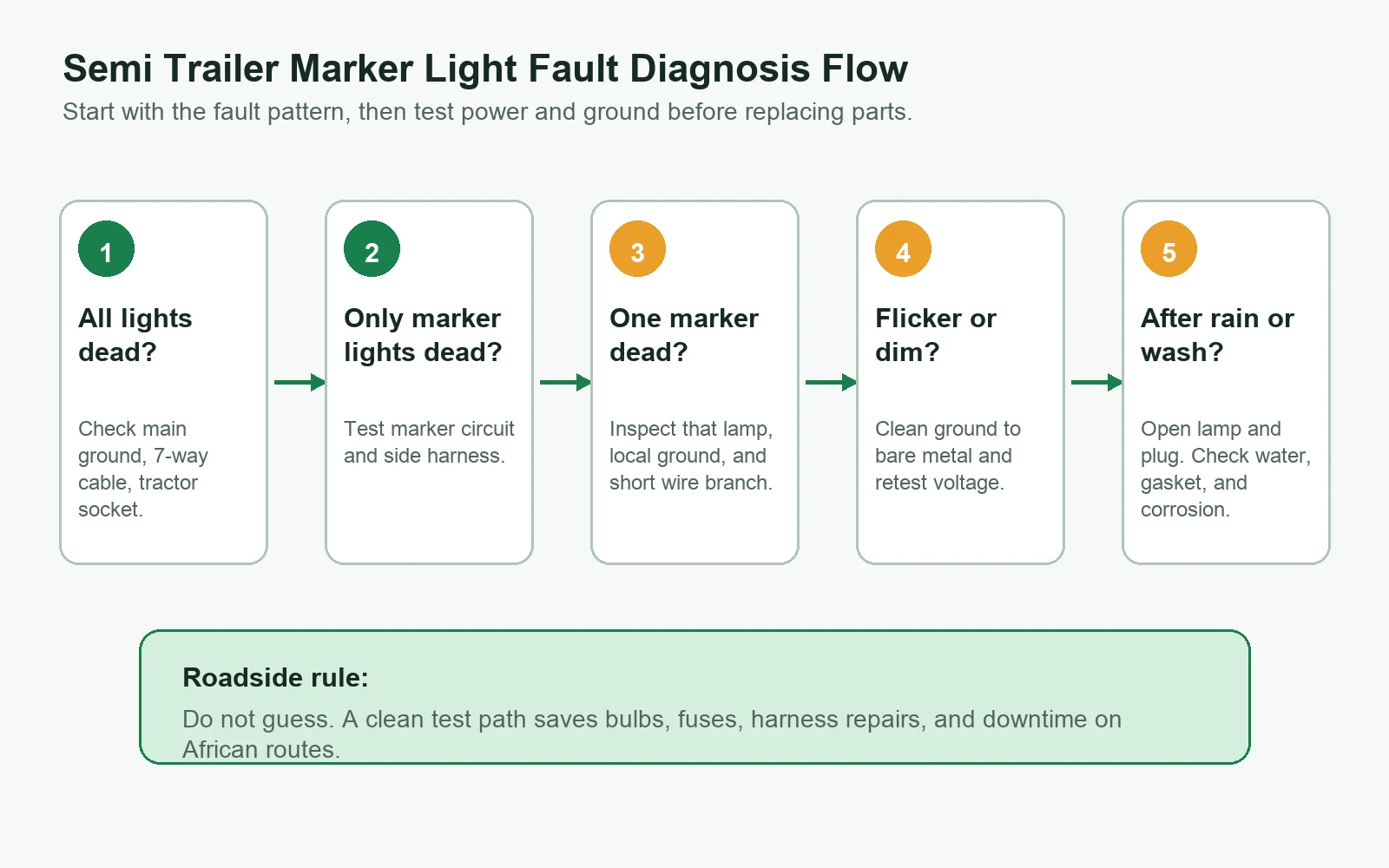
First: Are All Lights Dead, or Just the Markers?
This one question saves you hours. Answer it before you touch a wire.
Q: All trailer lights are dead.
A: The problem is often the main ground, main power feed, tractor socket, or 7-way cable. Start at the connector.
Q: Only the marker lights are out, but other lights work.
A: The problem is usually the marker circuit or the marker grounds. The main feed is likely working.
Here is how the cases differ.
| Symptom | Likely cause | Where to look |
|---|---|---|
| All lights dead | Main ground, tractor socket, 7-way cable | Trailer connector, ground stud, fuse |
| Only markers dead | Marker circuit or marker grounds | Marker wire, side harness, each lamp ground |
| Markers flicker or dim | Loose or corroded ground | Frame ground point, lamp mount, plug pins |
| One marker out | That lamp or its local ground | Single light unit and short branch wire |
Marker lights run on their own circuit in the trailer plug. So when only they fail, you can ignore most of the brake and turn-signal system and focus on one circuit.
The 3 Most Common Causes, and the Fix for Each
Most marker light faults trace back to three causes. Here is each one, and how to fix it.
| Cause | What you see | The fix |
|---|---|---|
| Bad ground | Flicker, dim lights, or dead lights | Clean ground to bare frame metal and tighten the fastener |
| Corroded connector | Works sometimes, not always | Clean pins, dry the plug, add dielectric grease |
| Worn or broken wire | Dead after a bump, turn, or rain | Find the rub point, repair the wire, and seal the joint |
A few notes matter on the road:
- Ground is the number one cause. Check it first, every time.
- LED markers need a clean ground. They run on low current and are sensitive to voltage drop.
- Wires break at pivot points. Check where the harness bends, rubs, or exits the frame.
- Corrosion hides inside connectors. Open them and look, do not guess.
For rainy, humid, and coastal operations, read the guide on semi-trailer maintenance in tropical climate. Lighting checks should be part of the same plan as rust control, brake inspection, tire inspection, and wiring protection.
Step-by-Step: Find the Fault Fast
Work from the tractor side to the trailer side. This keeps the diagnosis clean.
- Disconnect the trailer from the tractor first.
- Test the truck-side plug. With lights on, check for power at the marker pin.
- If there is no power there, the fault is on the tractor, not the trailer.
- If power is there, the fault is on the trailer. Move to the trailer side.
- Check the ground stud. Clean it to bare metal and retest.
- Open the connector. Look for corrosion, loose pins, mud, and water.
- Trace the marker wire. Look for rubbed, pinched, or broken sections.
- Check fuses and relays last, using a meter or test light.
Most faults are found by step 5. A clean ground fixes more marker lights than any new part.
Plug, Water, and Corrosion Checks
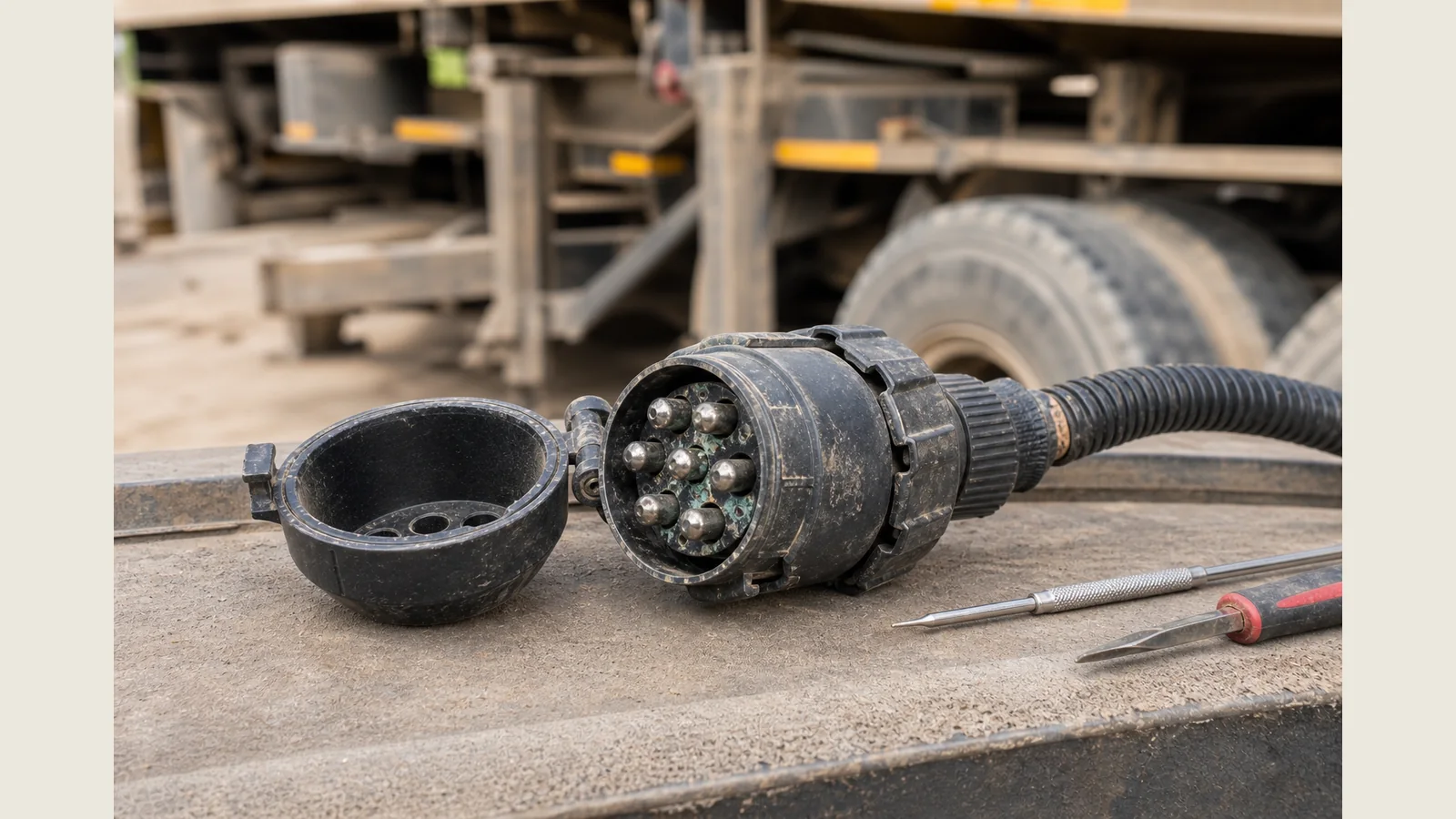
The tractor and trailer plug should be checked before replacing many lamps. A bad plug can make good lights look bad.
Check:
- Plug pins.
- Socket corrosion.
- Loose cable strain relief.
- Bent pins.
- Water inside the plug.
- Wrong wiring after repair.
- Damaged pigtail cable.
- Poor contact when the trailer turns.
For tractor matching, the HOWO NX371 6×4 Tractor Truck for Semi Trailer Haulage should be checked against the trailer electrical connector before work starts. The tractor, trailer plug, lights, brakes, and air lines should be tested as one combination.
Water entry is another common reason semi trailer marker lights stop working. It can enter through cracked lamp lenses, poor gaskets, old sealant, damaged cable holes, or unprotected connectors. If upper marker lights are failing after rain, also inspect roof joints and upper body seams. The article on semi trailer roof sealant in Africa explains how water can enter body seams and create wider maintenance problems.
Need trailer wiring checked before shipment?
Send your tractor voltage, plug type, route, and trailer model. FrogAuto can help confirm marker lights, connector wiring, sealing, and test photos before delivery.
Built Right: How to Stop Marker Light Faults on African Roads
The real fix happens before delivery. A trailer built and wired right does not keep losing its lights.
Built right means:
- Sealed lights and connectors, so water and dust stay out.
- Grounds bolted to bare frame metal, not paint or rust.
- Correct wire gauge for the voltage, with no thin sections.
- The right voltage and plug for your tractors, 12V or 24V.
- Markers routed away from rub and pinch points.
- A protected junction box, mounted where road spray and stones do less damage.
Different trailer types need different wiring protection. A 40 ft 3 Axle Flatbed Container Semi Trailer should protect marker wiring from cargo straps, forklift contact, and frame rubbing. A Fuel Tank Semi Trailer needs stricter electrical discipline because fleet safety procedures are tighter around fuel distribution.
African fleets run hard on rough roads. Marker lights take the worst of it. A trailer wired and sealed for these conditions stops the repeat failures that cost road time. For a fleet, fewer roadside light faults means fewer stops, fewer fines, and more uptime.
Pre-Shipment Electrical Inspection Before Export
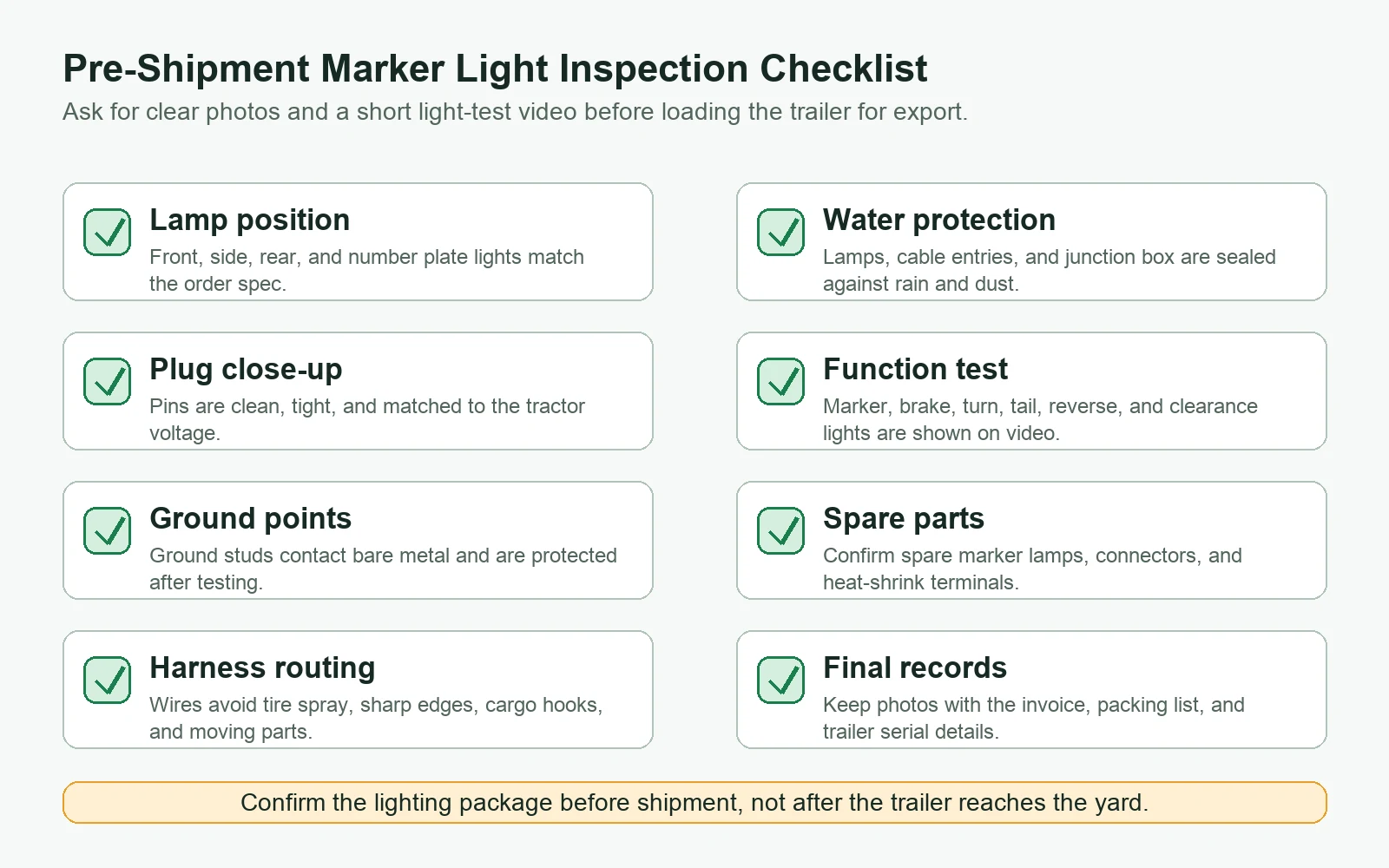
Before shipping from China, ask for a simple light-test video. The supplier should connect the trailer to a tractor or test box and show each lighting function.
Ask for:
- Side marker lights on both sides.
- Front clearance lights.
- Rear lights.
- Brake lights.
- Turn signals.
- Reverse light if fitted.
- Number plate light where required.
- Electrical plug close-up.
- Harness routing photos.
- Ground point photos.
If buying used equipment, read the used semi-trailer inspection checklist before deposit. Used trailers can hide wiring repairs under new paint or under the frame. For fleet spare-parts planning, the guide on trailer axle spare parts in Africa is useful because the same logic applies to electrical parts: keep the small fast-moving items that stop the trailer leaving the yard.
FAQ
Why are my semi trailer marker lights not working?
The most common reasons are weak ground, no power, a bad lamp unit, corrosion, water entry, a broken side harness, a blown fuse, or a bad tractor-trailer plug.
Should I replace all marker lights at once?
Not always. Test power and ground first. If several old lights are cracked, corroded, or different types, replacing them together may reduce future downtime.
Can a bad ground make trailer lights flicker?
Yes. A weak ground can make marker lights dim, flicker, or work only when the trailer moves. Clean the ground point and test continuity before changing many parts.
Do LED marker lights need different checks?
LED lights still need power, ground, correct polarity, dry connectors, and protected wiring. A sealed LED unit can fail if water enters or voltage supply is poor.
What should African buyers check before shipment?
Ask for a lighting test video, plug close-up, harness routing photos, lamp position photos, and ground point photos before the trailer is loaded for export.
Final Buyer Advice
When semi trailer marker lights are not working, follow the fault path. Check power, ground, plug, fuse, lamp, wiring, corrosion, and water entry. A clear process avoids random parts replacement and reduces downtime on African routes.
To see the new semi trailers FrogAuto supplies, view the product overview or compare options in the Semi Trailer category. Once you know your tractor voltage and route, confirm the lighting, wiring, and sealing spec before your order is built.
Ready to confirm trailer lighting specs?
Tell us your destination country, tractor voltage, trailer type, and road conditions. We will help match marker lights, plug standard, wiring protection, and spare-parts needs.