
On African roads, most trailer ABS faults come from dust, water, rough roads, loose wiring, and weak maintenance habits. The ABS control module rarely fails first. Keep the wheel sensors clean, the harness clipped, the connectors sealed, and the air system dry, and the ABS warning light is much less likely to stay on.
This guide explains what trailer ABS does, why the warning light comes on, how to maintain the system in harsh road conditions, and how to specify a new trailer brake system that can hold up on African routes.
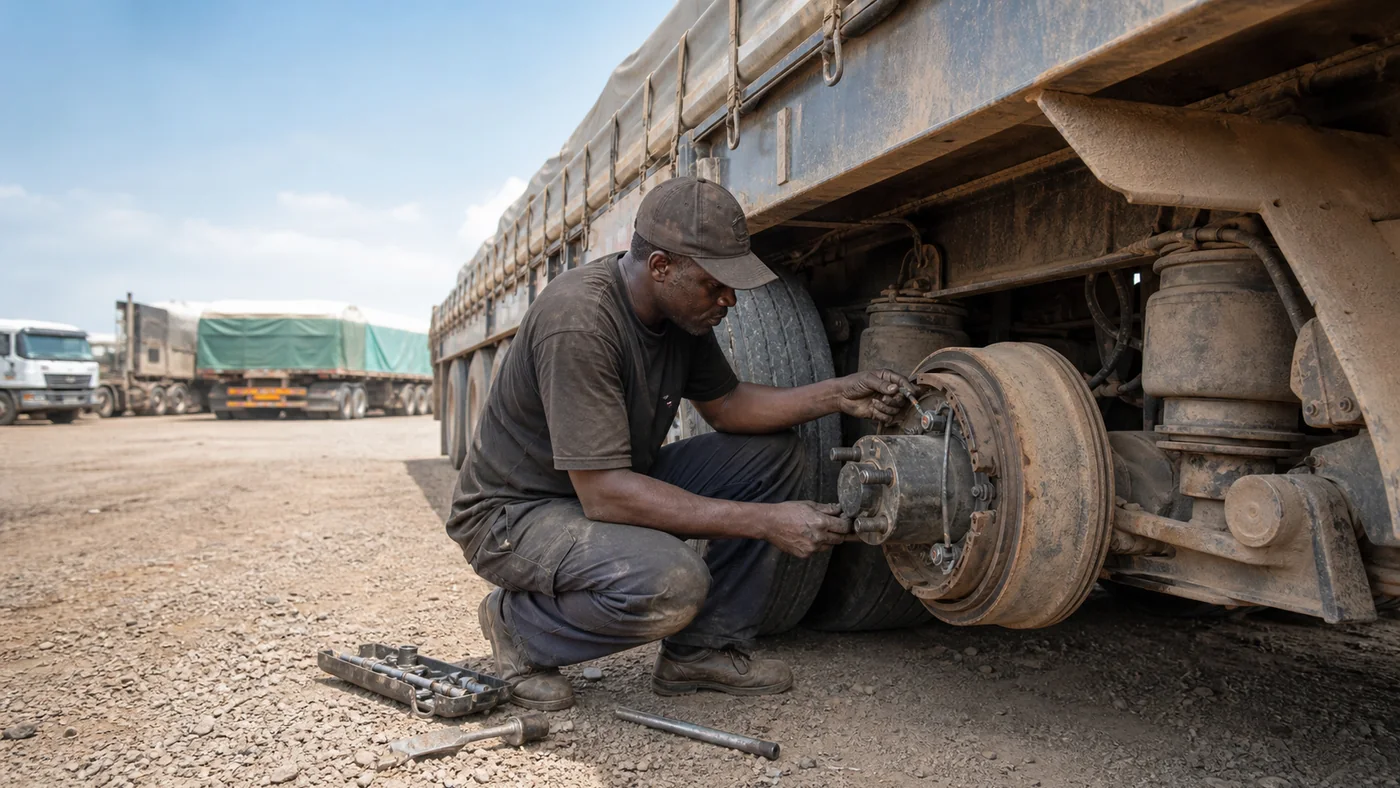
What Trailer ABS Does, and Why African Roads Stress It
Trailer ABS (Anti-lock Braking System): An electronic system that helps stop trailer wheels from locking during hard braking. It helps the trailer stay stable and straight.
ABS sits on top of the air brake system. It watches wheel speed through sensors at the wheel end. When a wheel starts to lock, the system releases brake pressure on that wheel for a moment, then applies it again. This repeats quickly, so the tire can keep some grip instead of sliding.
That control matters most on loose surfaces. On gravel, sand, mud, or wet tar, a locked wheel can slide. A sliding trailer can swing out of line. ABS helps the trailer keep a straighter path during hard braking.
The system is simple. The working conditions are not. Dust coats the sensor face. Water reaches the harness and plugs. Rough roads shake connectors loose. Heat and vibration age the cable routing faster. Every trip adds stress that a smooth highway would not.
The wheel speed sensor sits at the wheel end. That is one of the dirtiest, hottest, most exposed places on the trailer. So many ABS faults start there. For wider brake, tire, rust, and rainy-season checks, use this guide together with our semi-trailer maintenance in tropical climate article.
An ABS fault does not normally stop the trailer. Your service brakes still work. But you lose anti-lock control. On loose gravel or wet roads, that raises skid risk. It can also fail a roadside inspection and cost road days.
Why the Trailer ABS Light Comes On: Common Causes
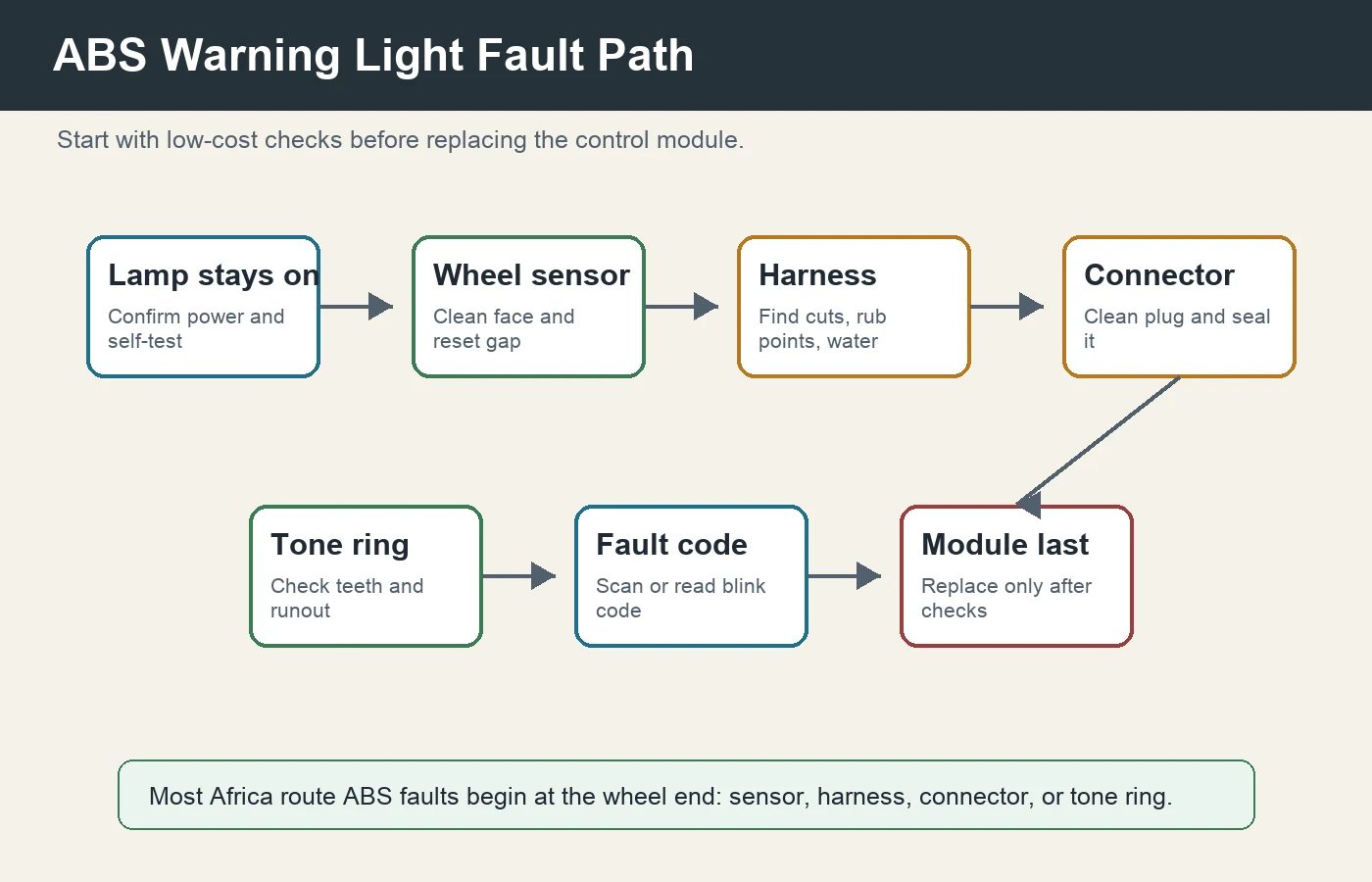
Most ABS warning lights trace back to a sensor, wire, connector, or tone ring. Start there before replacing expensive parts.
| Cause | What happens | How common in Africa |
|---|---|---|
| Wheel speed sensor dirty or misaligned | Dust fills the air gap; the sensor gives a weak or false signal | Very common |
| Damaged or corroded wiring | Water, vibration, and rubbing break the signal | Very common |
| Loose or corroded connector | The plug or pigtail loses contact | Common |
| Tone ring damage | Bent, dirty, or missing teeth give a false reading | Common |
| Blown fuse or relay | The system loses power | Less common |
| ABS module fault | The control unit cannot read or control the circuit | Least common |
Work through the cheap and likely causes first:
- Check the sensor first. Clean it and push it back firmly against the tone ring.
- Check the wiring. Look for cuts, rub points, hanging loops, and rust along the route.
- Check the connectors. Clean them, dry them, and seal them with dielectric grease.
- Read the fault code. A scan tool or blink code can point to the exact wheel.
- Replace the module last. The control module fails less often than wheel-end parts.
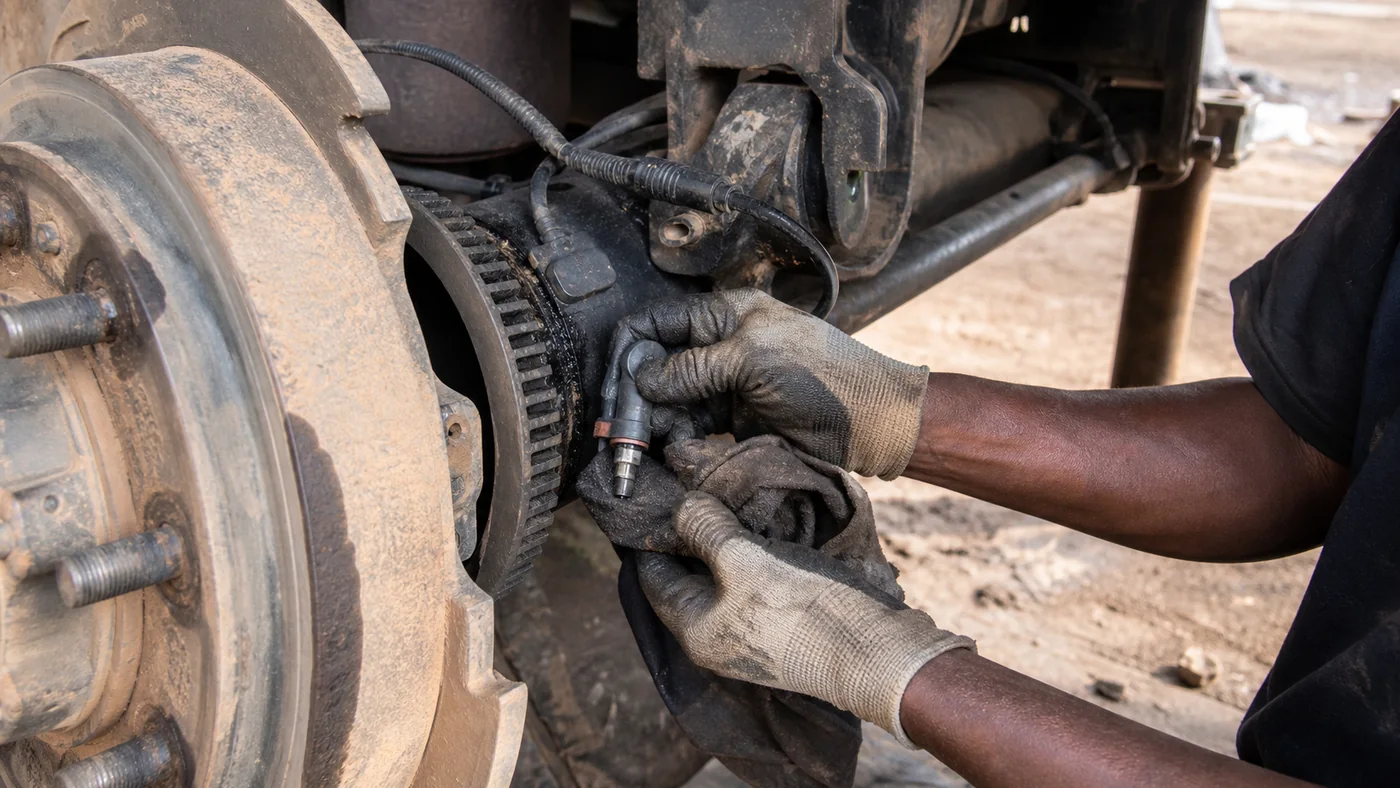
Many trailers let you pull a blink code without a scan tool. Turn on power to the trailer. The ABS lamp flashes a code. Count the flashes against the maker's chart. This helps you find the wheel or circuit to inspect first.
If the fault is tied to the plug, junction box, or lighting harness, the semi-trailer junction box wiring diagram can help your workshop trace pins, circuits, and common wiring checks.
Q: Can I keep driving with the trailer ABS light on?
A: The service brakes may still work, so you can reach a safe stop. But fix it fast. You lose anti-lock control on loose surfaces, and the trailer may fail inspection.
An ABS and Brake Maintenance Schedule for Harsh African Conditions
In dust, heat, humidity, and rough-road service, use a tighter schedule than a highway-only manual. Clean and check more often. Small habits prevent most ABS faults.
| Interval | Tasks |
|---|---|
| Daily pre-trip | Drain water from the air tanks. Watch the ABS lamp self-test. Check for air leaks. |
| Weekly | Clean wheel speed sensors. Check connectors and wiring. Inspect brake pads, drums, and linings. |
| Every 90 days | Do a full brake PM. Check the sensor air gap against the component manual. Inspect tone rings. Read stored fault codes. |
| Yearly | Replace the air dryer cartridge. Review fault-code history. Replace weak connectors and damaged harness clips. |
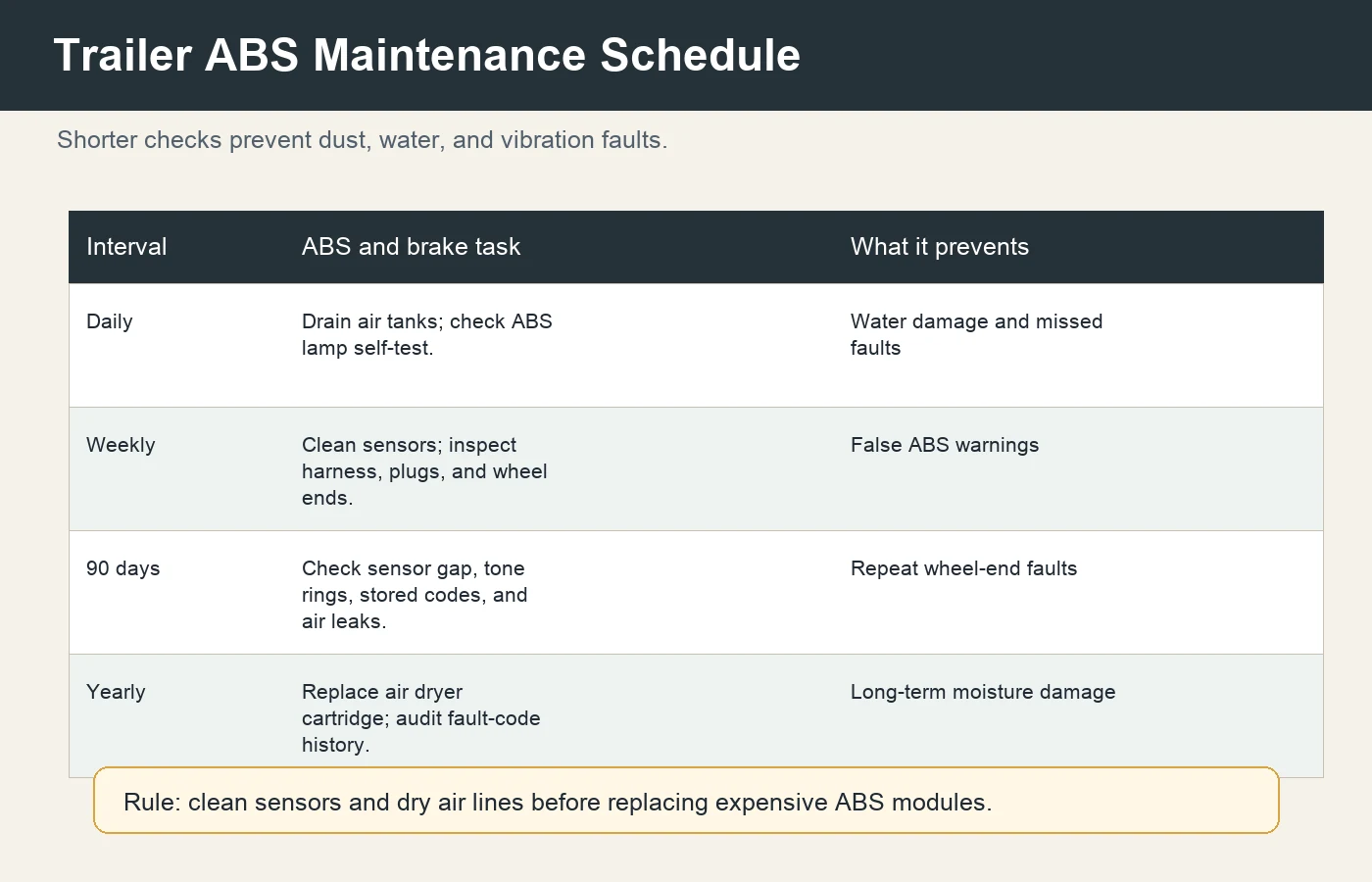
The wheel end fails most, so give it the most attention. Run this short check at every service:
- Clean the sensor face before every long trip.
- Push the sensor in firmly against the tone ring, then confirm the maker's gap requirement.
- Check the tone ring teeth. None should be bent, cracked, or missing.
- Secure the harness. No loose loops should hang near tires, springs, or moving parts.
- Seal the connectors. Dielectric grease helps keep water and dust out.
Clean the sensor the right way. Pull it out gently. Wipe the tip with a clean cloth. Do not use a hard scraper or wire brush. A scratched sensor tip can read badly. Then reinstall it according to the ABS supplier's service instructions.
Do not skip the daily air drain. It matters most on humid and coastal routes, such as Mombasa, Dar es Salaam, and Lagos. Water in the air system rusts valves and weakens braking. A 30-second drain each morning can prevent a costly repair later.
Keep a simple log. Write down each fault code and what you fixed. Over time, the log shows which wheel ends give repeat trouble. Then you can replace a weak sensor, connector, or harness before it strands a trailer.
Need a trailer brake setup that fits harsh routes?
Send your payload, road surface, tractor model, and brake brand preference. We can help confirm ABS, EBS, wiring, and axle brake specs before production.
How to Spec a New Trailer’s Brake System for Africa
A trailer built for African roads needs sealed, serviceable, brand-name brake parts from the start. Good components reduce maintenance load for years. Trailers are built new and made to order, so confirm the brake system before production.
Confirm these points when you order a new trailer:
- ABS brand. Ask for a serviceable brand such as WABCO, Haldex, or Bendix, based on local parts support.
- Sealed sensors and connectors. Better sealing keeps dust and water out at the wheel end.
- EBS option. Electronic braking can give faster, smoother response, especially for heavy fleet work.
- Axle and brake match. Match axle rating, brake size, tire load, and route surface.
- Spare parts supply. Order sensors, rings, connectors, and basic service parts with the trailer.
EBS (Electronic Braking System): A step up from ABS. It controls brake pressure electronically for faster response and steadier braking when the tractor and trailer are compatible.
Think about the whole wheel end, not only the sensor. The tone ring, harness, connector, brake chamber, drum, lining, tire, and suspension all share the same harsh environment. If one part is weak, the full brake system becomes harder to maintain.
For new-build selection, start from the trailer job:
- For container and port cargo, compare the 40 ft 3 axle flatbed container semi trailer.
- For mining and heavy equipment routes, review the 13 m heavy-duty low bed semi trailer with hydraulic ramps and check brake, axle, and ramp specs together.
- For liquid cargo, confirm sealed wiring and braking specs on the 30-40 ton fuel tanker semi trailer.
- For general cargo fleets, the 3-axle side wall cargo semi trailer can be matched with practical brake and axle configurations.
The cost case is simple. Cheap, unknown ABS parts can fail sooner in dust and heat. Then you chase faults and lose road days. A trailer with quality brake parts may cost more up front, but it can reduce downtime and repair cost over its life. For a fleet, that math usually favors the better build.
Also match brake planning with tires and axle load. Brake heat, tire load, and overload are connected. The guides on trailer tire selection for African roads and trailer axle load capacity for African roads are useful companion checks before confirming a fleet order.
Keeping Your Fleet Roadworthy: What to Confirm When You Source
For fleets and dealers, stable specs and parts supply matter more than a one-off low price. Consistent brake setups keep maintenance simple across the fleet. One ABS brand means one routine, one diagnostic method, and one set of spares.
Before buying, confirm these items in writing:
- ABS brand, sensor type, and diagnostic method.
- Axle brand, axle rating, brake size, and suspension match.
- Harness routing and connector protection.
- Air tank drain access and air dryer service plan.
- Spare wheel sensors, connectors, tone rings, and brake service parts.
- Port, route, and delivery method for the target country.
If you are buying used equipment or checking a supplier's yard stock, use our used semi-trailer inspection checklist before accepting the unit. If your route includes strict axle checks, also review trailer weight limits in African countries.
Good ABS maintenance in Africa comes down to three habits. Keep the sensors clean. Keep the wiring tight. Keep the air system dry. Do that, and the warning light stays off more often, the fleet stays legal, and your workshop spends less time chasing avoidable faults.
Frequently Asked Questions
What brake specs should I confirm before I buy?
Confirm the ABS brand, sensor type, axle and brake size, EBS option, air tank layout, harness routing, connector sealing, and spare parts supply. Get all of them in writing before production.
How do I keep ABS parts on hand in a remote area?
Buy a small stock of wheel speed sensors, tone rings, connectors, harness clips, and basic brake parts with the trailer. Keep one ABS brand across the fleet so spares fit more units.
Does one brake setup across the fleet really help?
Yes. One brake and ABS setup means one repair routine, one diagnostic habit, and fewer spare-part mistakes. This matters on remote routes where the right sensor or connector may not be available quickly.
How are new trailers delivered to Africa?
Many new trailers are delivered by RO-RO as complete units. Confirm the port, lead time, inland delivery plan, and inspection process before you order.
What should I do if the ABS fault keeps coming back?
Check the wheel-end record first. A repeat fault often points to one sensor, connector, tone ring, or harness section. Do not replace the control module until the wheel-end parts, power supply, and fault codes have been checked.
The next step depends on your fleet. If you run trailers now, build the 90-day ABS and brake check into your routine. If you are buying, specify the brake system for your roads from the start.
Planning a fleet order for African routes?
Send your payload, route surface, tractor model, destination port, and preferred brake brand. We can help confirm brake specs, ABS configuration, spare parts, and delivery details.