
How to Choose Trailer Suspension for the African Market: Leaf Spring vs Air Suspension
> Summary: Leaf spring suspension is usually easier to repair on rough African routes. Air suspension can protect cargo and tires on better corridors, but it needs better maintenance discipline and parts access.
Best for: Semi-trailer buyers deciding between mechanical suspension and air suspension for ports, mines, agriculture, construction, and long-haul cargo.
Quick Answer
Leaf spring suspension is usually easier to repair on rough African routes. Air suspension can protect cargo and tires on better corridors, but it needs better maintenance discipline and parts access. The buyer should decide from documents, route, cargo, workshop capacity, and cash-flow impact together. To compare the body types mentioned here against real export specifications, review FrogAuto’s semi-trailer category for African buyers before asking for a final quote.
Fast buyer rule
– Do not approve a quote until the trailer type, chassis identity, dimensions, and shipping term are written down.
– Ask a local agent or operator to verify customs, road-use, and route constraints before shipment.
– Keep the final decision tied to the first profitable route, not only the lowest factory price.
The Right Suspension Is The One Your Route Can Maintain
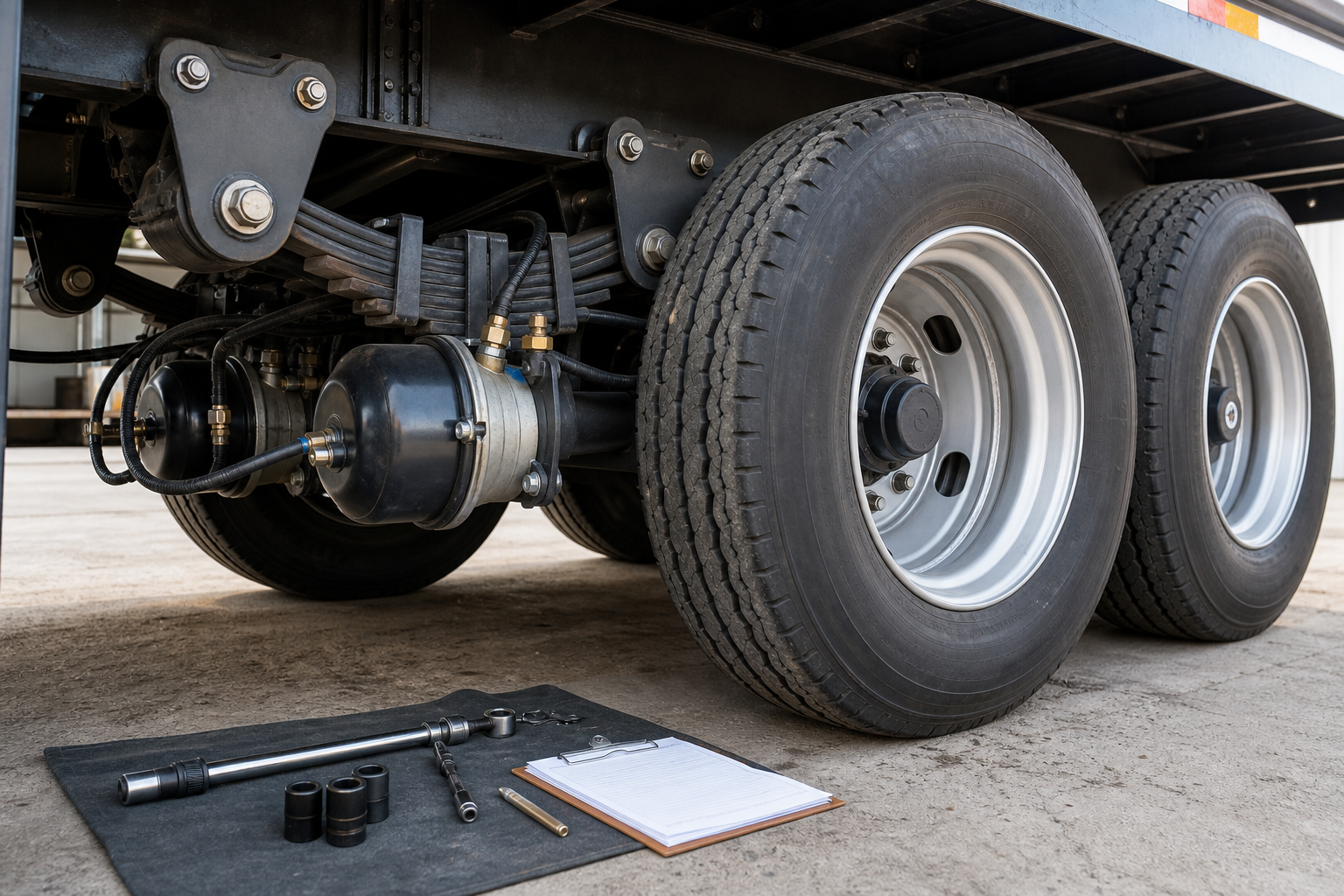
Choosing trailer suspension for the African market starts with one practical question: where will the trailer be repaired when something fails? Leaf spring suspension is simple, familiar, and tolerant of rough site roads. Air suspension can reduce shock, improve ride control, and protect sensitive cargo, but it depends on airbags, valves, height control, air supply, and more disciplined inspection.
Major running-gear suppliers present suspension as part of the trailer system, not as an isolated comfort feature BPW, accessed 2026 SAF-Holland, accessed 2026. That matters for buyers because suspension choice affects tire wear, braking stability, chassis stress, cargo damage, empty weight, and roadside repair time.
Leaf Spring Fits Rough Work And Remote Workshops
Leaf spring suspension is still the safer default for many construction, agriculture, quarry, and remote logistics routes. It is not elegant, but it is repairable. Local mechanics understand spring leaves, U-bolts, hangers, bushings, and equalizers. If a buyer is sending trailers into wet-season rural roads or mining access tracks, that repairability is often worth more than a smoother ride.
The trade-off is harshness. Leaf spring trailers can transmit more shock into the frame and cargo. On routes carrying packaged goods, fragile machinery, cold-chain equipment, or high-value import cargo, that shock can become claims, loosened fasteners, or tire wear if alignment is poor.
If your next question is country-specific import clearance, compare this with FrogAuto’s Nigeria semi-trailer import guide and the semi-trailer category page for Africa-focused specifications.
Buyer Decision Table
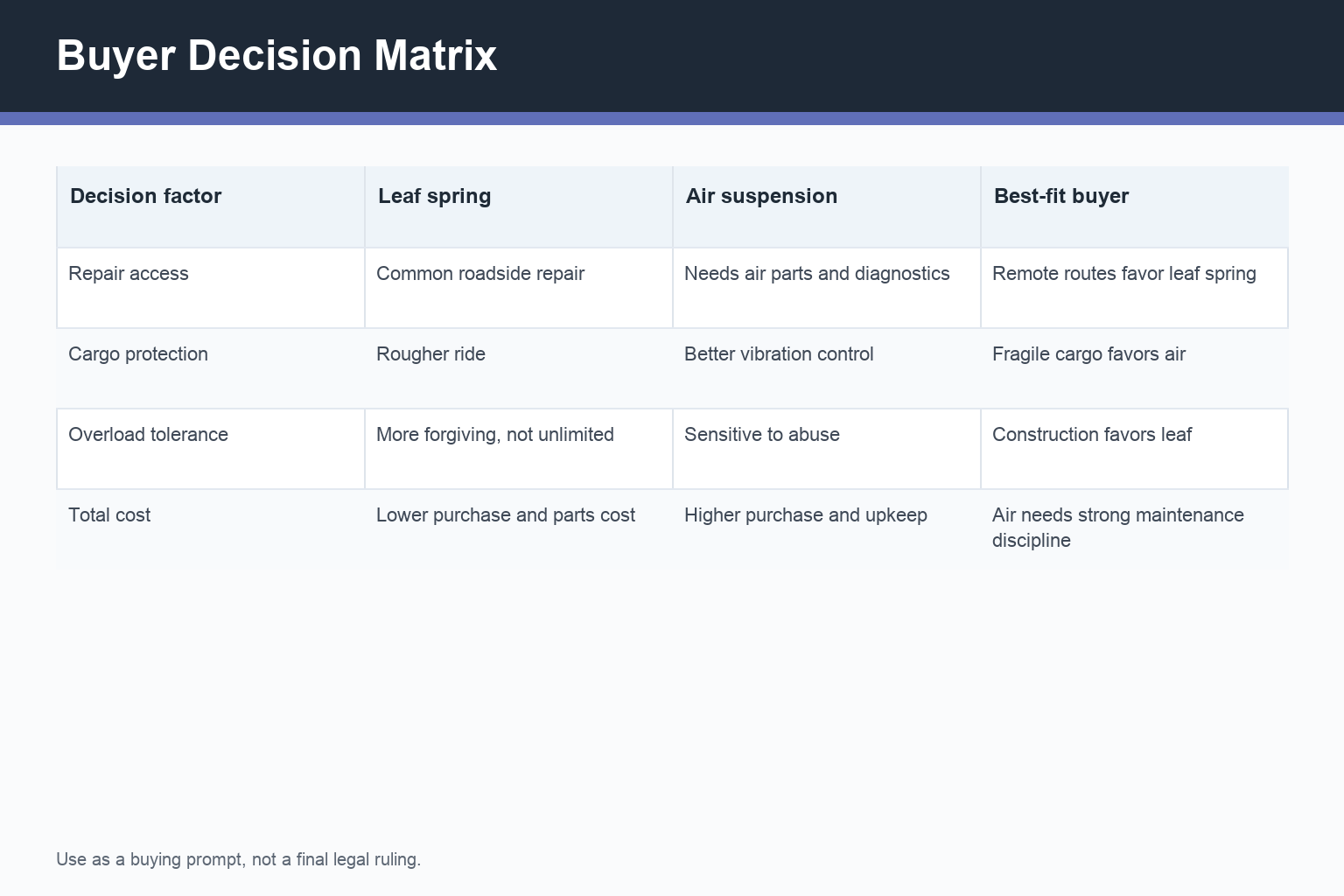
| Decision factor | Leaf spring | Air suspension | Best-fit buyer |
|---|---|---|---|
| Repair access | Common roadside repair | Needs air parts and diagnostics | Remote routes favor leaf spring |
| Cargo protection | Rougher ride | Better vibration control | Fragile cargo favors air |
| Overload tolerance | More forgiving, not unlimited | Sensitive to abuse | Construction favors leaf |
| Total cost | Lower purchase and parts cost | Higher purchase and upkeep | Air needs strong maintenance discipline |
Air Suspension Works When The Corridor Is Controlled
Air suspension can make sense on paved corridors, port shuttles, fuel or tank work, container routes, and cargo where shock damage matters. It can help maintain ride height and reduce vibration, but only when the fleet checks airbags, air lines, valves, ride height, shock absorbers, and compressor health.
Air suspension is a poor choice when the buyer has no air-system parts supply or when the trailer will be repeatedly overloaded on bad roads. A failed airbag on a remote route is not a small inconvenience. It can stop the trip, damage tires, and force an expensive recovery.
Procurement Checklist
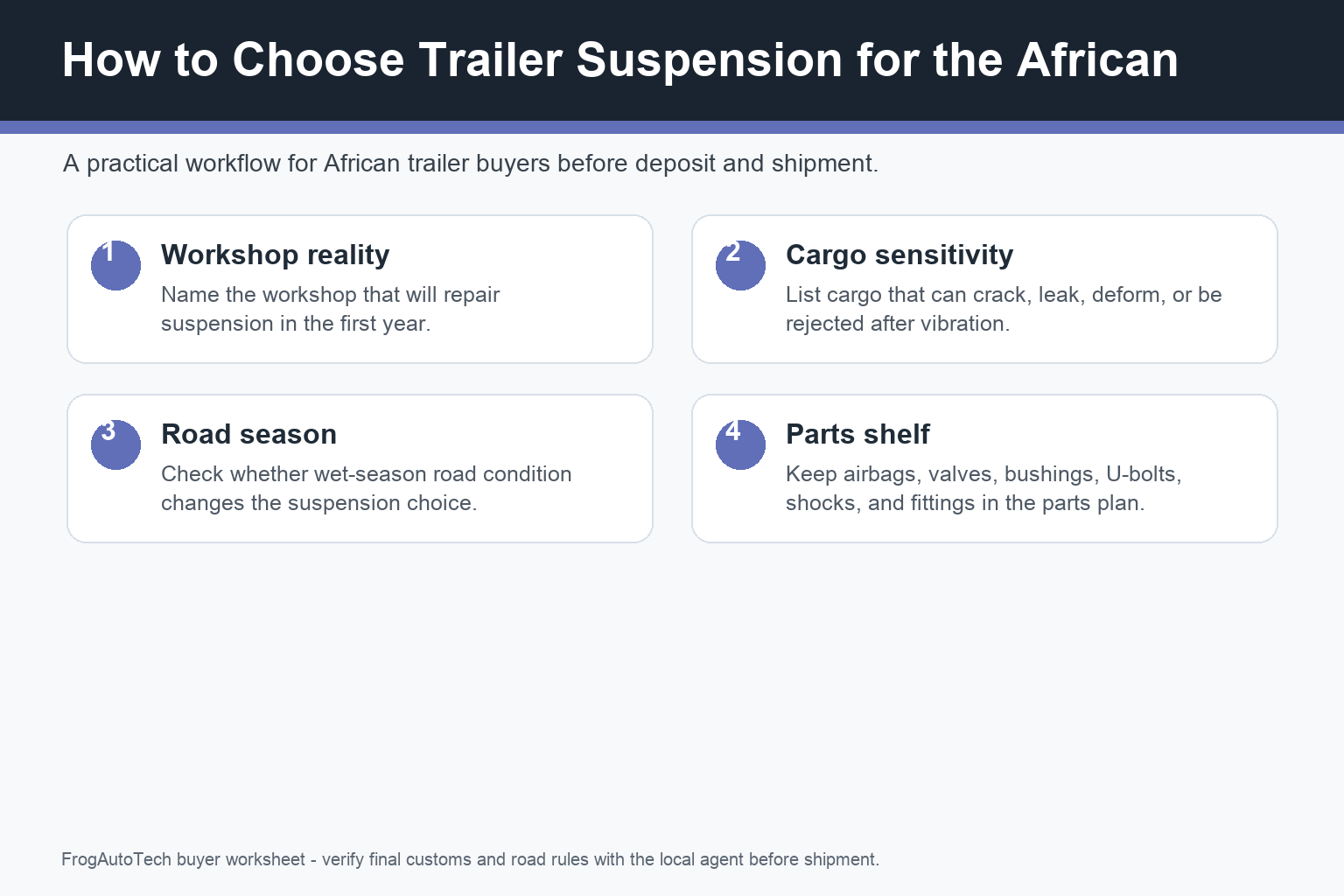
- [ ] Workshop reality: Name the workshop that will repair suspension in the first year.
- [ ] Cargo sensitivity: List cargo that can crack, leak, deform, or be rejected after vibration.
- [ ] Road season: Check whether wet-season road condition changes the suspension choice.
- [ ] Parts shelf: Keep airbags, valves, bushings, U-bolts, shocks, and fittings in the parts plan.
Questions To Ask The Supplier
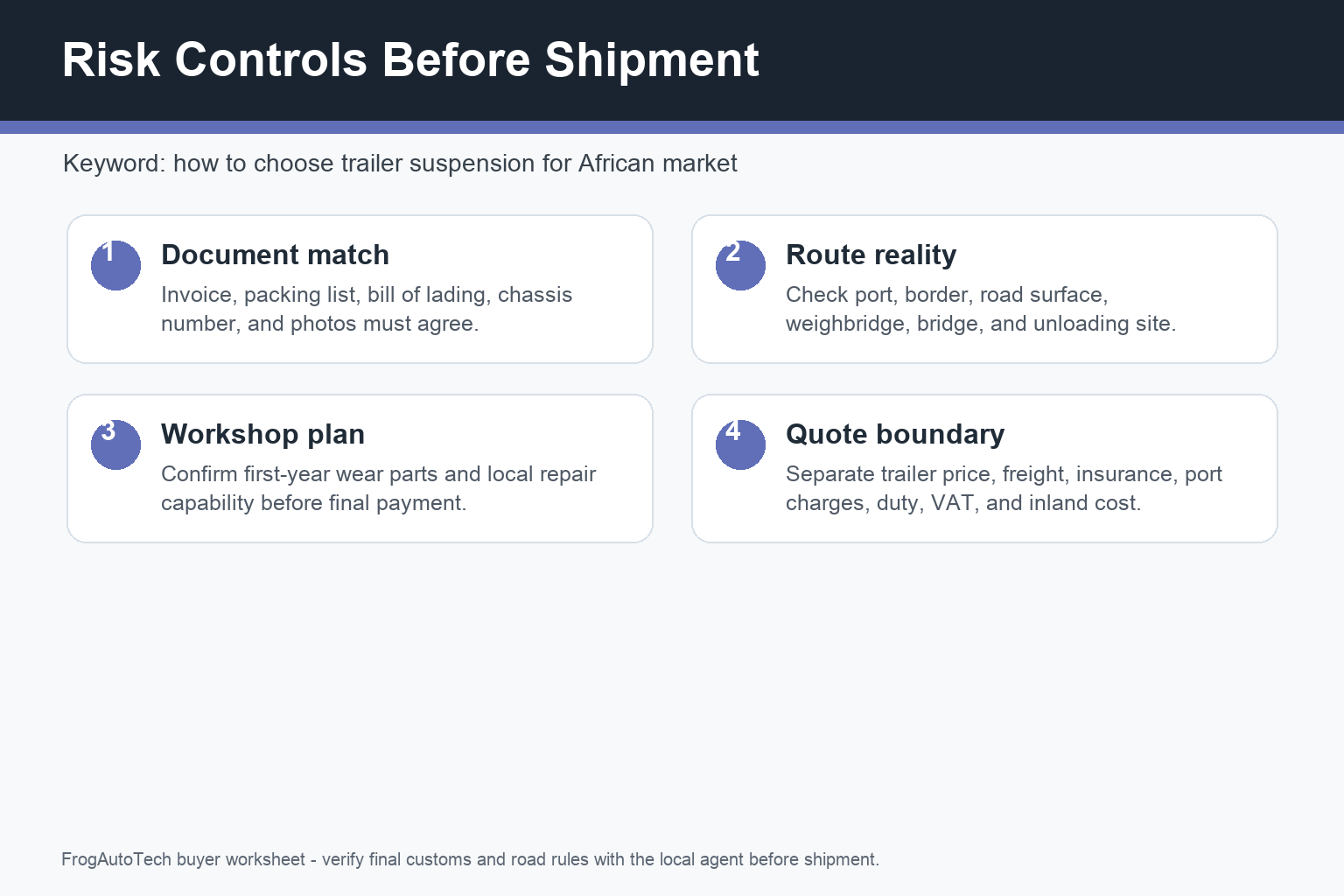
- Can you put the exact trailer type, axle count, empty weight, dimensions, and chassis number on the invoice and packing list?
- Which parts are standard in Africa: brake lining, bearings, hub seals, suspension bushings, lights, tires, and air fittings?
- What shipping term is quoted, what is outside that term, and who receives the arrival notice?
- Can the drawing be checked by the buyer’s clearing agent or route operator before production?
Frequently Asked Questions
Is air suspension good for Africa?
It can be good on controlled paved corridors and sensitive cargo routes. It is risky on rough remote roads without parts and trained maintenance.
Is leaf spring suspension outdated?
No. For heavy-duty African site work, leaf spring remains practical because it is strong, familiar, and easier to repair.
Can I use air suspension for mining trailers?
Only in controlled conditions. Most mining and quarry routes still favor robust mechanical suspension unless the operator has strict load control and maintenance support.
Bottom Line
The safest buying move is to turn this topic into a document check, route check, and supplier question list before paying the deposit. If your team already has the route, cargo, and destination country, send FrogAuto the details for a trailer quotation and import-ready specification pack.