
GVWR tells you how much a semi trailer can safely carry. Get it wrong, and you either waste capacity or get stopped at the weighbridge. This guide explains what semi trailer GVWR means, how it differs from the GVM and axle limits Africa actually enforces, and how to pick the right rating for your loads and routes.
If you are comparing new trailers, start with the Semi Trailer product category and use this guide to check whether the quoted GVWR, payload, axle setup, tire rating, and route limits fit your real work.
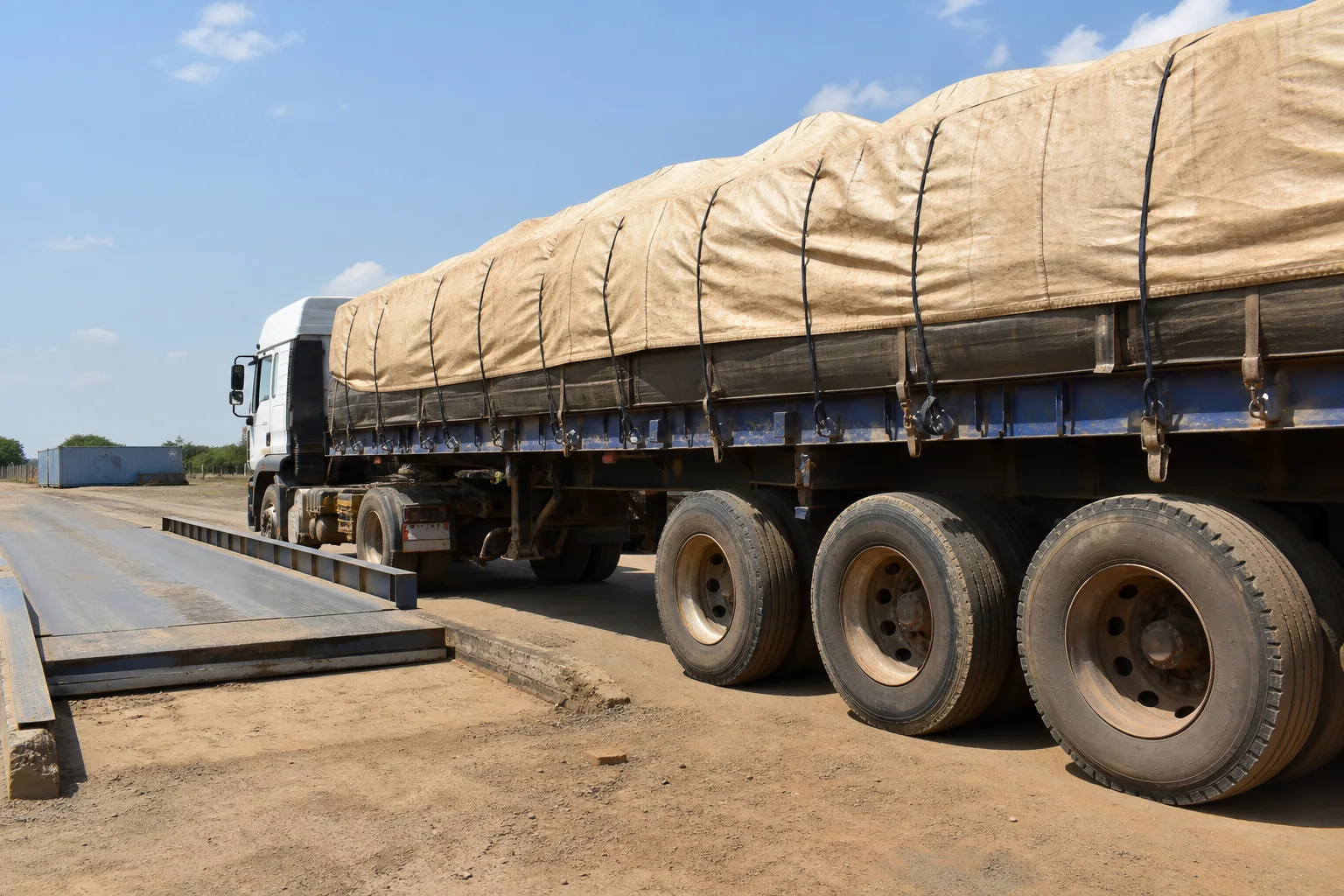
What Is Semi Trailer GVWR?
GVWR (Gross Vehicle Weight Rating): The maximum total weight a trailer is built to carry safely. It includes the trailer's own weight plus the full load.
GVWR is set by the manufacturer. It is not a guess. It is based on the weakest link in the build: the frame, axles, suspension, tyres, and brakes. The trailer is rated to whatever those parts can safely handle together.
Three numbers often get mixed up. They are not the same.
- GVWR: The trailer's own weight plus maximum cargo.
- Payload: Cargo only. Payload equals GVWR minus empty weight.
- GAWR: The rating for one axle group, not the whole trailer.
Here is why this matters in practice. A trailer with a 40,000 kg GVWR and a 12,000 kg empty weight carries 28,000 kg of cargo. Not 40,000 kg. Many buyers confuse the two and overload by mistake.
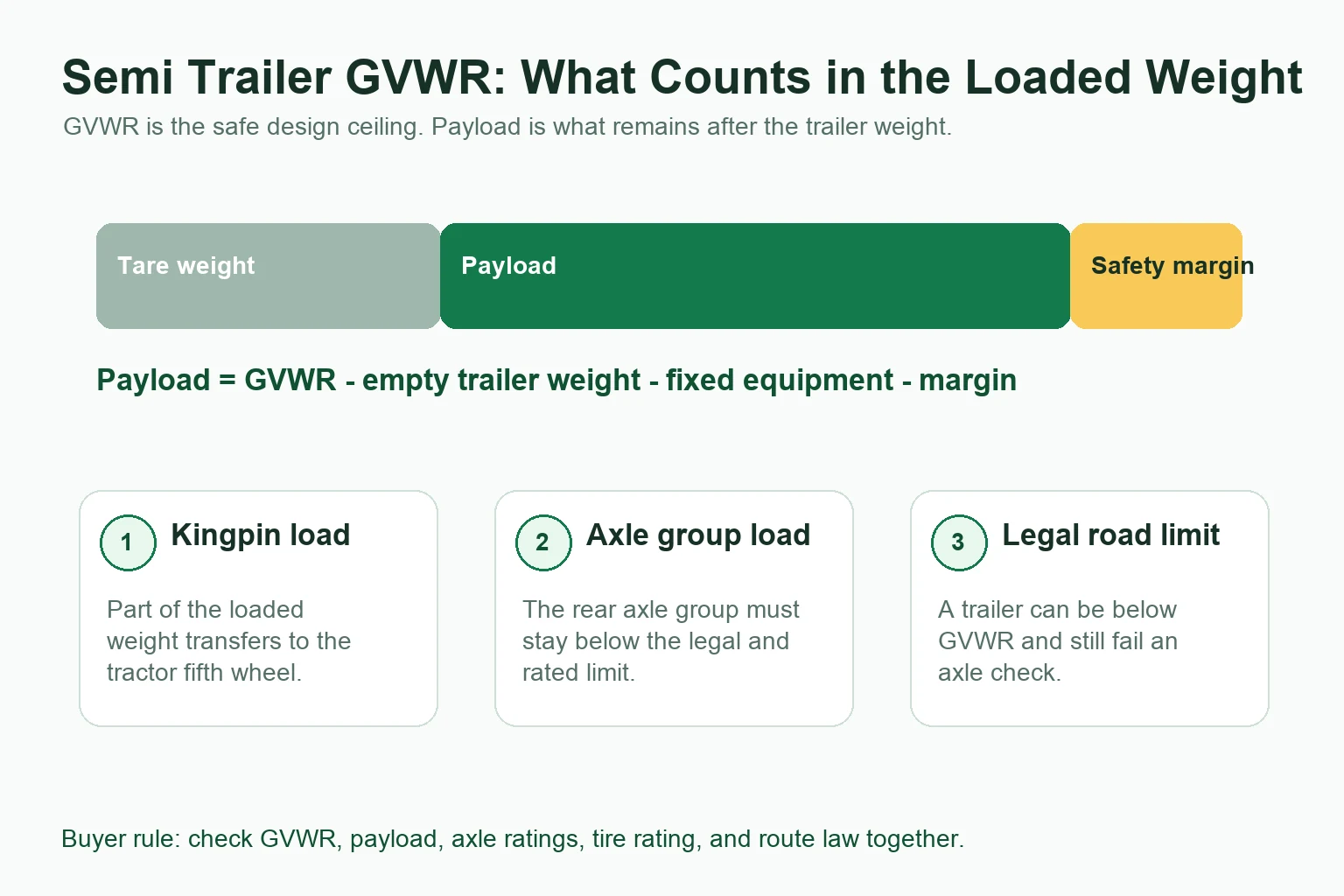
For a tractor and trailer working together, the makers also set a combined limit. The tractor's rating plus the trailer's rating gives the rated mass for the whole rig. That combined number matters as much as the trailer alone. If you are buying a tractor and trailer as a set, a model such as the HOWO NX371 6×4 Tractor Truck for Semi Trailer Haulage should be checked together with the trailer GVWR, fifth-wheel height, brake system, and kingpin load.
GVWR vs Africa’s Legal Weight Limits: GVM, GCM, and Axle Load
Here is the part most buyers miss. In Africa, the weighbridge does not read your GVWR plate and stop there. It checks your axle loads and your total mass against the law.
The manufacturer's GVWR is a safety rating. The legal limit is a separate number, set by each country's road law. Both apply. You must stay under both.
These are the terms you will meet on African roads:
GVM (Gross Vehicle Mass): The maximum legal mass of one vehicle, including load.
GCM (Gross Combination Mass): The maximum legal mass of the truck and trailers combined.
Axle load limit: The maximum mass allowed on one axle or axle group.
In the SADC region, the figures are broadly harmonised. Common limits look like this:
| Limit type | Typical SADC / South Africa figure |
|---|---|
| Maximum combination mass | 56,000 kg |
| Tridem axle group | 24,000 kg |
| Tandem axle group | 18,000 kg |
| Single axle | 9,000 kg |
| Steering axle | 7,700-8,000 kg |
| Power-to-mass ratio | 240 kg per kW of engine power |
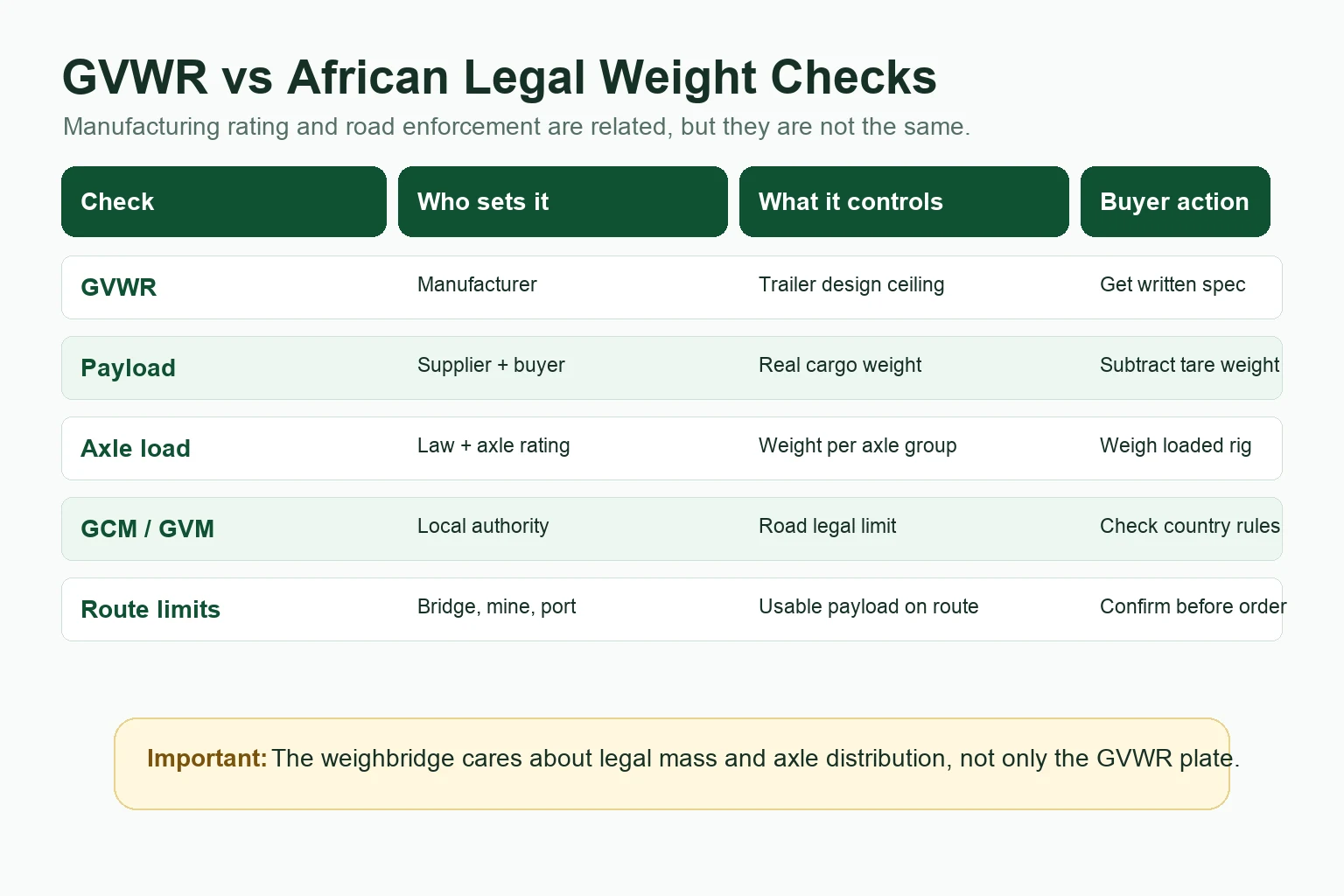
The axle limit is usually the real cap. A trailer can sit under its GVWR and still be illegal if one axle group is over. This is why axle count and spacing matter so much. The related guide on trailer weight limits in African countries gives more background on gross weight, axle load, permits, and weighbridge practice.
It also depends on how the load sits. A heavy load placed too far back overloads the rear axles, even when the total mass is legal. Where the cargo sits over the axles is as important as how much you carry. More axles and correct loading keep each group under its limit.
Limits are not identical across the continent. COMESA, the EAC, and SADC are still working to harmonise axle load rules across borders. Always confirm the figure for your own country and corridor before you load.
How to Choose the Right GVWR for African Routes
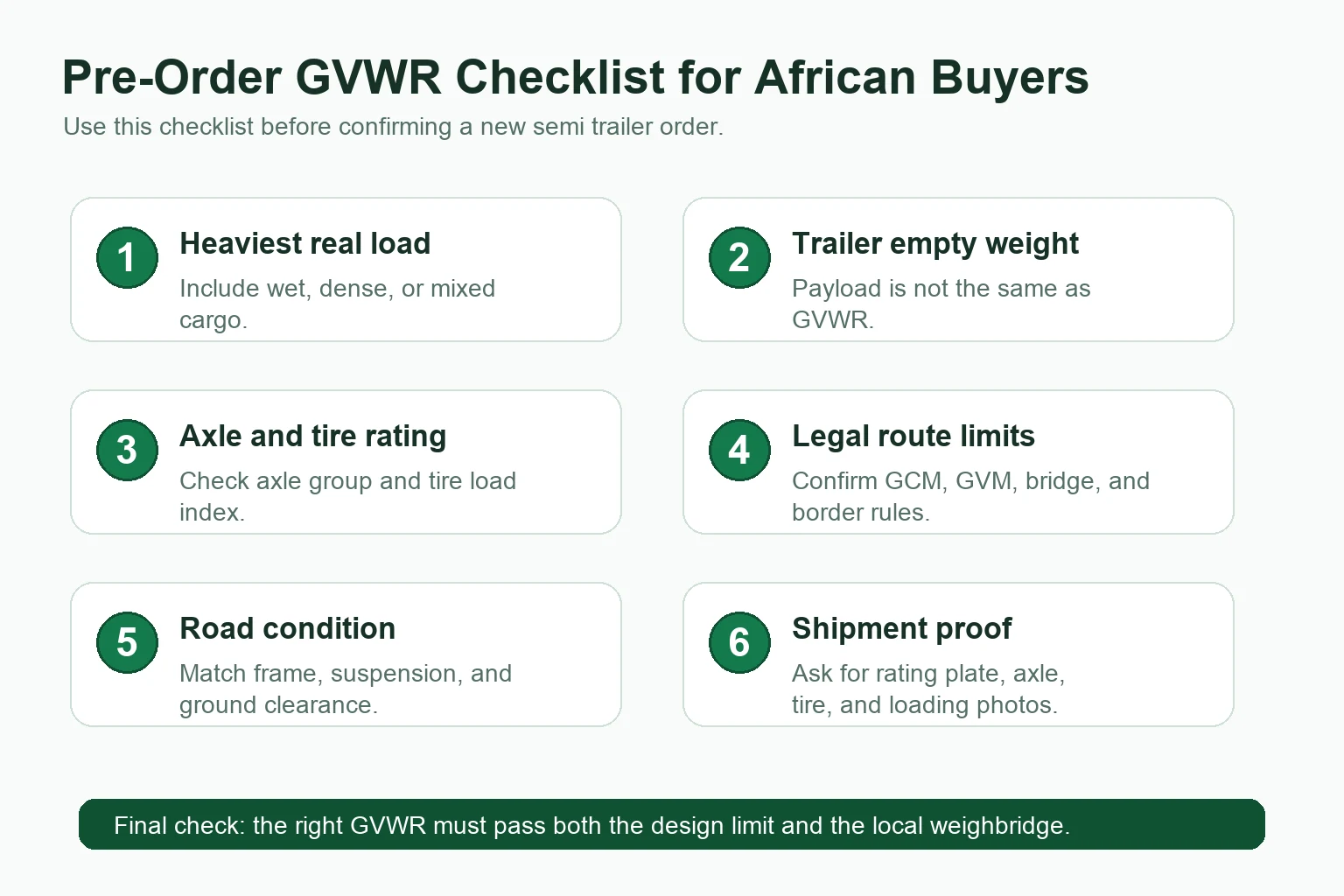
Start with the load, not the trailer. The right GVWR carries your heaviest real load and still stays legal at the weighbridge. Work through it in order.
1. Confirm your heaviest load
Take your heaviest regular cargo. Add a margin for wet or dense material. This is the payload you must carry. Your GVWR must cover this payload plus the trailer's empty weight.
Here is a simple example. Your heaviest load is 26,000 kg. The trailer's empty weight is 11,000 kg. You need a GVWR of at least 37,000 kg. Order less, and you are overloaded on day one.
2. Check it against your legal limits
Now compare against your country's GVM, GCM, and axle limits. If your payload pushes any axle group over the limit, you need more axles or a different layout. The law wins, not the wish.
3. Match axles to the load and the road
More axles spread the weight. They raise your legal load and protect the trailer on rough ground. A tri-axle setup is a common choice for heavy work in Africa for this reason.
4. Build for the road, not just the rating
African routes are hard on trailers. A high GVWR means little if the frame twists on poor roads. Confirm the frame material, axle quality, tire load index, brake setup, and suspension for your real conditions, not only a brochure.
For container, steel, bagged cargo, and general freight, compare a product such as the 40 ft 3 Axle Flatbed Container Semi Trailer against your payload and axle limits. For machinery transport and concentrated loads, a 13 m Heavy-Duty Low Bed Semi Trailer with Hydraulic Ramps needs a different GVWR, axle, deck height, and ramp check.
Need help matching GVWR to your load and route?
Send your cargo weight, destination country, trailer type, and route condition. FrogAuto can help check GVWR, axle setup, tire rating, and export details before production.
To see the trailer types and load ratings FrogAuto supplies, view the product overview.
Why Loading Past GVWR Costs You in Africa
Overloading looks like free extra revenue. It is not. It costs you in damage, fines, and downtime, often more than the extra load is worth.
What overloading does to the trailer:
- Tyres: Even a small overload can raise blowout risk and heat buildup.
- Brakes: More mass means longer stops and faster brake fade.
- Frame: Constant overload bends and cracks the frame over time.
- Suspension and axles: They wear faster and fail sooner.
What it costs at the weighbridge:
- Fines: Penalties rise with the percentage over the limit.
- Delays: An overloaded rig can be held until it offloads.
- Records: Repeat offences raise scrutiny on every trip.
Q: Is a small overload really a problem?
A: Yes. The damage to tires, brakes, suspension, and frame parts starts before a fine is issued.
Q: How do I avoid overloading?
A: Weigh your loaded rig. Know your payload and axle limits. Buy enough GVWR for the job from the start.
Buying a trailer with the right GVWR up front is cheaper than years of fines and repairs. For rough-road operating checks, read the guide on trailer tire selection for African roads and the guide on semi-trailer maintenance in tropical climate.
Buying New Semi Trailers for Africa: GVWR, Specs, and Export
For fleets, dealers, and importers, GVWR is one line on a longer spec sheet. The goal is a trailer that carries your load, passes the weighbridge, and lasts on your roads.
Q: What GVWR should I order?
A: Enough to carry your heaviest load and stay legal. Confirm payload, axle count, and your country's limits before production.
Q: Standard or customised?
A: Standard suits common freight. Customise when your cargo, mass, or local rules are specific. Lock the specs in writing.
Q: What matters most for fleet and wholesale orders?
A: Consistent specs and stable supply. For fleets and dealers, steady supply beats a one-off low price.
Q: How is the trailer delivered for export?
A: It depends on the type and destination. Shipping a fully assembled trailer by ro-ro avoids on-site assembly and arrives ready to work. Confirm the lead time and shipping method in writing before you order.
For importers, three steps lower risk. Confirm GVWR, payload, and axle ratings up front. Match them to your country's legal limits. Check that documents are complete for customs and registration. If you are still checking suppliers, the guide on how to verify a Chinese trailer manufacturer can help you review factory proof, photos, documents, and after-sales support.
Choosing the Right GVWR: Next Steps
The right semi trailer GVWR starts with two numbers. Know your heaviest load. Know your legal axle and combination limits. The right trailer sits comfortably under both.
If you know your load and route, the next move is simple. Browse the product overview to see available types and ratings. Then contact us to confirm GVWR, axle configuration, delivery, and export details for your market.
Ready to confirm semi trailer GVWR?
Tell us your payload, cargo type, axle preference, destination country, and delivery route. We will help match the trailer specification before you place the order.