
Direct answer: A tipper trailer specification for construction in Africa should be based on material density, road surface, unloading site, body steel, hydraulic system, axle load, suspension, tires, and brake reliability. A good tipper trailer is not the largest body at the lowest price. It is the trailer that carries the right material safely, tips reliably, and returns to work after repeated loading cycles.
Construction fleets often work under pressure: quarry to site, sand pit to road project, cement depot to batching plant, or demolition area to dump site. The trailer is loaded hard, driven on uneven roads, tipped on imperfect ground, and expected to work every day. That is why a buyer should define the operating job before confirming the quotation.
For construction fleets that also use self-dumping vehicles, the Tipper truck product page gives a related product reference for bulk material work.
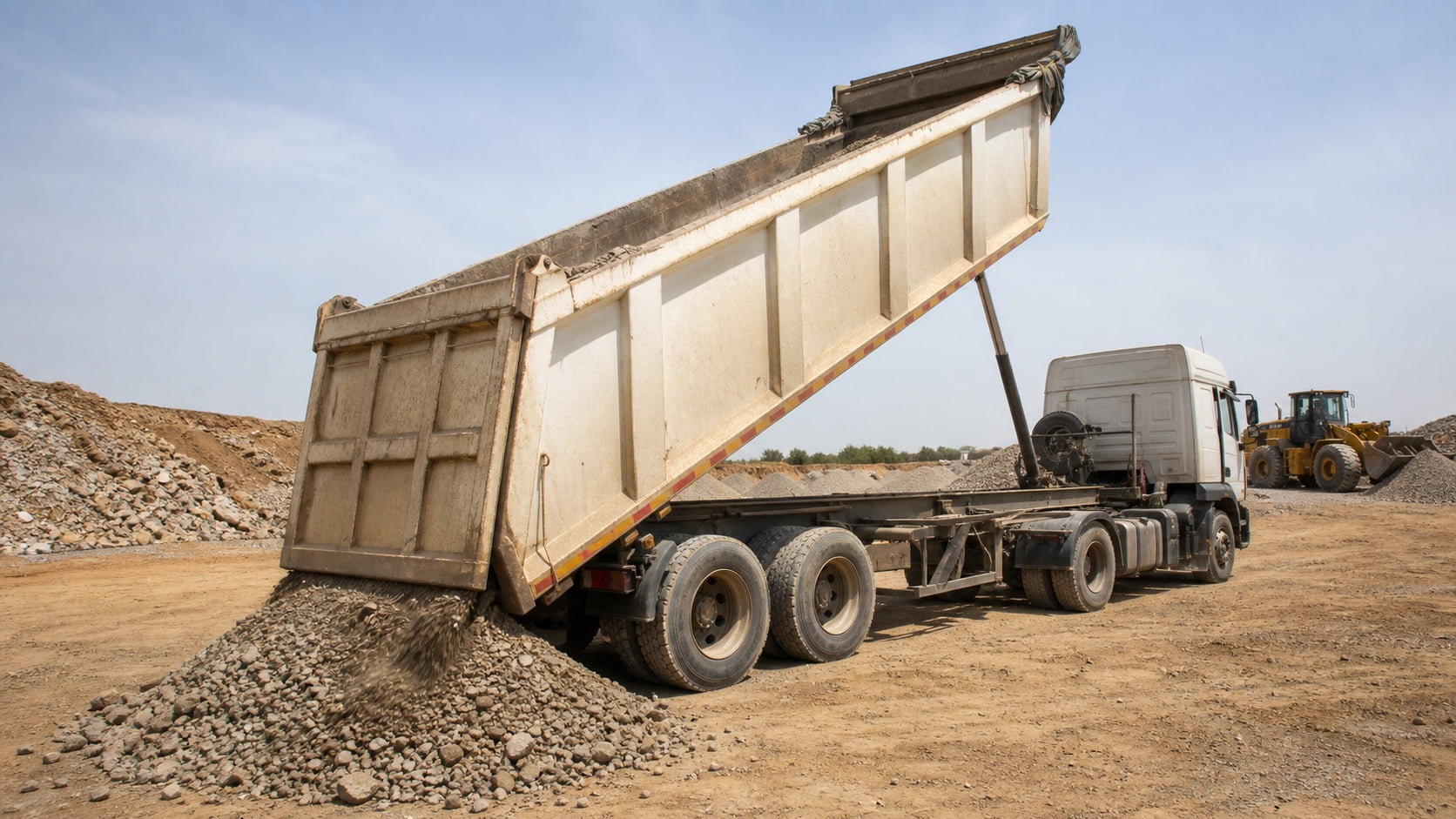
Quick Buyer Decisions
- Decide body volume only after listing the main materials: dry sand, wet sand, gravel, stone, laterite, or demolition waste.
- Choose floor and side-wall steel by abrasion and impact level, not by the cheapest empty-body weight.
- Ask for hydraulic cylinder brand, stroke, rated lifting capacity, tipping angle, oil tank size, and safety-valve setup.
- Standardize axle, tire, brake, and air-system parts with the buyer’s existing fleet where possible.
- Train drivers not to tip on soft, sloped, or unstable ground; this is a safety requirement, not just an operating tip.
Start With Material Density and Body Volume
Tipper trailer capacity starts with material density because a large body can overload the trailer if the cargo is heavy. Sand, gravel, stone, laterite, demolition waste, and wet soil do not weigh the same. If the buyer asks only for the highest cubic-meter body, the trailer may exceed safe axle load before the body is visually full.
| Cargo | Specification concern | Buyer note |
|---|---|---|
| Dry sand | Volume and sealing | Avoid leakage at tailgate |
| Wet sand | Higher density | Do not oversize body volume |
| Gravel | Abrasion and impact | Reinforce floor and side wall |
| Stone | Impact loading | Stronger floor and ribs |
| Laterite | Sticky material | Check tipping angle |
| Demolition waste | Sharp edges | Strong floor and side protection |
The existing FrogAutoTech article on trailer axle load capacity for African roads is important here. Payload should be evaluated by real loaded weight, not just cargo volume.
Body Steel and Structural Design
Body steel and structural design determine how long the tipper trailer survives construction work. A light body may look attractive in the quotation, but thin floor plate can deform under repeated loading from wheel loaders or excavators. A heavy body may be stronger, but it reduces legal payload and increases fuel consumption.

Ask the supplier to specify:
- Floor plate thickness.
- Side wall thickness.
- Front wall reinforcement.
- Longitudinal beam and cross member design.
- Tailgate locking system.
- Wear-resistant steel option if needed.
- Paint and anti-corrosion treatment.
Buyers working near coastal areas or wet construction sites should pay special attention to rust prevention. Tropical humidity, mud, and cargo residue can shorten body life if cleaning and repainting are ignored.
Hydraulic System and Tipping Safety
The hydraulic system is the heart of a tipper trailer. If the cylinder, oil tank, hose, pump, or valve system fails, the trailer stops earning money. Worse, a poor tipping setup can create a safety problem during unloading.

Key hydraulic checks:
| Component | What to confirm | Why it matters |
|---|---|---|
| Hydraulic cylinder | Brand, lifting capacity, stroke | Controls lifting reliability |
| Tipping angle | Suitable for sticky material | Reduces unloading residue |
| Oil tank | Capacity and placement | Prevents overheating and service issues |
| Hoses and fittings | Protection and routing | Reduces leak and damage risk |
| Safety valve | Present and serviceable | Helps prevent uncontrolled movement |
| Body hinge | Reinforced and aligned | Prevents frame stress |
The unloading surface should also be considered. A tipper trailer should not tip on a soft, sloped, or unstable surface. Driver training is part of the specification because even a strong trailer can overturn if operated badly.
Axle, Suspension, Tire, and Brake Choices
Construction routes can include paved highways, gravel roads, quarry tracks, muddy access roads, and tight urban sites. That mix influences axle, suspension, tire, and brake choices.
Leaf spring suspension is often preferred where repair access is limited. Air suspension may reduce vibration, but construction tippers usually need simple, robust serviceability. For a detailed comparison, see How to Choose Trailer Suspension for the African Market.
Tires should be selected by load, road surface, heat, and service availability. A tire that is cheap at purchase can be expensive if it fails under heat and overload. Brakes should be easy to service, and the buyer should confirm spare brake chambers, air lines, and fittings before shipment.
Specification Table for Common Construction Jobs

| Construction job | Trailer focus | Suggested buyer priority |
|---|---|---|
| Sand delivery | Sealing and volume control | Tailgate, body shape, tire capacity |
| Gravel delivery | Abrasion resistance | Floor plate, side wall, suspension |
| Stone transport | Impact resistance | Reinforced floor and ribs |
| Road project laterite | Sticky unloading | Tipping angle and cylinder strength |
| Demolition waste | Sharp cargo protection | Steel thickness and tailgate strength |
| Remote quarry work | Maintenance access | Standard axles, tires, brake parts |
Links to Other Trailer Decisions
A construction buyer may also compare a tipper trailer with a flatbed or side wall trailer. If the fleet moves bagged cement, steel bars, pipe, machinery, and pallets, a flatbed or side wall may be more flexible. The article Side Wall Trailer vs Flatbed for Cargo in Africa helps buyers compare those general cargo options.
If the fleet mainly moves loose bulk material, the tipper trailer remains the stronger fit. The key is to avoid buying one trailer for every possible cargo. A trailer built for sand is not automatically ideal for stone or demolition waste.
Frequently Asked Questions
What is the best tipper trailer body volume for construction?
The best body volume depends on material density and legal payload. Heavy cargo such as wet sand or stone may require a smaller body than light bulk material.
Is thicker steel always better?
No. Thicker steel improves durability but adds tare weight. The buyer should balance durability, legal payload, road condition, and fuel cost.
What hydraulic system should a construction tipper trailer use?
Use a hydraulic system sized for the loaded body weight and tipping angle. Confirm cylinder capacity, hose quality, oil tank size, and safety valve setup.
Is leaf spring suspension suitable for African construction work?
Leaf spring suspension is often suitable because it is robust and easier to repair in many markets. The final decision should match route condition and maintenance access.
Conclusion
A tipper trailer specification for construction in Africa should be practical, not exaggerated. Match the body volume to material density, choose steel thickness for the cargo, specify a reliable hydraulic system, and keep axle, tire, suspension, and brake parts serviceable. The best trailer is the one that keeps working under real construction conditions, not the one that only looks strongest in a quotation.
References
1. UN Trade and Development, Review of Maritime Transport, accessed June 17, 2026 2. World Bank Logistics Performance Index, accessed June 17, 2026 3. World Customs Organization, origin overview, accessed June 17, 2026
Related Reading
- Trailer Axle Load Capacity for African Roads
- How to Choose Trailer Suspension for the African Market
- Side Wall Trailer vs Flatbed for Cargo in Africa
- Tipper truck product page
After checking capacity, steel, hydraulic, and road-condition requirements, compare current FrogAuto used tipper truck options for construction and quarry work.