
Direct answer: A lowbed trailer for mining in Congo should be selected by machine weight, road condition, axle load, ramp type, deck height, ground clearance, and spare-parts availability. The correct lowbed trailer is not simply the heaviest model. It is the model that can load the target machine safely, move through the route legally, and survive mine-road conditions with manageable maintenance.
Mining logistics in the Democratic Republic of the Congo can be demanding because heavy machines often move between ports, border points, workshops, and mine sites. EITI describes the DRC economy as highly dependent on the extractive sector, with copper, cobalt, gold, diamonds, tin, tantalum, tungsten, and other minerals among the country's identified ores. That demand creates real work for lowbed trailers, but it also creates high risk when buyers choose a trailer only by price.
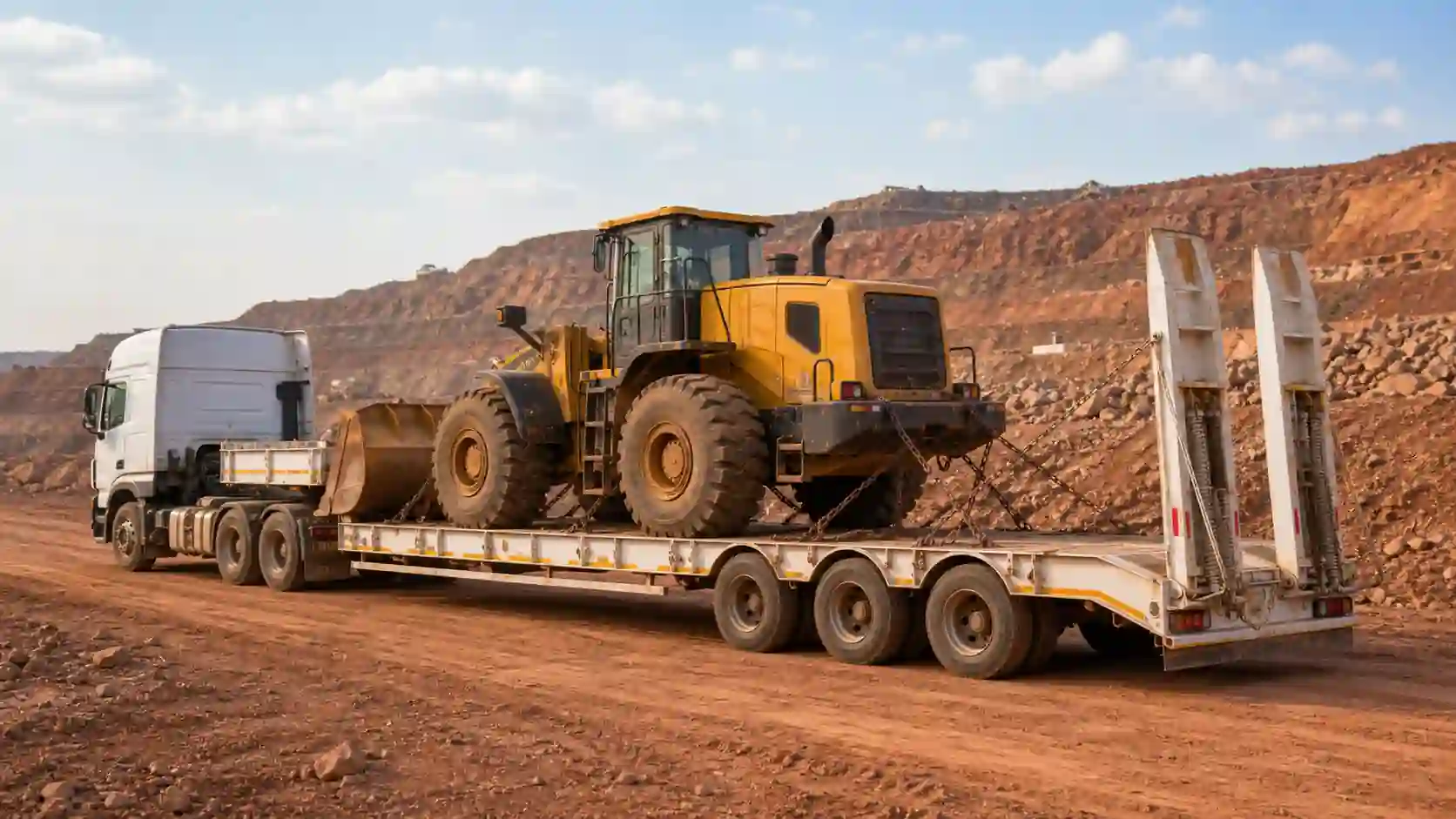
A Lowbed Semi-Trailer is the natural starting point for excavators, loaders, drilling rigs, and other mining machines, but the final specification still has to match the route.
Quick Buyer Decisions
- Build the quotation from a real machine list: model, operating weight, track or tire width, attachments, and loading method.
- Require a loaded axle-distribution estimate before accepting a "60 ton" or "80 ton" payload claim.
- Choose ramp type after confirming whether the machine loads by driving, crane, or winch.
- Avoid rare tire sizes unless the mine already stocks them.
- Order the first service kit with the trailer: brake chambers, air fittings, lights, wheel hardware, bearings, seals, and ramp parts.
Mining Cargo Comes First
Mining cargo comes first because the trailer should be built around the machine, not the other way around. The buyer should list the heaviest and most frequent cargo before asking for a lowbed trailer quote.
Common mining cargo includes:
| Cargo | Main trailer concern | Buyer check |
|---|---|---|
| Excavator | Track width and machine weight | Deck width, ramp angle, payload |
| Wheel loader | Tire width and center of gravity | Deck strength and tie-down points |
| Drilling rig | Height and stability | Deck height and route clearance |
| Bulldozer | Ground contact and ramp loading | Ramp strength and anti-slip surface |
| Crusher parts | Concentrated load | Frame reinforcement |
| Generator or compressor | Forklift or crane loading | Tie-down and lashing points |
The buyer should not rely only on a model name such as "60 ton lowbed." Ask for the frame drawing, axle brand, axle capacity, tire size, suspension type, deck height, ramp design, and loading test assumptions.
Payload and Axle Configuration
Payload and axle configuration are linked. A stronger frame does not solve the problem if axle load distribution is poor. The existing FrogAutoTech article on trailer axle load capacity for African roads explains why legal road limits, road surface, cargo density, and maintenance access should be considered before the trailer is built.

| Lowbed layout | Typical use case | Strength | Watch point |
|---|---|---|---|
| 3-axle lowbed | Medium excavators and general machinery | Easier maintenance and lower cost | May be limited for heavier machines |
| 4-axle lowbed | Heavier machines and longer routes | Better load distribution | Higher tire and maintenance cost |
| Multi-axle modular plan | Oversized project cargo | Higher payload planning flexibility | Needs specialist route survey |
| Detachable gooseneck option | Equipment with low clearance | Easier loading for some machines | Higher purchase and service complexity |
For Congo mining work, the buyer should ask the supplier to calculate the loaded axle distribution, not only the total payload. A trailer that is strong on paper can still overload one axle group on a rough route.
Ramp, Deck Height, and Ground Clearance
Ramp design matters because many mining machines are loaded by driving onto the trailer. A ramp that is too steep can damage the machine, overload the rear structure, or create a safety hazard. The ramp should match the machine approach angle, track condition, and working environment.
Deck height also matters. A lower deck can reduce total transport height, which helps when moving under bridges or power lines. But very low ground clearance can become a problem on mining roads, village access roads, and uneven loading areas.

Ask these questions before confirming the lowbed:
- What is the maximum machine operating weight?
- What is the machine track width or tire width?
- Is the machine loaded by driving, crane, or winch?
- What is the minimum route clearance?
- Are roads paved, gravel, laterite, or mine access tracks?
- Will the trailer cross steep slopes or drainage channels?
Suspension, Tires, and Braking
Suspension should match road reality. Leaf spring suspension is often easier to repair in remote operations. Air suspension can protect cargo on better roads, but it needs more careful maintenance and parts availability. The existing guide on trailer suspension for the African market explains the trade-off in more detail.
Tires should be selected for load, heat, road surface, and service availability. Mining fleets should avoid rare tire sizes unless there is a reliable supply chain. Brake chambers, slack adjusters, air tanks, hoses, and valves should also be familiar to local maintenance teams where possible.
Route Survey for Congo Mining Transport
A route survey is the buyer's safety net. Before the lowbed is shipped, the buyer should identify the route from port or border to mine site, including bridge limits, road surface, urban restrictions, turning radius, slopes, security checkpoints, and fuel stops.
The existing article on Zimbabwe trailer import for mining transport is useful as a related mining logistics reference. The country is different, but the planning logic is similar: route first, trailer second.
Route survey checklist:
| Checkpoint | Why it matters |
|---|---|
| Bridge and culvert condition | Prevents unsafe overload |
| Narrow village roads | Confirms turning radius |
| Slope and drainage crossings | Confirms ground clearance |
| Mine entrance road | Confirms final delivery feasibility |
| Police and permit checkpoints | Reduces delay |
| Workshop access | Supports maintenance planning |
Spare Parts and After-Sales Plan
A mining lowbed trailer should ship with a basic spare-parts plan. Remote downtime can cost more than the spare kit.

Recommended starting spares:
- Brake chambers and air fittings.
- Light units and wiring connectors.
- Wheel nuts, studs, bearings, and seals.
- Ramp pins and hydraulic hose if hydraulic ramps are used.
- Suspension bushings or spring components.
- Grease fittings and basic service tools.
The supplier should also provide drawings, parts codes, and service instructions. If a mine uses several trailers, standardizing axles, tires, brakes, and landing gear across the fleet can reduce inventory cost.
Frequently Asked Questions
What payload should a Congo mining lowbed trailer have?
The payload should be based on the heaviest machine, attachment weight, route limits, and axle distribution. Buyers should not choose payload from a catalog number alone.
Is a 3-axle or 4-axle lowbed better for mining?
A 3-axle lowbed can work for medium machines and easier maintenance. A 4-axle lowbed may suit heavier machines or rougher routes because it distributes load across more axles.
Is leaf spring or air suspension better for Congo mining roads?
Leaf spring suspension is often easier to repair in remote areas. Air suspension may protect cargo on better corridors but requires better service capacity.
Should ramps be hydraulic or mechanical?
Hydraulic ramps reduce manual work but add hydraulic maintenance. Mechanical ramps are simpler but require more labor and safe handling discipline.
Conclusion
A lowbed trailer for mining in Congo should be selected from the route backward. Confirm the machine, route, axle load, ramp design, deck height, tire size, braking system, and spare-parts plan before production. When the specification matches the mining job, the trailer becomes a productive asset. When it does not, the mine pays for the mistake through downtime, tire damage, loading risk, and repair delays.
References
1. EITI, Democratic Republic of the Congo country page, accessed June 17, 2026 2. World Bank Logistics Performance Index, accessed June 17, 2026 3. UN Trade and Development, Review of Maritime Transport, accessed June 17, 2026