
Side Wall Trailer vs Flatbed for Cargo in Africa: A Practical Buyer Comparison
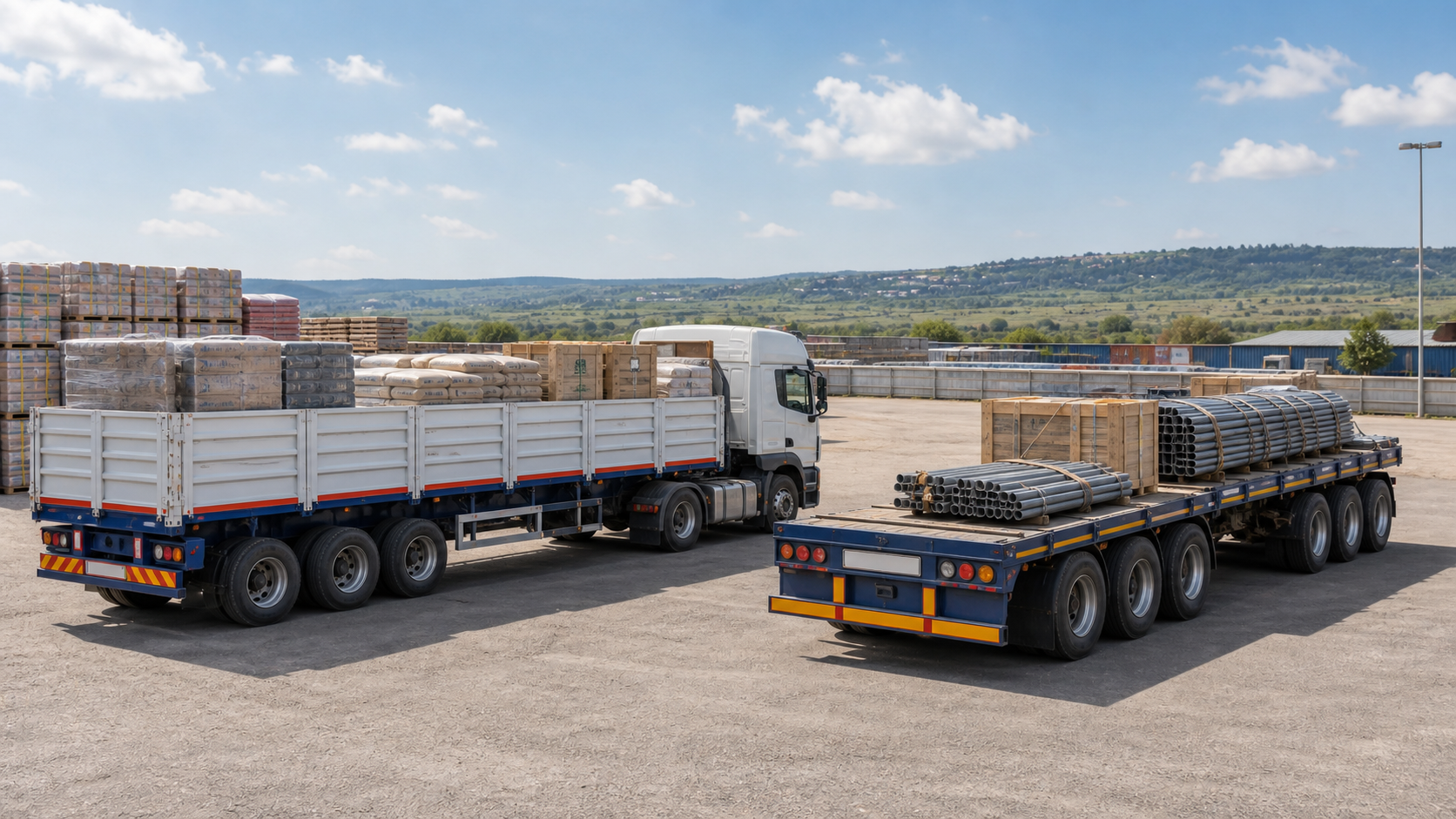
> Summary: A side wall trailer is better when cargo needs edge protection and mixed loading. A flatbed is better when the fleet carries steel, machinery, containers, or oversized loads that need open access.
Best for: Logistics companies, dealers, farm suppliers, construction buyers, and importers choosing a general-purpose cargo trailer.
Quick Answer
A side wall trailer is better when cargo needs edge protection and mixed loading. A flatbed is better when the fleet carries steel, machinery, containers, or oversized loads that need open access. The buyer should decide from documents, route, cargo, workshop capacity, and cash-flow impact together. To compare the body types mentioned here against real export specifications, review FrogAuto’s semi-trailer category for African buyers before asking for a final quote.
Fast buyer rule
– Do not approve a quote until the trailer type, chassis identity, dimensions, and shipping term are written down.
– Ask a local agent or operator to verify customs, road-use, and route constraints before shipment.
– Keep the final decision tied to the first profitable route, not only the lowest factory price.
Choose By Cargo, Not By What Looks Popular
Side wall trailer vs flatbed for cargo in Africa is not a beauty contest. It is a cargo-handling decision. A side wall trailer gives side protection for bagged goods, cartons, farm inputs, building materials, and mixed loads. A flatbed gives open access for forklifts, cranes, steel, pipes, machinery, timber, containers, and loads that do not fit neatly between side boards.
Buyers often choose the body type too early. First write down cargo length, width, height, weight per pallet, loading method, return load, tie-down points, and unloading equipment. Only then should the factory draw the body.
Side Wall Trailers Help Mixed Cargo, But They Slow Some Loading
A side wall trailer is useful when cargo shifts easily or when the operator carries mixed commercial goods from a city depot to regional towns. The side boards protect edges and make drivers feel safer when small packages sit beside heavier items. For many African distribution fleets, that versatility matters more than maximum deck access.
The trade-off is loading speed and flexibility. If a crane or side forklift needs full access, fixed side walls get in the way. Hinged or removable side boards help, but they add hinges, locks, panels, and repair points. Ask how the side boards are reinforced and whether replacement panels are available.
If your next question is country-specific import clearance, compare this with FrogAuto’s Nigeria semi-trailer import guide and the semi-trailer category page for Africa-focused specifications.
Buyer Decision Table
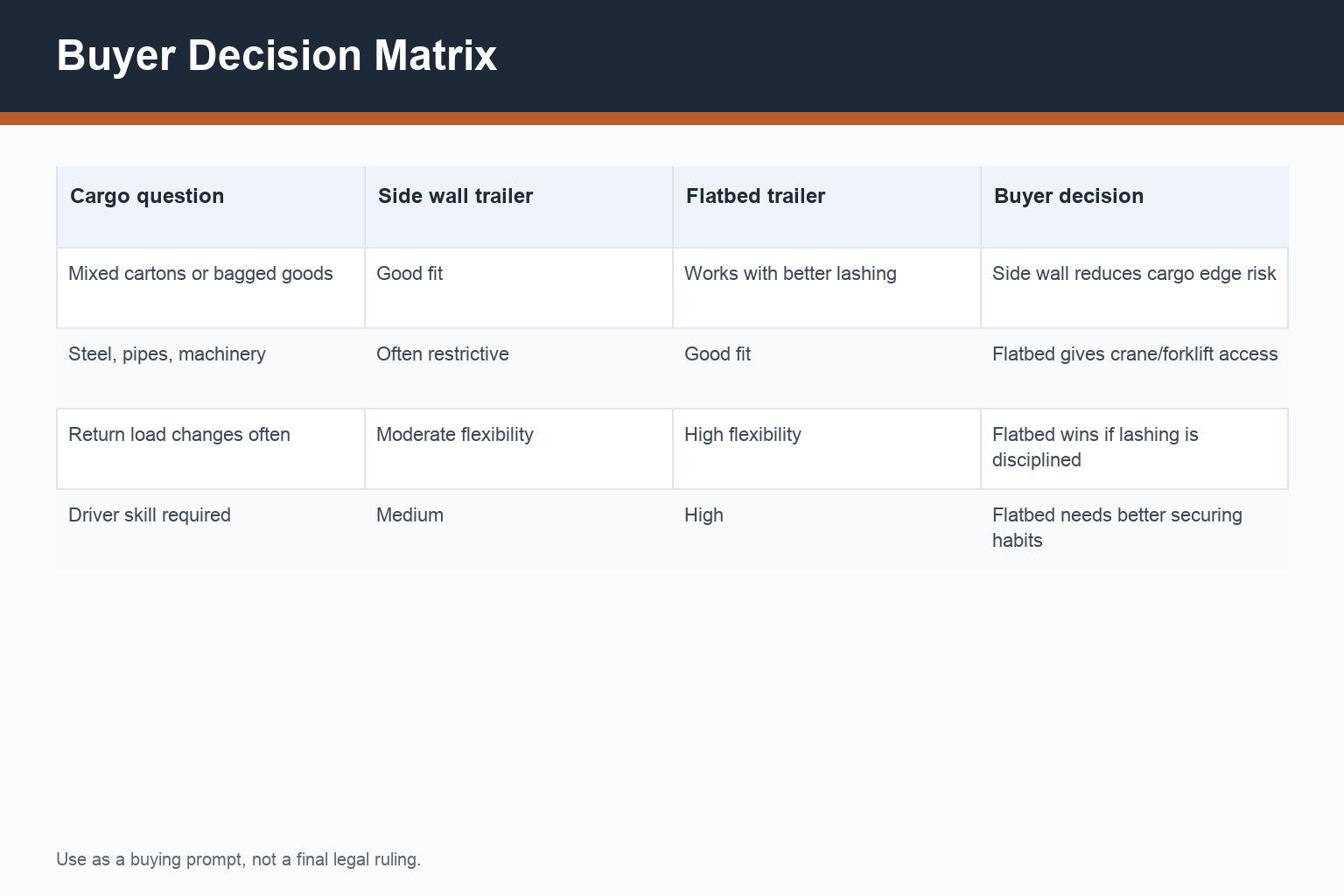
| Cargo question | Side wall trailer | Flatbed trailer | Buyer decision |
|---|---|---|---|
| Mixed cartons or bagged goods | Good fit | Works with better lashing | Side wall reduces cargo edge risk |
| Steel, pipes, machinery | Often restrictive | Good fit | Flatbed gives crane/forklift access |
| Return load changes often | Moderate flexibility | High flexibility | Flatbed wins if lashing is disciplined |
| Driver skill required | Medium | High | Flatbed needs better securing habits |
Flatbeds Are Flexible, But Cargo Securing Must Be Disciplined
A flatbed is the better choice when cargo shape changes often. It is also easier for steel, pipes, machinery, precast materials, agricultural equipment, and container-like loads. The open deck gives buyers more freedom, but it also removes the psychological comfort of side boards. Every load now depends on proper dunnage, chains, straps, corner protection, and driver training.
For cross-border work, flatbed buyers should pay attention to customs description and cargo documents. The World Customs Organization notes that HS classification is the basis for customs tariffs and trade statistics World Customs Organization HS overview, accessed 2026. If the trailer carries many different goods for different customers, document discipline matters almost as much as the trailer body.
Procurement Checklist
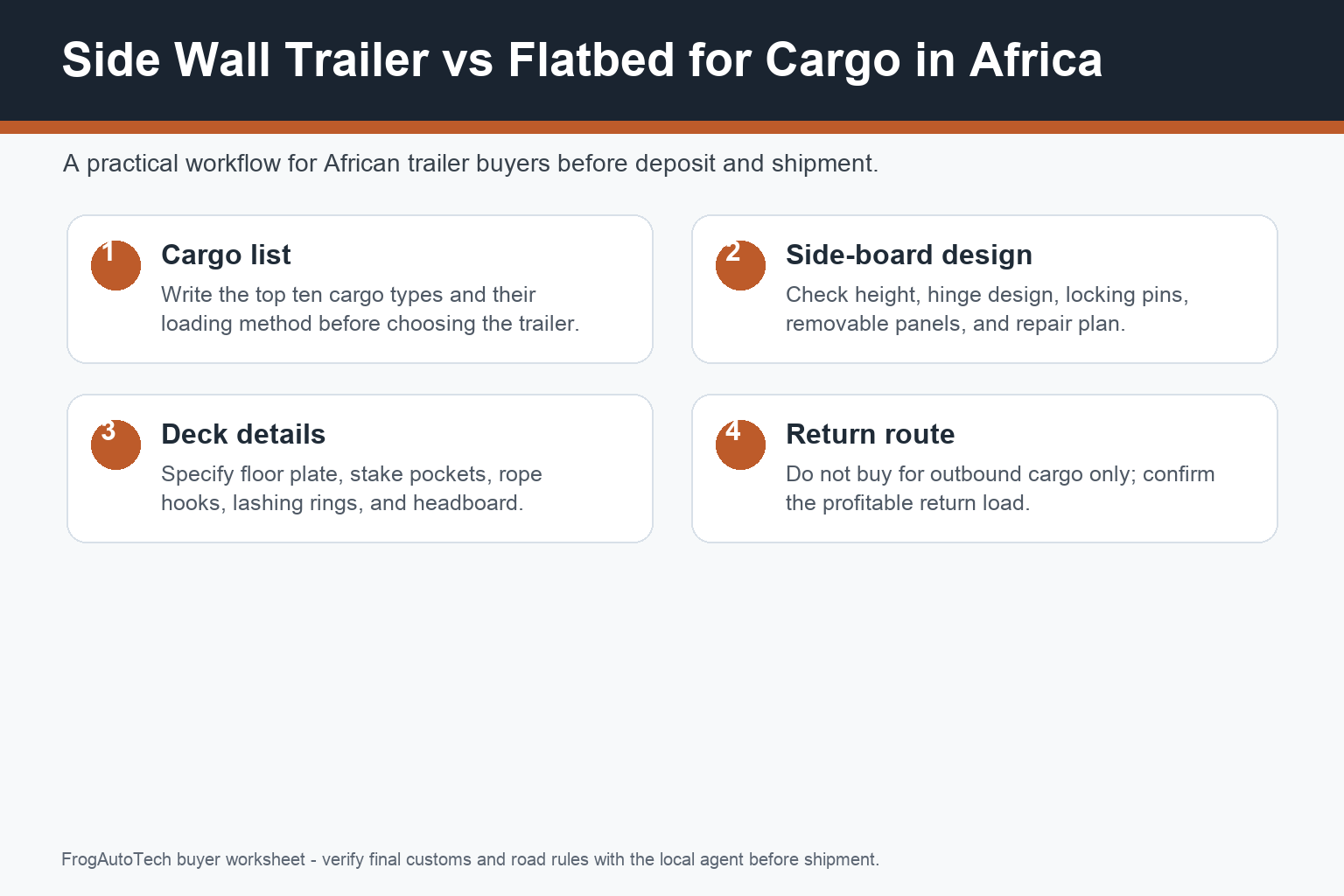
- [ ] Cargo list: Write the top ten cargo types and their loading method before choosing the trailer.
- [ ] Side-board design: Check height, hinge design, locking pins, removable panels, and repair plan.
- [ ] Deck details: Specify floor plate, stake pockets, rope hooks, lashing rings, and headboard.
- [ ] Return route: Do not buy for outbound cargo only; confirm the profitable return load.
Questions To Ask The Supplier
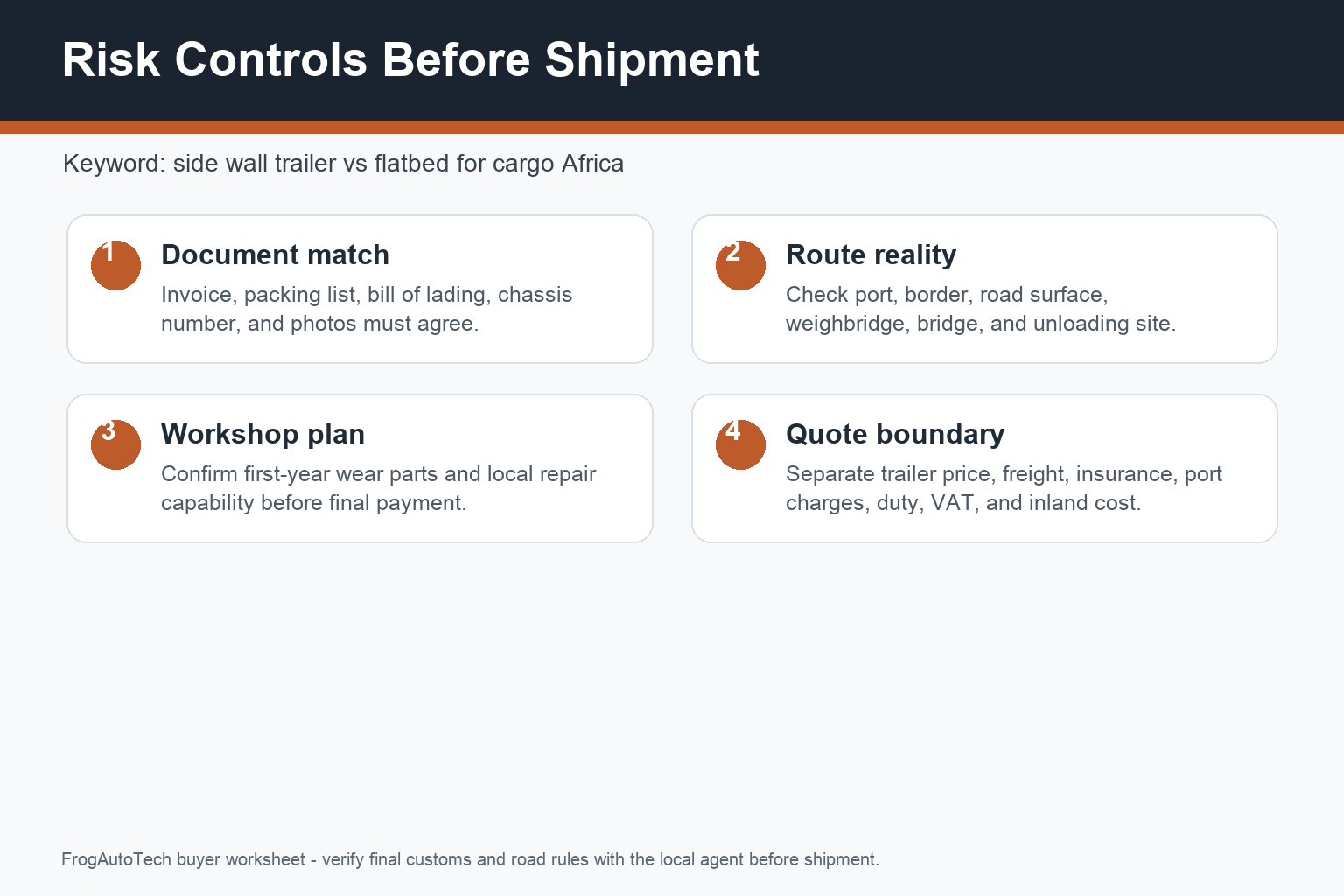
- Can you put the exact trailer type, axle count, empty weight, dimensions, and chassis number on the invoice and packing list?
- Which parts are standard in Africa: brake lining, bearings, hub seals, suspension bushings, lights, tires, and air fittings?
- What shipping term is quoted, what is outside that term, and who receives the arrival notice?
- Can the drawing be checked by the buyer’s clearing agent or route operator before production?
Frequently Asked Questions
Is a side wall trailer better than a flatbed?
It is better for mixed cargo needing side protection. A flatbed is better for heavy, long, irregular, or crane-loaded cargo.
Can a flatbed carry bagged cement or fertilizer?
Yes, but the fleet needs proper pallets, tarpaulin, straps, and edge protection. Side walls make this kind of cargo easier for less disciplined loading teams.
Which trailer has better resale value in Africa?
General-purpose flatbeds often resell well because they fit many cargo types. In regions with bagged goods and construction distribution, side wall trailers can also sell quickly.
Bottom Line
The safest buying move is to turn this topic into a document check, route check, and supplier question list before paying the deposit. If your team already has the route, cargo, and destination country, send FrogAuto the details for a trailer quotation and import-ready specification pack.