
Direct answer: A refrigerated trailer for the Africa market should be selected by cargo temperature range, route heat, loading time, door-open discipline, fuel or power support, service access, and record needs. The right trailer is not only a box with a reefer unit. It is a complete cold-chain tool that must keep cargo temperature stable from the warehouse gate to the final buyer.
For African food, pharma, and high-value cargo routes, the best purchase plan starts with the cargo. Fresh produce, frozen food, dairy, meat, seafood, flowers, and medical cargo do not need the same trailer body, insulation, airflow, floor, sensor, or cleaning routine. Buyers should confirm these details before choosing axle layout, body length, door type, and reefer brand.
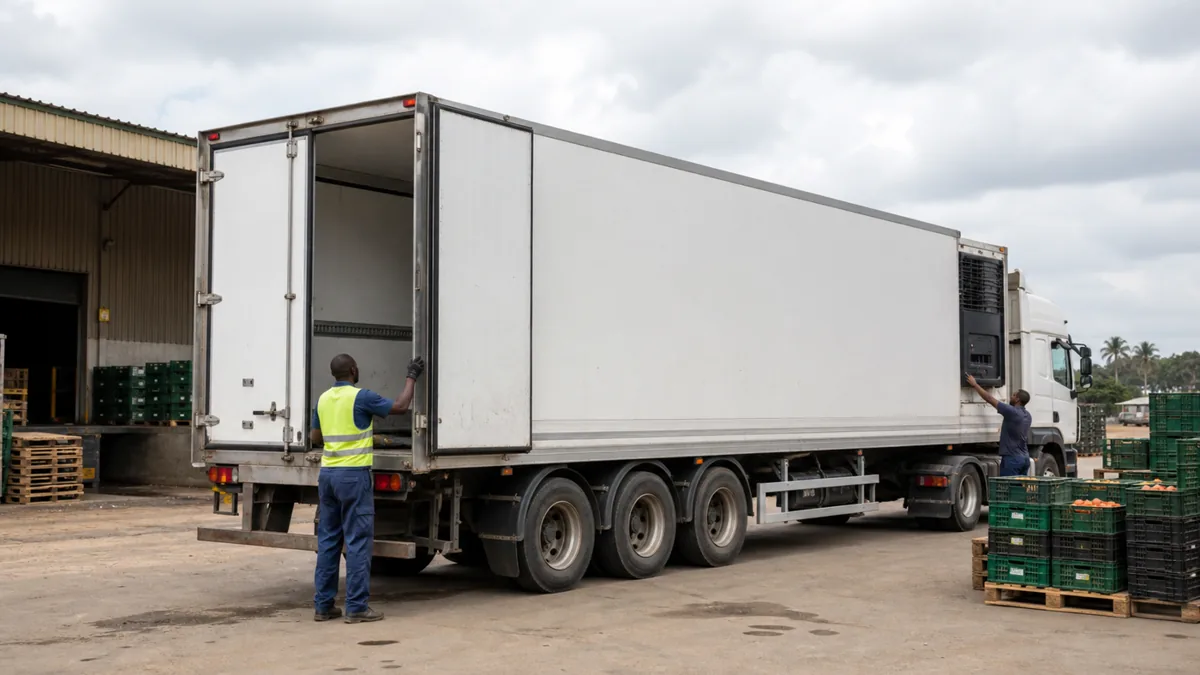
Quick Buyer Decisions
- Choose the trailer by cargo risk first, not by body size only.
- Confirm the temperature range, loading time, and route delay risk before asking for price.
- Ask for insulation thickness, door seal quality, airflow design, floor type, and drainage details.
- Check whether local technicians can service the reefer unit, sensors, door hardware, and wiring.
- Keep door-open time short in hot yards and during port or border delays.
- Use temperature records for food, pharma, and export-linked cargo.
- Do not mix cargo with different odor, moisture, hygiene, or temperature needs in the same load.
Why Cold-Chain Trailer Choice Matters in Africa
Cold-chain transport protects cargo value. It also protects trust between the supplier, carrier, wholesaler, and final buyer. A refrigerated trailer may carry produce from a farm area to a city market, frozen food to a supermarket, seafood to a hotel buyer, or medical cargo to a distribution center. In each case, a small temperature failure can become a claim, a rejected load, or a damaged customer relationship.
The FAO Food Loss and Waste platform, accessed June 19, 2026 explains that food loss and waste are linked to handling, storage, processing, transport, retail, and consumer stages. For trailer buyers, this is a practical point. Better cold-chain transport cannot solve every food-loss problem, but it can reduce one important risk: cargo sitting in heat without enough temperature control.
Data point: FAO Food Loss Index material, accessed June 19, 2026, estimates that 13.2% of food produced globally was lost after harvest and before retail in 2021.
The World Bank Transport overview, accessed June 19, 2026 also stresses the role of resilient transport systems in economic growth. For refrigerated trailer buyers, resilience means more than strong steel. It means the trailer can handle rough yards, long waiting time, port delay, bad roads, and power or fuel planning without losing temperature control.
Data point: The World Bank Transport overview, accessed June 19, 2026, says more than one billion people live more than 2 km from an all-weather road.
Match Trailer Specs to Cargo Type
Start with the cargo profile. A reefer trailer built for frozen meat may be too expensive for short-route vegetable work. A simple insulated body may not be enough for frozen cargo or pharma cargo. A mixed-load fleet needs clear rules, because one wrong cargo mix can create odor, moisture, contamination, or temperature problems.
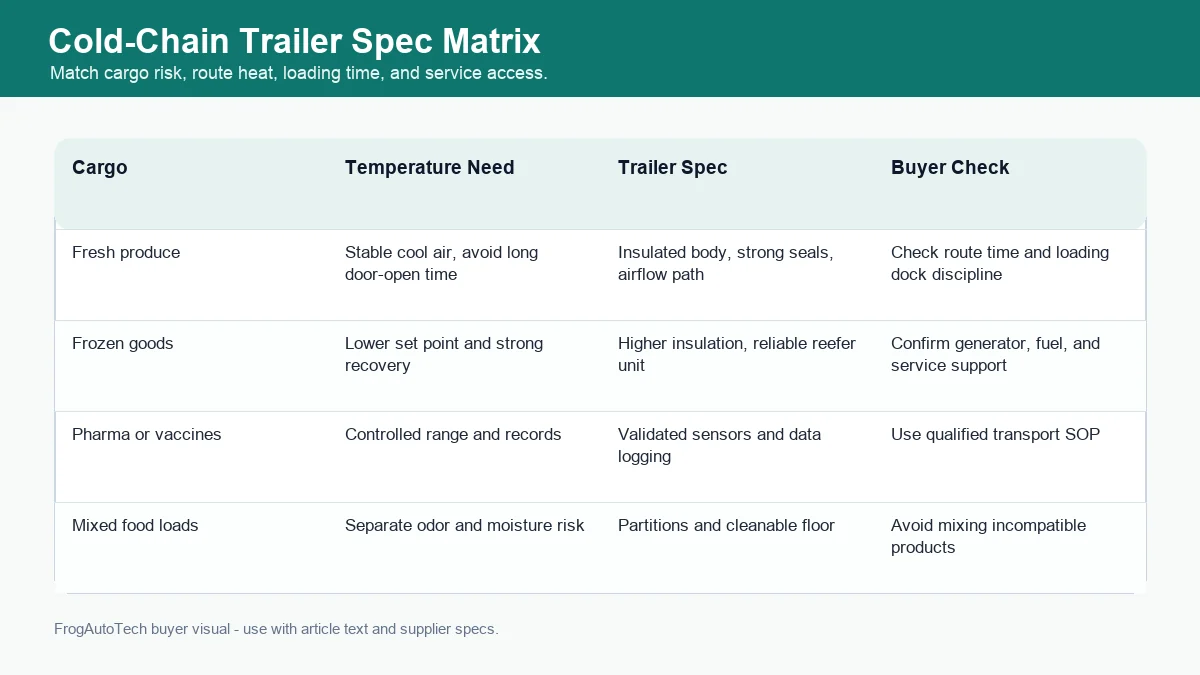
| Cargo type | Main risk | Trailer specification focus | Buyer question |
|---|---|---|---|
| Fresh produce | Heat, moisture, bruising, air blockage | Airflow path, clean floor, short loading time | Can the cargo breathe without blocking air return? |
| Frozen food | Temperature recovery after door opening | Strong insulation, reliable reefer unit, door seals | Can the unit recover after loading in hot weather? |
| Meat and seafood | Hygiene, smell, drip, strict temperature control | Washable floor, drainage, strong seals, records | Can the body be cleaned after every trip? |
| Dairy | Temperature stability and hygiene | Smooth panels, stable cooling, easy cleaning | Can the fleet prove temperature control? |
| Flowers | Airflow, humidity, careful handling | Gentle airflow, clean interior, low vibration | Can the route avoid long hot stops? |
| Pharma or vaccines | Controlled range and records | Qualified sensors, data logging, strict SOP | Does the buyer need proof for every trip? |
For pharma cargo, do not treat a refrigerated trailer as a normal food trailer. The WHO immunization supply chain page, accessed June 19, 2026 shows how important equipment, logistics, and temperature control are for vaccine supply chains. A commercial trailer buyer should confirm the required procedure with the cargo owner before ordering.
Insulation, Doors, and Airflow Are Core Specs
The trailer body is the first line of protection. If the insulation is weak, the reefer unit must work harder. If the rear door seals leak, cold air escapes each time the truck stops. If pallets block airflow, the front of the trailer may be cold while the rear becomes too warm.
Check these body details before confirming the order:
- Insulation material and thickness for side walls, roof, front wall, rear doors, and floor.
- Door gasket quality and hinge strength.
- Interior panel material and cleaning method.
- Floor surface, drainage, and anti-slip design.
- Air chute or airflow path from the reefer unit to the rear.
- Interior lighting and wiring protection.
- Rear bumper, side guards, and underrun protection for local rules.
If the route includes rough roads, also check the frame. A cold box is heavier than a simple dry van. Axle load, suspension, tire size, and body mounting points need to be matched to the road. The guide on trailer axle load capacity for African roads is useful before choosing the axle group.
Reefer Unit Selection Is a Service Decision
The reefer unit should match the cargo and the service network. A powerful unit is useful, but the buyer also needs local maintenance support, spare parts, filters, belts, sensors, control panels, and technicians who can diagnose faults. For remote routes, service access can matter as much as brand name.
Ask the supplier these questions:
| Question | Why it matters |
|---|---|
| What temperature range is the unit designed to hold? | Fresh, frozen, and pharma cargo have different needs. |
| How fast can the body recover after loading? | Hot loading yards create high temperature pull-down demand. |
| What fuel or power support does the unit need? | Long waiting time at ports and borders can drain fuel or battery. |
| Which parts are stocked locally? | Downtime can destroy cargo value. |
| Can it provide temperature records? | Food, pharma, and export buyers may need proof. |
| Who services the unit after delivery? | A good trailer can fail if no one can repair the cooling system. |
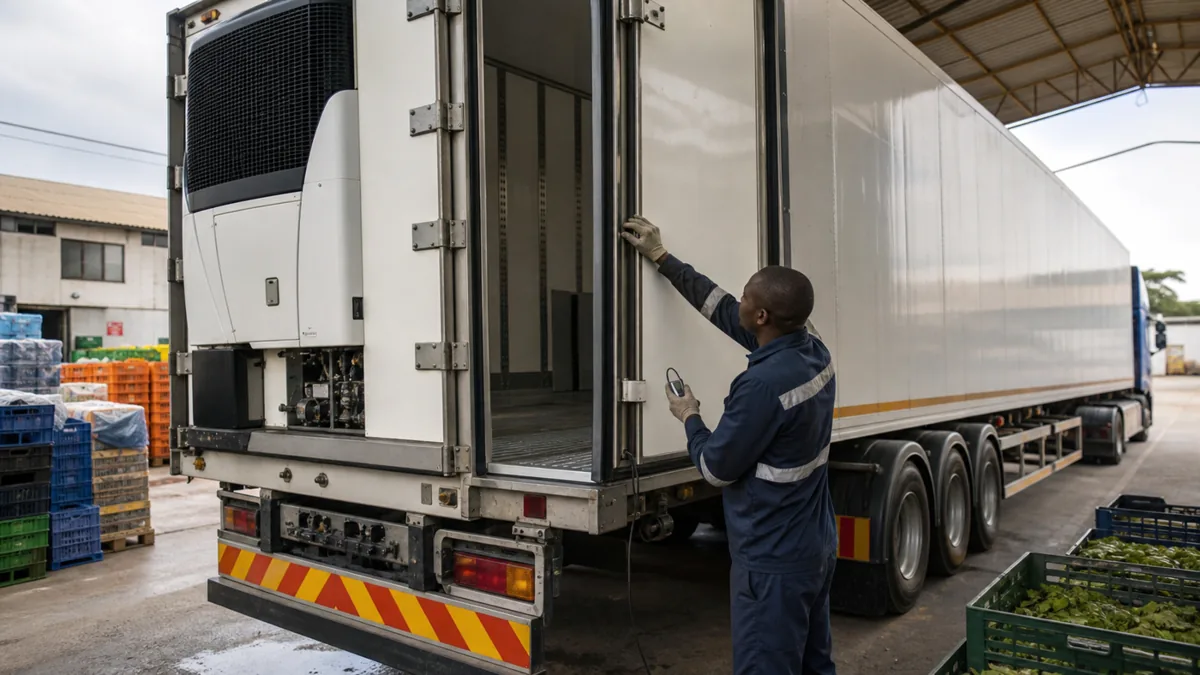
Loading Discipline Can Save the Cargo
Many cold-chain failures begin during loading. The trailer may be correct, but the warehouse may leave doors open too long. Cargo may enter the trailer while still warm. Pallets may block airflow. Drivers may shut down the reefer unit to save fuel while waiting. These habits can destroy the benefit of a good trailer.
Use simple rules:
- Pre-cool the trailer when the cargo requires it.
- Do not load warm cargo into a cold trailer and expect the reefer to fix it.
- Keep door-open time short.
- Keep space for air return and circulation.
- Use clean pallets and avoid broken packaging.
- Record loading time, departure time, temperature setting, and arrival condition.
Planning a cold-chain trailer order for hot routes?
Share cargo type, temperature range, route distance, and loading method before confirming the body and reefer unit.
Route Risk: Heat, Delay, Roads, and Waiting Time
Cold-chain buyers should plan for delay. A trailer may wait at a port, weighbridge, border, market gate, or customer yard. The World Bank Logistics Performance Index, accessed June 19, 2026 focuses on logistics performance, connectivity, and supply-chain speed. For refrigerated cargo, delay is not only an accounting problem. It is also a temperature problem.
Before ordering, map the route:
| Route factor | What to confirm | Trailer impact |
|---|---|---|
| Port or border waiting | Expected hours and parking conditions | Fuel, battery, monitoring, and reefer uptime |
| Hot city traffic | Stop-start time and unloading points | Door seals and temperature recovery |
| Rough rural road | Vibration and body stress | Frame, suspension, tires, and box mounting |
| Long inland corridor | Service access and emergency repair | Spare parts and technician support |
| Night delivery | Lighting and security | Interior lights, lock system, and driver procedure |
| Cleaning station access | Wash and dry process | Floor, drainage, panel material, and hygiene plan |
If a buyer also runs fuel, water, or liquid distribution routes, keep those equipment needs separate. A Fuel Tank Semi Trailer is built for liquid transport. A refrigerated trailer is built for controlled air temperature. Mixing the two concepts at the buying stage can lead to the wrong specification.
Maintenance Plan for Refrigerated Trailers
A refrigerated trailer has more maintenance points than a flatbed or side wall trailer. The body, seals, reefer unit, wiring, sensors, floor, drains, hinges, and frame all need attention. In humid or coastal routes, corrosion can also attack door frames, hinges, landing gear, and rear bumper parts. For a broader tropical maintenance approach, see Semi-Trailer Maintenance in Tropical Climate.
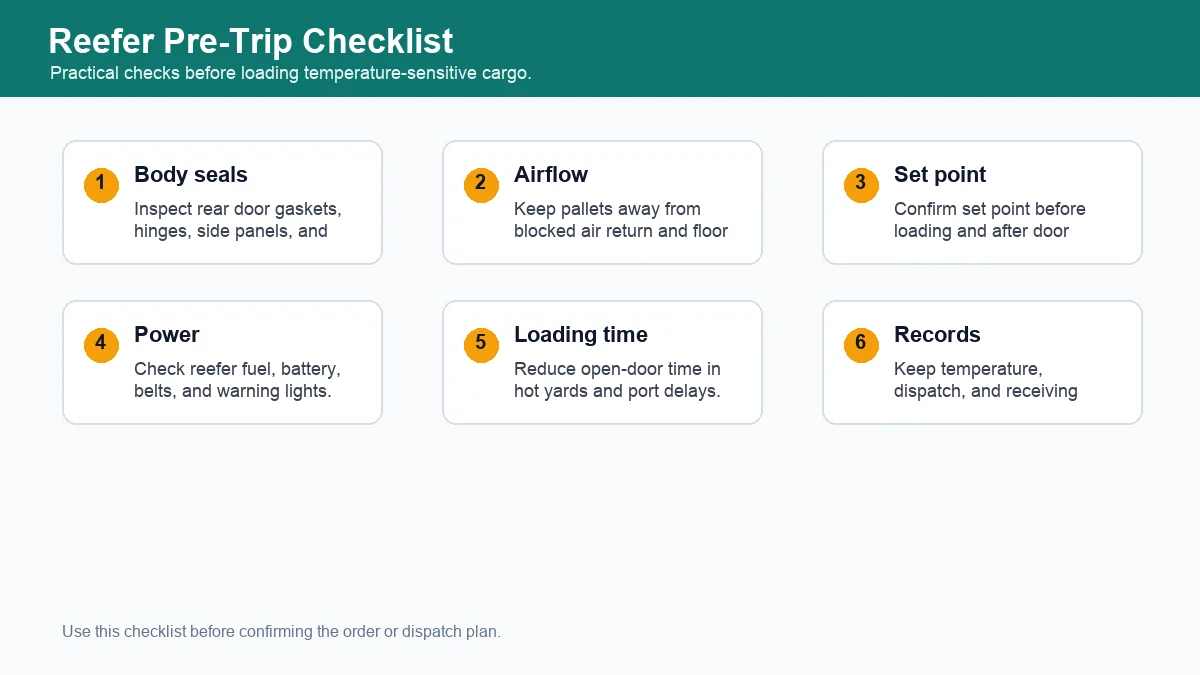
Use this routine:
| Timing | Check |
|---|---|
| Before loading | Body cleanliness, door seals, floor, drains, pre-cooling, set point |
| During route | Reefer operation, fuel or power, warning lights, temperature record |
| At delivery | Arrival temperature, door condition, cargo claim notes |
| Weekly | Hinges, gaskets, wiring, lights, drains, body damage |
| Monthly | Reefer service, sensor check, insulation damage, corrosion points |
| After cargo spill | Wash, drain, dry, inspect odor and panel damage |
FAQ
What is the best refrigerated trailer size for Africa?
There is no single best size. The buyer should choose by cargo volume, pallet size, route weight limits, loading dock design, and return-load plan. A large trailer may reduce trips, but it can create problems if the route has tight gates, poor yards, or low cargo volume.
Can one refrigerated trailer carry fresh and frozen cargo?
It can only work if the trailer has the right compartments, airflow design, temperature control, and cargo procedure. Many buyers should avoid mixing fresh and frozen cargo unless the operation is planned by a cold-chain specialist.
Is insulation more important than the reefer unit?
Both matter. A strong reefer unit cannot fully compensate for weak insulation, bad door seals, blocked airflow, or long door-open time. Body quality and operating discipline are part of the cooling system.
What should African buyers ask before payment?
Ask for body drawings, insulation details, reefer model, temperature range, service plan, spare-parts list, loading photos, and a pre-delivery inspection checklist. For shipping terms and document control, the guide on CIF vs FOB trailer shipping to Africa can help the buyer decide who controls freight and risk.
Final Buyer Advice
A refrigerated trailer for Africa should be bought as a route system. The body, reefer unit, doors, airflow, sensors, tires, axles, service plan, and driver routine all work together. If the buyer only compares price, the trailer may fail at the exact moment when cargo value is highest.
Start with cargo temperature, route delay, and maintenance access. Then confirm the trailer specification. That order will prevent many cold-chain problems before the first shipment leaves the yard.