
How to Start a Trucking Business in Nigeria With a Trailer: Cost, Routes, and Compliance Checks
> Summary: A Nigeria trailer trucking business works only when the route, cargo, driver control, maintenance, port access, and cash cycle are planned before the truck and trailer are bought.
Best for: Nigerian entrepreneurs, fleet owners, investors, and dealers comparing flatbed, side wall, lowbed, or tanker trailers for a new transport business.
Quick Answer
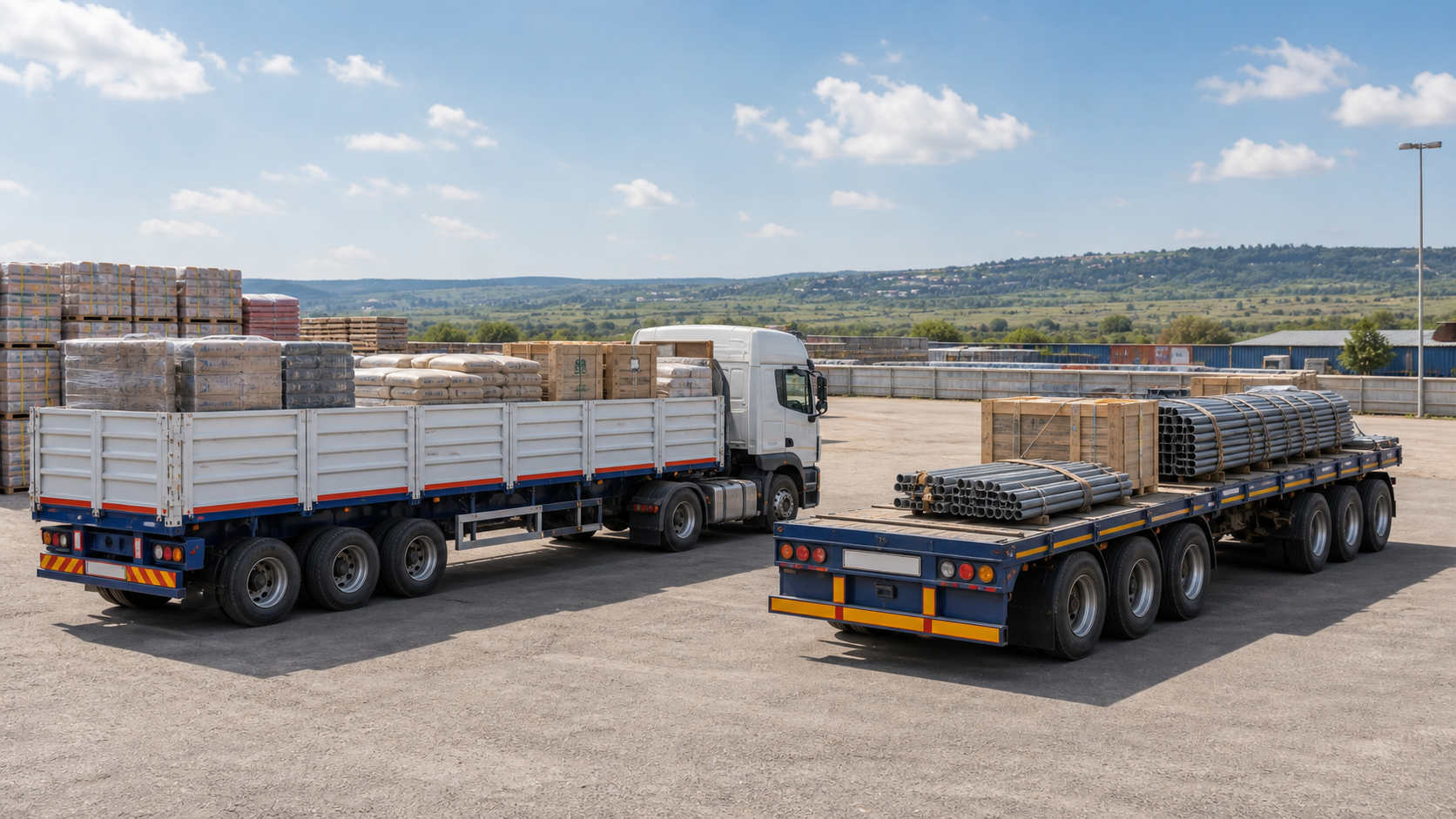
A Nigeria trailer trucking business works only when the route, cargo, driver control, maintenance, port access, and cash cycle are planned before the truck and trailer are bought. The buyer should decide from documents, route, cargo, workshop capacity, and cash-flow impact together. To compare the body types mentioned here against real export specifications, review FrogAuto’s semi-trailer category for African buyers before asking for a final quote.
Fast buyer rule
– Do not approve a quote until the trailer type, chassis identity, dimensions, and shipping term are written down.
– Ask a local agent or operator to verify customs, road-use, and route constraints before shipment.
– Keep the final decision tied to the first profitable route, not only the lowest factory price.
Start With Cargo And Route, Not With The Trailer Price
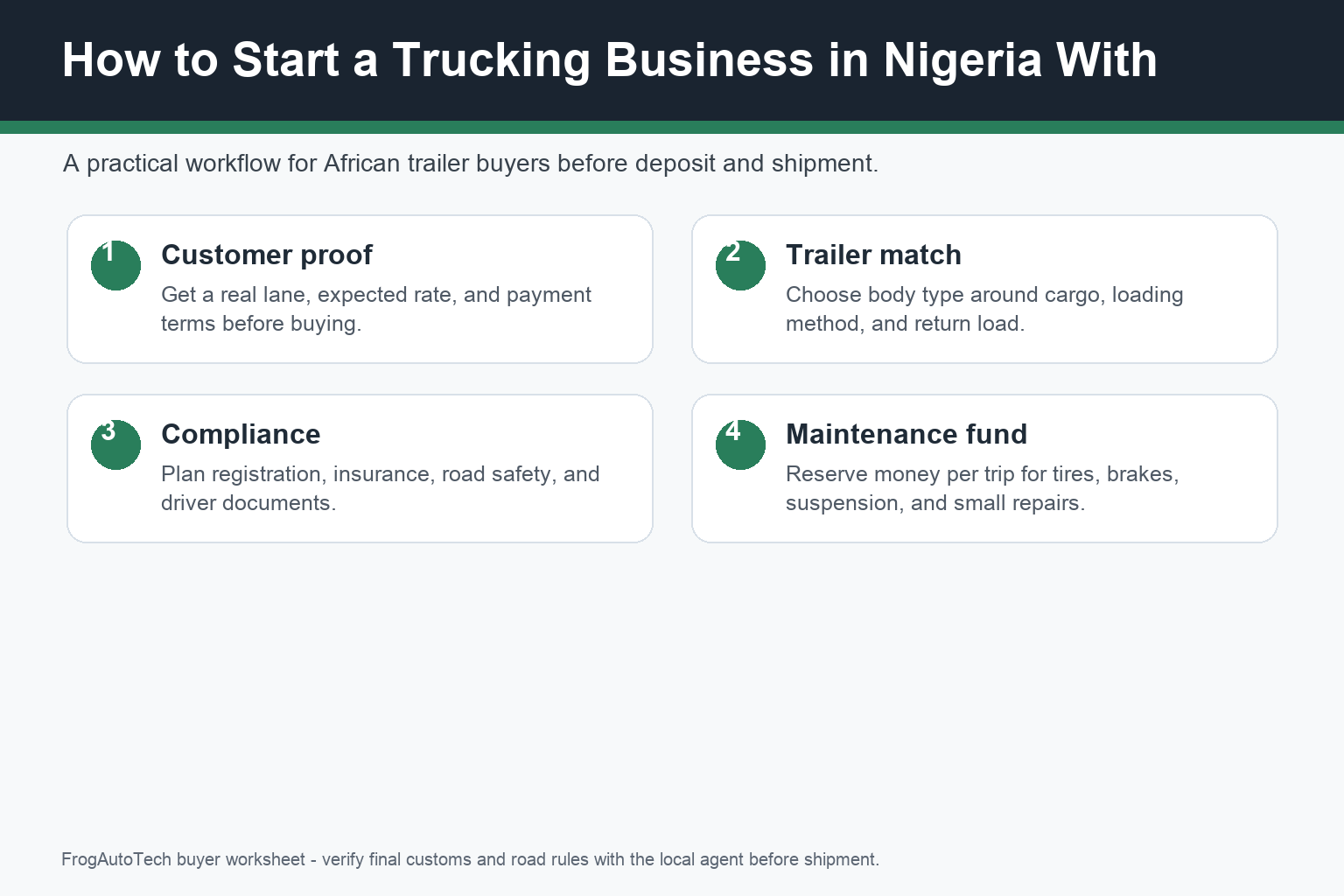
If you want to know how to start trucking business Nigeria trailer, begin with the job you can actually win. A trailer is a revenue tool, not a decoration. Decide whether you will move containers from Lagos ports, cement, steel, farm produce, construction machines, fuel, or project cargo. The Nigerian Ports Authority is the official port authority for Nigeria Nigerian Ports Authority, accessed 2026, and port-linked freight can be profitable, but it also exposes a new operator to queues, document timing, and cash-flow pressure.
A first-time buyer should not buy the largest trailer they can finance. They should buy the trailer that matches a repeatable route, a paying customer, a driver they can manage, and a workshop plan.
Pick The Trailer Body Around The First Paying Lane
For container-linked work, a skeletal trailer or flatbed may fit. For building materials and bagged goods, a side wall trailer can reduce cargo loss. For equipment movement, a lowbed is the right tool, but it needs stronger route planning and higher capital. For bulk construction material, a tipper trailer can work only if loading and unloading sites are controlled.
Nigeria Customs is a key agency for cross-border trade and customs processes Nigeria Customs Service, accessed 2026. If your business includes imported cargo, bonded movements, or port pickup, document discipline matters. If the business is domestic haulage only, the same discipline still helps with invoices, waybills, insurance, and customer disputes.
If your next question is country-specific import clearance, compare this with FrogAuto’s Nigeria semi-trailer import guide and the semi-trailer category page for Africa-focused specifications.
Buyer Decision Table
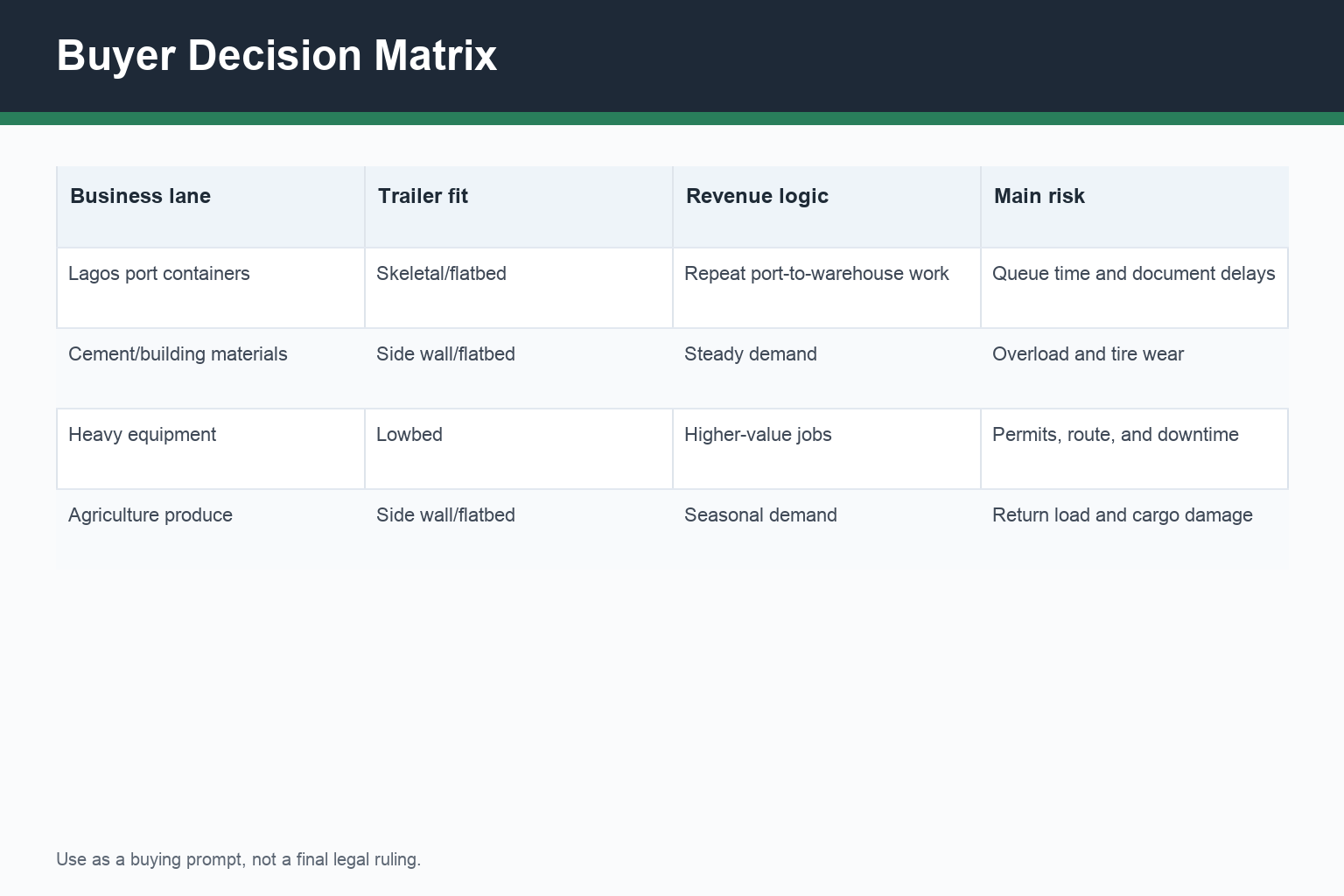
| Business lane | Trailer fit | Revenue logic | Main risk |
|---|---|---|---|
| Lagos port containers | Skeletal/flatbed | Repeat port-to-warehouse work | Queue time and document delays |
| Cement/building materials | Side wall/flatbed | Steady demand | Overload and tire wear |
| Heavy equipment | Lowbed | Higher-value jobs | Permits, route, and downtime |
| Agriculture produce | Side wall/flatbed | Seasonal demand | Return load and cargo damage |
Cash Flow Can Break The Business Before The Trailer Does
Many new trucking businesses underestimate diesel, tires, brake work, driver advances, police/checkpoint delays, port waiting, loading damage, and customer payment delay. FRSC is Nigeria’s federal road safety body FRSC Nigeria, accessed 2026, and road compliance is not optional. A truck that is parked for safety, registration, or maintenance issues earns nothing while loan payments continue.
Build the first-year budget around conservative trips per month. If the vehicle can only complete three paid round trips because loading waits two days each time, a spreadsheet based on five trips will lie to you. Put maintenance money aside per trip, not after a breakdown.
Procurement Checklist
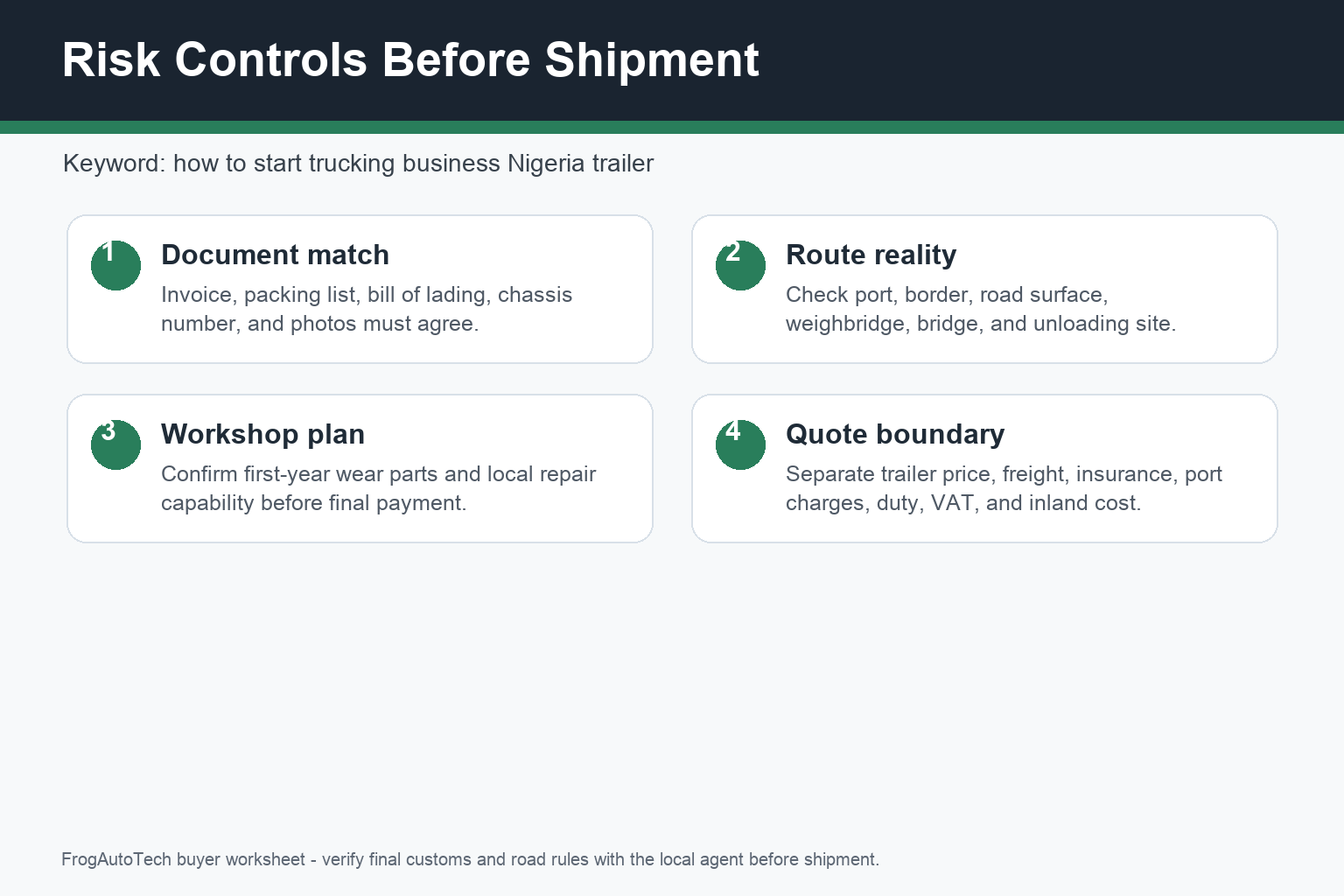
- [ ] Customer proof: Get a real lane, expected rate, and payment terms before buying.
- [ ] Trailer match: Choose body type around cargo, loading method, and return load.
- [ ] Compliance: Plan registration, insurance, road safety, and driver documents.
- [ ] Maintenance fund: Reserve money per trip for tires, brakes, suspension, and small repairs.
Questions To Ask The Supplier
- Can you put the exact trailer type, axle count, empty weight, dimensions, and chassis number on the invoice and packing list?
- Which parts are standard in Africa: brake lining, bearings, hub seals, suspension bushings, lights, tires, and air fittings?
- What shipping term is quoted, what is outside that term, and who receives the arrival notice?
- Can the drawing be checked by the buyer’s clearing agent or route operator before production?
Frequently Asked Questions
Is trucking profitable in Nigeria?
It can be, but profit depends on route, customer reliability, fuel, tires, maintenance, driver control, and payment cycle. Do not calculate from gross freight rate alone.
Which trailer is best for a new Nigerian trucking business?
For a first business, a flatbed or side wall trailer is often more flexible than a specialized lowbed or tanker. The best choice still depends on confirmed cargo.
Should I buy new or used trailer for Nigeria trucking?
Used can reduce entry cost, but brake, tire, axle, chassis, and document risk can erase the saving. Compare used repair cost against a new trailer quote and downtime risk.
Bottom Line
The safest buying move is to turn this topic into a document check, route check, and supplier question list before paying the deposit. If your team already has the route, cargo, and destination country, send FrogAuto the details for a trailer quotation and import-ready specification pack.